


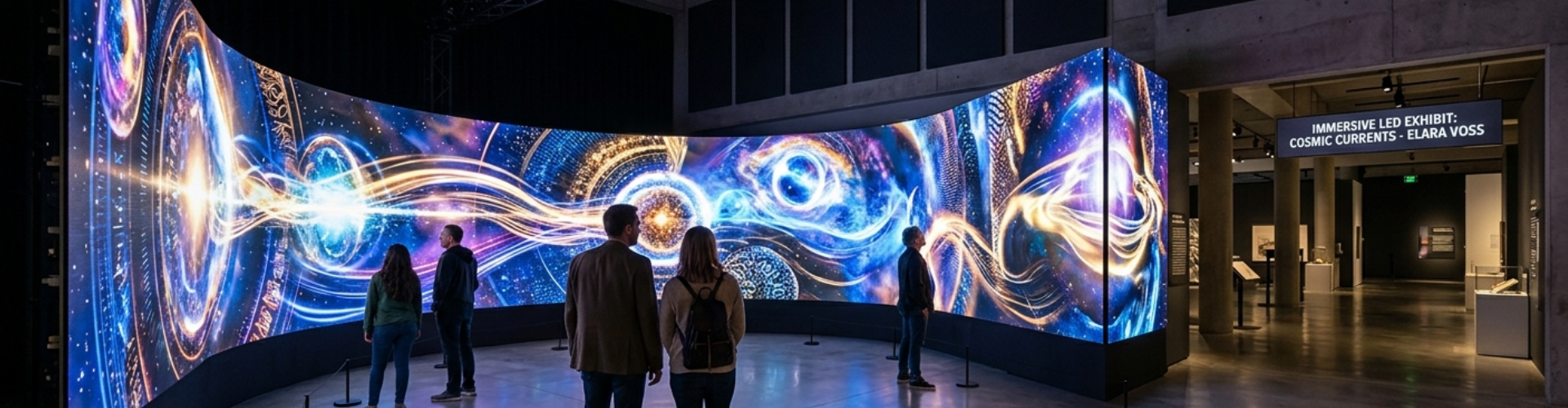
Create immersive cultural spaces with seamless visual technology built for museums and galleries.
- Ultra-fine pixel pitch for close viewing environments
- Seamless integration with architectural interiors
- Designed for curated storytelling and exhibition flow
- Supports interactive and immersive digital experiences
- Custom shapes for artistic and spatial flexibility
Display Types for Museums
Flexible LED technologies adapted for different exhibition designs and curatorial concepts.
Each solution supports different storytelling goals and spatial requirements.

High-resolution display for close viewing and detailed artwork presentation

Seamless curved surfaces for immersive environments and spatial storytelling
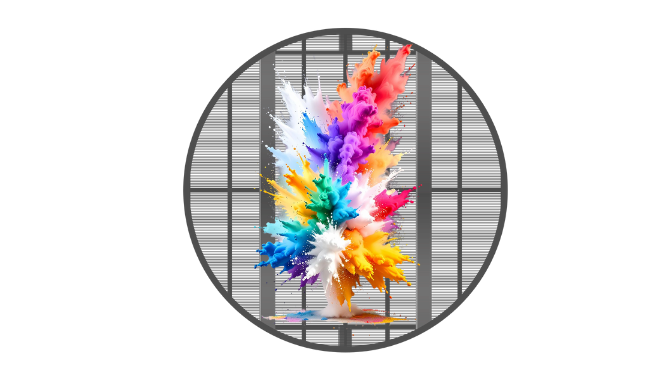
Lightweight visual layers that preserve visibility of physical exhibits
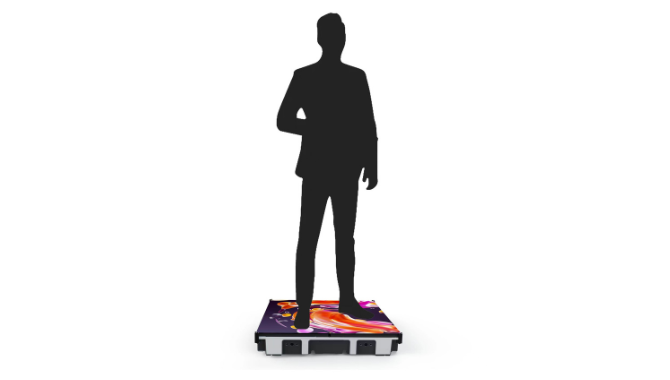
Walkable interactive surfaces for visitor engagement and guided movement

Custom-shaped installations designed for artistic and architectural concepts
- Transform static exhibitions into dynamic storytelling spaces
- Enhance visitor engagement through visual immersion
- Support both art presentation and educational content
- Adapt to modern museum digital transformation needs
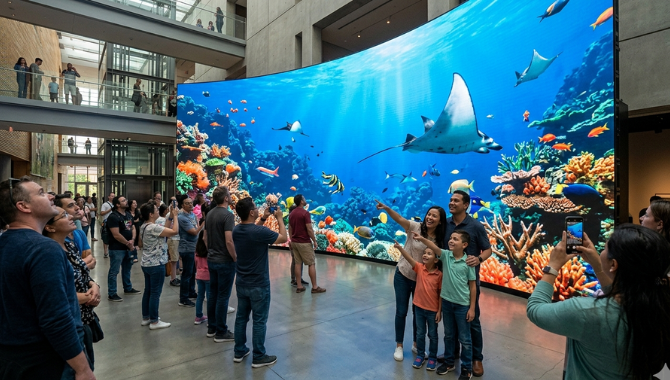
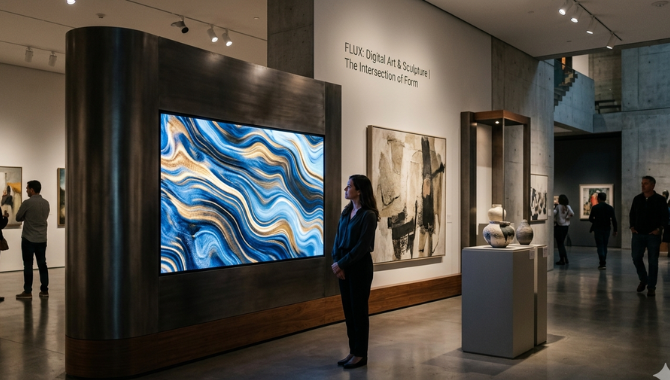
- Low-glare and controlled brightness for gallery conditions
- Accurate color reproduction for art-sensitive environments
- Invisible integration into walls, ceilings, and installations
- Supports quiet, distraction-free visual environments
- Motion-based and sensor-driven interaction systems
- Immersive room design for 360° storytelling
- Digital art integration and real-time content control
- Multi-layer visual experiences for educational exhibits
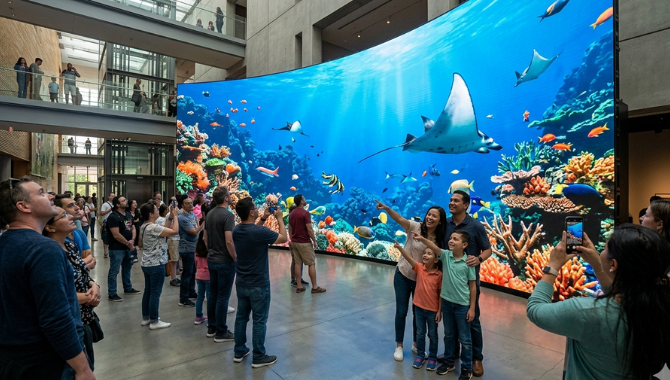
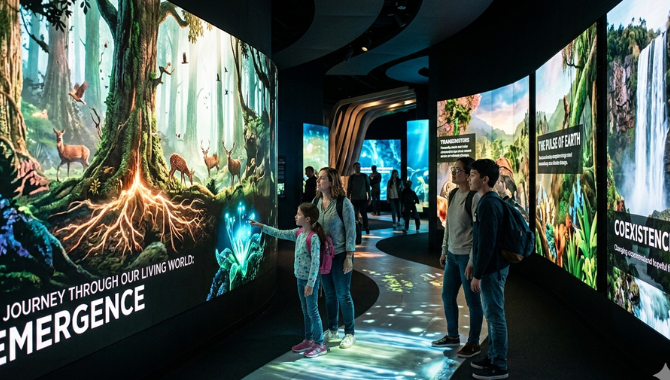
- Guide visitor flow through visual sequencing
- Highlight artifacts with contextual digital layers
- Create emotional transitions between exhibit zones
- Support thematic storytelling across large spaces
- Fully customizable shapes and dimensions
- Flexible integration with architectural structures
- Support for curved, corner, and irregular layouts
- Tailored solutions for permanent or temporary exhibitions
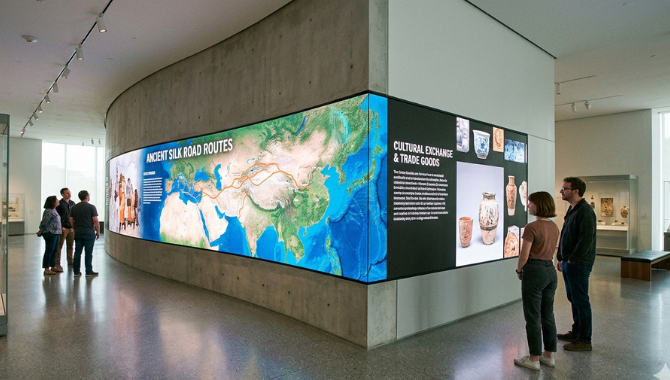
Applications in Cultural Spaces
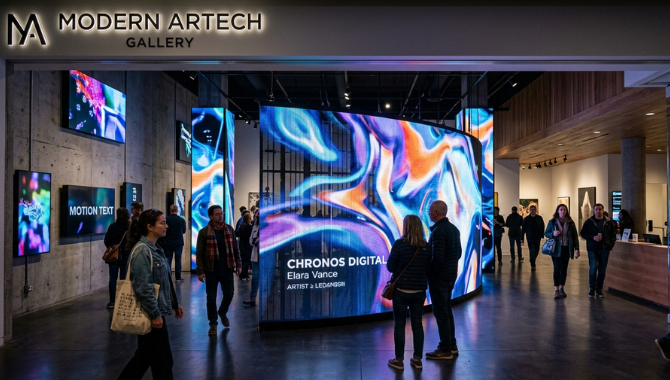
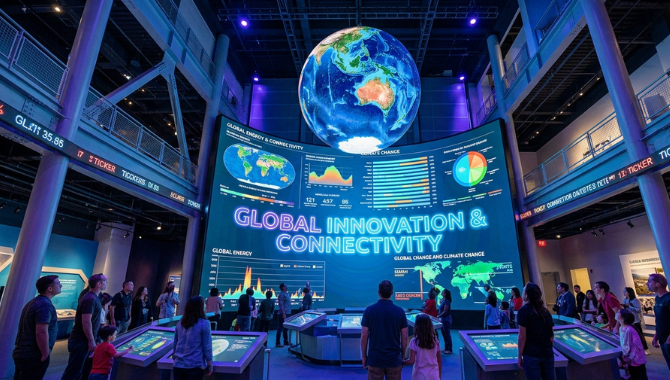
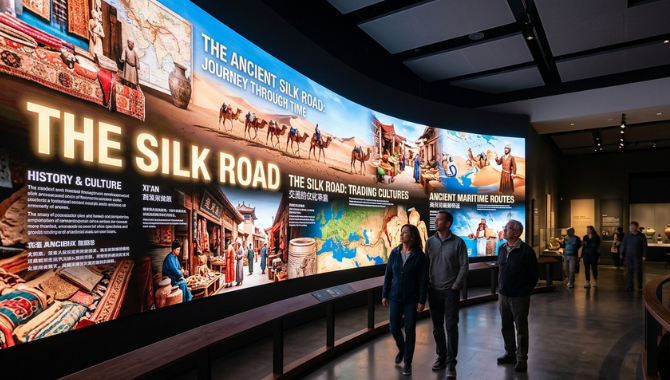
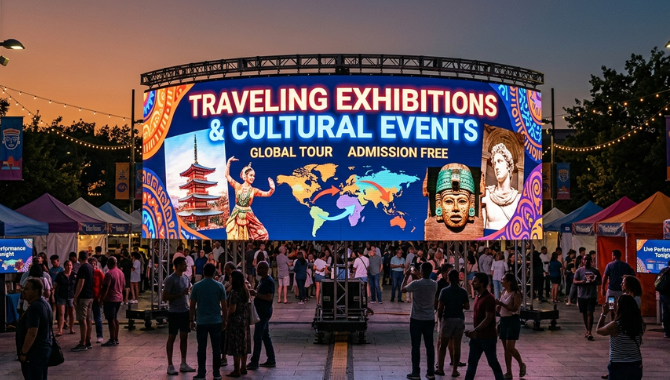
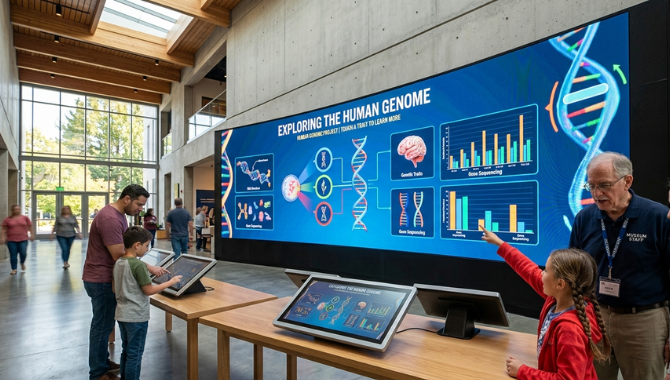
An art museum LED display is used to enhance exhibitions with dynamic visual storytelling. It helps present artworks, historical content, and educational media in a more immersive and engaging way.
Modern museum LED screens are designed with low brightness control and accurate color calibration. They can blend into gallery environments without distracting from physical exhibits.
Common solutions include fine pitch LED walls, curved LED displays, transparent LED screens, floor interactive LEDs, and custom creative LED structures.
Yes. They can integrate motion sensors, touch interaction, and content control systems to create immersive and interactive museum exhibitions.
Yes. Museum-grade LED systems are built for stable 24/7 operation, low maintenance, and long lifecycle performance in public exhibition environments.