


LED has proven to be an innovational technology in the lighting industry and the following are the reasons. Chip on board (COB) and chip scale package (CSP) are two highly used types of LED systems. Thus, it is very important to have knowledge between them so as to make appropriate lighting choices.
What Is COB LED?
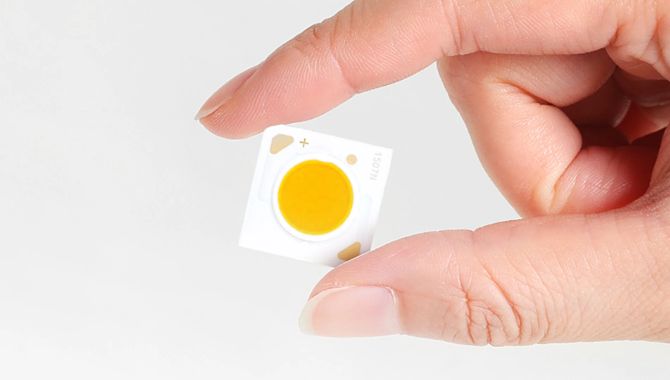
Chip-on-Board Light Emitting Diode is abbreviated as COB LED. This technology entails placing a number of LED chips in a single array with leads constructed in such a way that the LEDs are bonded directly on a substrate. What is obtained is a small-sized, high-power-density light source where the light-emitting region forms a single surface.
In the case of COB LEDs, several numbers of miniature LED chips are mounted from one another on a PCB and enclosed with an outer coating of phosphor. This design also means that the secure edge structure provides better heat sinking and higher luminance in a more confined area. COB LEDs are most commonly used in spotlights, downlights, and in every other setting where highly focused light output is needed.
What Is CSP LED?

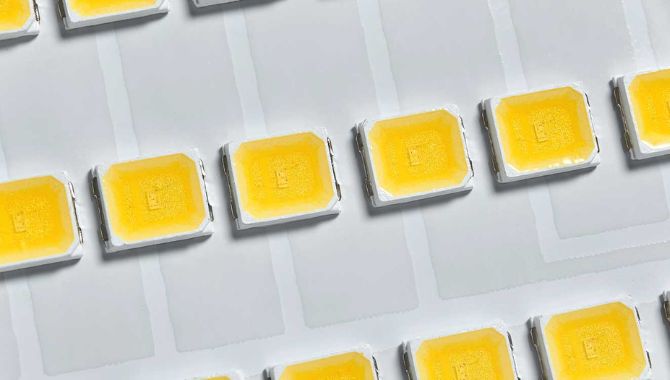
CSP LED as an abbreviation stands for Chip-Scale Package Light Emitting Diode. This is a technological innovation since the development of this LED is a step up in the miniaturization process of LED lamps. Employing CSP LEDs, the package is as small as the LED chip; there is no need for extra packaging or substrate.
The CSP design entails the leading of LED die on the circuit board with the standard packaging being omitted. This leads to an extremely lightweight light source and a factor that entails better thermal applications. The CSP LEDs are used in portable devices, automotive lighting, and wherever size is a constraint.
Key Differences Between COB and CSP LEDs

You have a good idea of what COB and CSP LEDs are, so let me list the main distinctions in their characteristics.
Size and Design
COB LEDs are inherently larger than CSP LEDs because of the layout that is followed in their construction. In a COB LED, several chips are mounted on a single substrate and hence the total package size is larger. This design enables the many chips to be soldered closely together to produce a reasonably even lighting surface.
Nevertheless, CSP LEDs are extremely small in size and dimensions. In size, their package is about the same as that of the LED chip. This miniaturization is done by doing away with conventional packaging media and sipping the LED die directly to the PCB.
The size difference affects where and how these LEDs can be applied in an element or a design. COB LEDs are designed for most applications that need high-intensity light-emitting diode sources in a single package. CSP LEDs are well suited for applications where there is very little space available for an LED such as in slimline displays and small portable electronics.
Light Output and Efficiency
High light output and efficiency are typical for both COB and CSP LEDs; however, they are gained with their help in different ways.
As commonly seen in LEDs such as big size and multi-chip, COB LEDs offer a higher total luminous flux. In COB LEDs, a number of LED chips in a small area provide really intense and bright light from a single source. This makes them ideal for use in applications where a high amount of light output is needed like spotlight or high bay lighting applications.
Nonetheless, as with other CSP sources, LEDs at the CSP scale can offer massive light output given their size. Their efficiency derives from the fact that they are sleek and do not allow light loss, which could be observed in other forms of packaging.
In terms of luminous efficacy (lumens per watt), it’s generally been found that CSP LEDs have a very narrow advantage. The first is that it enhances the direct chip mounting, and the second is that it improves heat dissipation so that energy conversion is enhanced. However, the high quality of COB can be as efficient as CSP LEDs in many cases, although there are slight differences.
Heat Dissipation

As for LED thermal management, both the COB and CSP LEDs have their own methods.
Self-emanating COB LEDs do not suffer from their design since the heat generated can easily be dissipated across the substrate. The COB module has a larger component area and therefore surface; this allows the heat to diffuse out easily. Some of the commonly used LED applications by car manufacturers also include extruded COB LEDs and high aluminum content ceramic or metal-core PCBs.
Nevertheless, CSP LEDs, even if physically small, can exhibit rather good thermal characteristics. In these packages, the chip is directly connected to the board, which eliminates all the thermal interfaces as observed in other packages. Therefore, this design may cause lower junction temperature and longer lifetime of devices.
In rating heat dissipation, decisions between COB and CSP may be contingent on the use and related thermal system. The only real potential for COB LEDs might be in high-power applications where it is claimed the larger heat-spreading area could be an advantage. For their size, in cases where space is limited, CSP LEDs can have respectable thermal characteristics.
Manufacturing Process
Manufacturing methods for the COB and CSP LEDs are also vastly different which causes differences in cost, quality, and volume production.
COB LED manufacturing involves several steps:
- Preparing the substrate
- Applying a conductive layer
- Mounting multiple LED chips
- Wire bonding for the joining of the chips
- Applying phosphor coating
- Adding a protective layer
This process makes it possible to produce thin films which give lighting surfaces and it is adequate for mass production.
CSP LED manufacturing is simpler and more streamlined:
- Fabricating the LED wafer
- Spraying phosphor directly onto the wafer
- Slicing of the wafer into individual CSP LEDs
- CSP LEDs can be directly placed on the circuit board
CSP is a process that removes some stages that are used commonly in LED packaging, so it is possible to reduce the cost of manufacturing and increase quality.
Cost Factors
Let us compare costs between COB and CSP LEDs: here you have to consider both initial and long-term expenses.
Typically, COB LEDs are cheaper per lumen at the beginning because of set manufacturing procedures and the buying up of huge amounts. Their capability of giving high luminous intensity in one module can also cut down the number of LEDs required to use in a specific application and thus bring down the cost of the total system.
CSP LEDs, while potentially more expensive per unit due to their advanced technology, can offer cost savings in other areas. This in turn results in reduced material usage, lower transportation costs compared to large-size ones, and flexibility to manufacture small, neat, and relatively cheaper products.
In the long term, the working efficiency and the durability of the COB and CSP LEDs result in low operational expenses compared to the current lighting systems. The choice between the two often comes down to specific application requirements and overall system design considerations.
Durability and Lifespan
It is now clear that both the COB and the CSP LEDs have a long lifespan, but they get it in two very different ways.
COB LEDs benefit from their robust construction. The multiple chips are well protected from physical impact by the substrate and phosphor layer, so it is difficult for them to be damaged. Their efficient heat management also plays the part of prolonging the useful life since the thermal load on the LED chips is minimized.
CSP LEDs, despite their small size, can be surprisingly durable. They may have fewer interfaces which, means they could be less susceptible to failure in relation to large, complex systems. Also, owing to the direct chip-to-board connection in LEDs, one can experience better thermal control, and as a result, have a longer working life.
When designed and operated correctly, both technologies are generally capable of providing in excess of 50,000 operating hours. Yet, real-life longevity depends on conditions of usage, thermal characteristics, and the drive current.
Flexibility in Applications
Since COB and CSP LEDs have their own respective benefits which makes them suitable for use in various uses, the following are some of the applications of every type of LED.
COB LEDs excel in:
- High-power lighting: Spotlights, floodlights, high-bay lighting
- Downlights and track lighting
- Automotive headlights
- Grow lights for horticulture
Because of their ability to deliver high luminance from a single-point source, they are suitable for use where bright, concentrated beams of light are needed.
CSP LEDs are well-suited for:
- Mobile devices: Smartphones, tablets, wearables
- Automotive interior and exterior lighting
- Thin displays and signage
- Industrial and medical equipment
This is important in areas of mention where space is an important issue or where the weight of the equipment is a serious issue.
Comparative Chart: COB vs CSP LEDs
Here’s a quick reference chart summarizing the key differences between COB and CSP LEDs:
| Feature | COB LED | CSP LED |
| Size | Larger, multiple chips on the substrate | Very compact, chip-sized package |
| Light Output | High overall output | High output for size |
| Efficiency | Good | Excellent |
| Heat Dissipation | Effective over a larger area | Efficient direct chip cooling |
| Manufacturing | Multi-step process | Streamlined process |
| Initial Cost | Often lower per lumen | Can be higher per unit |
| Durability | Very good | Excellent |
| Typical Applications | High-power lighting, spotlights | Mobile devices, compact lighting |
Conclusion
The LEDs under both the COB and CSP configurations have many benefits in the current world of illumination. A number of factors come into consideration when a decision is being made, these include, output capacity, size of the system, as well as versatility of application. To seek advice on LED solutions contact NSE lighting experts.