


Choosing the right concert LED screens for live music events is very different from selecting a standard commercial display.
Concert environments demand extreme brightness, long viewing distances, live camera compatibility, and fast installation cycles. Many organizers underestimate these requirements. They choose screens designed for retail or conference use, only to face visibility issues, flicker during filming, or oversized budgets. In large-scale concerts and touring productions, even small specification mistakes can affect audience experience and sponsor exposure.
In this guide, I will break down how to select LED screens specifically for concerts, festivals, and touring shows. You will learn how to match pixel pitch, brightness, screen size, and configuration to real performance conditions while controlling cost and maximizing visual impact.

Why Concert LED Screens Are Critical for Modern Live Events
Concert LED screens enhance visibility, sponsorship, and digital broadcasting. Audiences expect immersive visuals, while promoters use screens to extend brand exposure. Compared with projectors, LED walls offer higher brightness, modular scaling, and stable performance. According to the Event Industry Council, hybrid and digitally integrated events are now a long-term standard, making LED infrastructure a strategic investment.
Enhancing Audience Visibility in Large Venues
LED screens ensure all attendees see the performance clearly, even at long distances. In large arenas, viewing distances can exceed 80–150 meters. Side screens or IMAG displays help maintain visibility of facial expressions and stage details.
Venues like Wembley Stadium rely on massive LED side walls to keep audiences engaged. Outdoor events need screens exceeding 5,000 nits, while indoor arenas prioritize contrast. Matching screen specs to venue scale improves audience satisfaction.
Increasing Sponsorship and Advertising Value
LED screens boost sponsorship visibility and revenue opportunities. Dynamic logos, animated content, and rotating brand placements replace static banners, allowing multiple sponsors per show.
The PwC reports live events continue to drive revenue within entertainment, with digital stage assets contributing to measurable sponsor ROI. LED walls also support creative motion graphics, helping justify higher sponsorship packages.
Supporting Live Streaming and Hybrid Events
LED screens now serve both in-person and online audiences. High refresh rate panels reduce flicker and scan lines, ensuring professional filming quality.
Platforms like YouTube and Twitch demand camera-optimized stages. Synchronized visuals across LED walls and live feeds maintain content quality for hybrid events. LED screens unify audience experience, expanding reach beyond the venue.
In short, concert LED screens are essential for visibility, revenue, and digital broadcasting. They are no longer optional enhancements but a central component of modern live productions.
Types of Concert LED Screens and Their Applications
Concert LED screens come in different types, each serving specific visual and functional roles. Screen position, viewing distance, stage design, and audience size determine which type works best.
Many modern concerts combine a main backdrop, side IMAG screens, and sometimes floor or creative panels to create immersive visuals. Understanding these categories helps design an effective system without overspending.
Main Stage LED Backdrop Walls
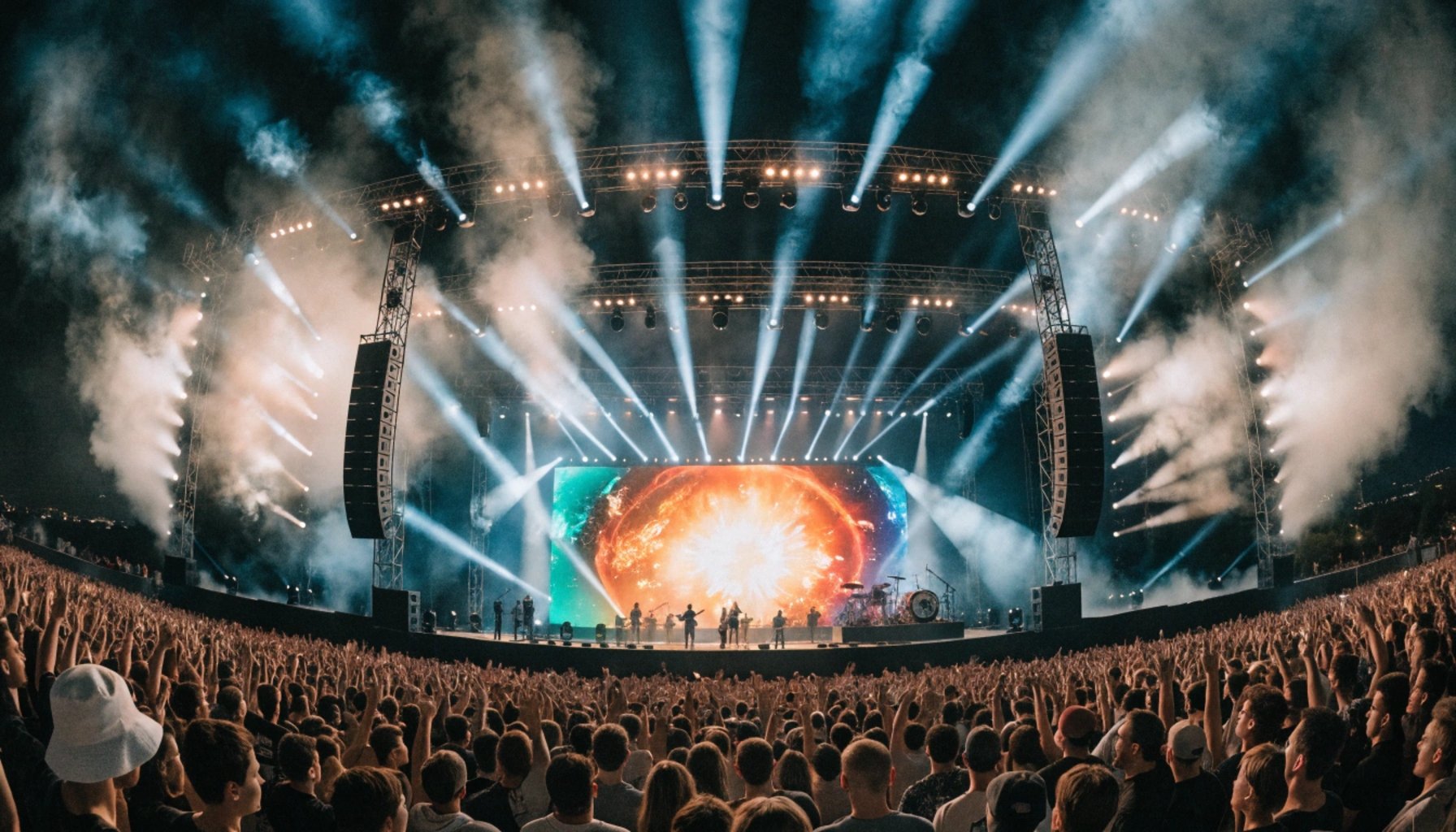
The main stage LED backdrop serves as the concert’s visual centerpiece, displaying live feeds, video content, motion graphics, and synchronized lighting. Large-scale shows rely on it to define stage identity.
Backdrops typically span 10–30 meters, using modular cabinets (e.g., 500×500mm) for flexible scaling and quick assembly. High-resolution content mapping ensures visuals align with lighting and stage structures. A well-configured backdrop turns the stage into a dynamic digital canvas.
Side Screens for Large-Scale Venues
Side screens, or IMAG (Image Magnification) screens, improve visibility for audiences far from the stage. Large stadiums with 40,000–80,000 attendees rely on them to ensure everyone sees performer details.
These screens sit on both sides of the stage and often use slightly larger pixel pitches due to longer viewing distances. Venues like MetLife Stadium depend on side LED walls to maintain engagement and preserve emotional connection at scale.
LED Floor Panels and Creative Stage Designs
LED floor panels allow production teams to extend visuals beyond vertical walls and into the stage surface itself. These panels support interactive lighting effects, motion-triggered animations, and immersive storytelling elements.
Concert designers use LED floors to create depth and movement. Artists can perform on illuminated pathways, reactive surfaces, or animated patterns that synchronize with music beats. However, floor panels must support higher load-bearing capacity and anti-slip protection to ensure performer safety.
Event safety standards such as those referenced by the Occupational Safety and Health Administration emphasize stable staging and secure installation. While OSHA does not regulate LED technology directly, production teams must ensure structural safety when integrating digital flooring into live environments.
Transparent and Curved LED Screens for Immersive Effects
Transparent and curved LED screens enable creative, immersive stage designs. They allow concave, convex, or wrap-around layouts, breaking from traditional flat backdrops.
Transparent panels let visuals layer in front of lighting without blocking depth, while curved screens create panoramic experiences for 270° or semi-enclosed stages. According to AVIXA, adaptable LED structures are increasingly demanded for experiential production. Understanding these options helps design a system that maximizes impact efficiently.

How to Choose the Right Concert LED Screen for Your Event
You should choose concert LED screens based on venue type, viewing distance, screen layout, and performance requirements—not just price. Many organizers focus on specifications first, but a successful selection starts with understanding the event environment and audience experience goals.
When you align technical parameters with real-world usage conditions, you avoid overspending and prevent visual performance issues. The following four factors form a practical decision framework for concerts and touring productions.
Event Type and Venue Environment
The venue sets the baseline requirements for your concert LED screens. Indoor arenas need controlled brightness and strong contrast, while outdoor festivals demand higher brightness, weather resistance, and stable performance in sunlight.
Large stadiums require careful planning for long viewing distances and multi-tier seating. For example, outdoor concerts at Rose Bowl Stadium face bright daylight and wide audience spreads, whereas indoor venues focus on depth and color accuracy. Always assess your venue conditions before selecting specifications.
Pixel Pitch and Viewing Distance Matching
It must match the minimum viewing distance to balance clarity and budget efficiency. Pixel pitch refers to the distance between individual LED pixels, typically measured in millimeters.
As a general guideline, you can estimate minimum viewing distance by multiplying pixel pitch (in mm) by 1,000 to obtain distance in millimeters. For example:
| Pixel Pitch | Recommended Minimum Viewing Distance | Typical Application |
| P2.6 | ~2.6 meters | Indoor concerts, close seating |
| P3.9 | ~3.9 meters | Medium arenas |
| P4.8 | ~4.8 meters | Outdoor festivals, side screens |
You should avoid selecting ultra-fine pitch screens for large outdoor venues where audiences sit far from the stage. Higher resolution does not always improve experience if viewers cannot perceive the difference. Smart matching prevents unnecessary capital expenditure.
For technical background on pixel pitch, you can refer to Wikipedia’s explanation of LED display fundamentals.
Screen Size and Configuration Strategy
Screen size and layout must align with stage design and audience distribution. Many organizers focus on pixel pitch but underestimate the importance of physical dimensions and positioning.
You should determine:
- Main backdrop width and height
• Need for side IMAG screens
• Aspect ratio (16:9, custom panoramic, etc.)
• Single large wall vs multi-panel configuration
Large venues often combine a central backdrop with two side screens to maximize visibility. Designers may also create curved or segmented layouts to match lighting structures and truss systems.
When you plan configuration early, you avoid last-minute structural adjustments and content scaling issues. A well-planned layout enhances both artistic design and operational efficiency.
Brightness and Refresh Rate Requirements
Brightness and refresh rate impact both audience visibility and broadcast quality. Outdoor concerts typically need 4,500–6,000 nits, while indoor shows require 1,000–2,000 nits depending on lighting.
High refresh rate panels (≥3840Hz) are essential for live streaming and professional filming, reducing flicker and preventing camera scan lines. According to AVIXA, camera-friendly LED displays significantly improve production quality. If filming is involved, refresh rate is non-negotiable.
Evaluating LED screens by environment, pixel pitch, layout, and performance creates a structured selection process. This approach reduces risk, maximizes visual impact, and ensures your LED investment works for both live and digital audiences.
2026 Trends in Concert LED Screen Design
Concert LED screens in 2026 focus on flexibility, immersion, efficiency, and high visual quality. LED walls are now central to stage design, enhancing audience experience while supporting faster touring and sustainable operations. Key trends include modularity, wraparound layouts, energy efficiency, and HDR performance.
- Flexible and Lightweight LED Cabinets
- Immersive 270° and 360° Stage Experiences
- Energy Efficiency and Sustainable Touring
- Higher Contrast and HDR Performance

How to Choose a Reliable Concert LED Screen Manufacturer
Selecting the right manufacturer is as important as choosing the right LED screen. A reliable partner ensures consistent quality, technical support, and long-term performance, reducing the risk of delays or costly errors during live events. Several factors help you evaluate a manufacturer’s capability and credibility.
- Manufacturing Capability and Quality Control
Strong manufacturing capability ensures consistent performance and durability.
- Customization and Project Support
Customization allows your LED screens to match specific stage designs and event requirements.
- After-Sales Support and Spare Parts Availability
Ongoing support and easy access to spare parts protect your investment.
Conclusion
Concert LED screens are essential for delivering immersive, high-impact live events. They enhance audience visibility, support sponsorship and advertising, and enable seamless live streaming or hybrid experiences. Choosing the right screen, configuring it properly, and partnering with a reliable manufacturer ensures your event stands out both on-site and online.
If you are planning a concert or touring production, explore our range of customizable LED screens at NSELED. Our expert team can help you select the ideal pixel pitch, screen size, and layout to match your venue and event goals. Contact us today to discuss your project and bring your stage to life with professional-grade concert LED technology.