


DIP LED is a through-hole LED packaging technology designed for outdoor large-scale display applications where brightness, durability, and long viewing distance matter more than pixel density. It remains widely used in highway billboards, stadium perimeter screens, and transportation signage systems across global markets, especially in North America, Europe, and the Middle East.
This guide helps you understand DIP LED from a procurement and engineering decision angle. We explain how structure, electrical design, and material choices influence long-term stability, maintenance cost, and total cost of ownership so you can make better B2B purchasing decisions.

What is DIP LED?
DIP LED refers to a discrete LED packaging method where red, green, and blue diodes are individually encapsulated and mounted through pin insertion into a PCB. Each pixel consists of three physically separated LED lamps, making the structure larger but significantly more durable for outdoor environments with high temperature variation, rain exposure, and long-distance viewing requirements.
Definition of DIP LED (Dual In-line Package LED)
DIP LED stands for Dual In-line Package Light Emitting Diode, a packaging method where each LED chip is housed in a plastic epoxy lens with two metal pins for through-hole mounting. Unlike SMD technology where RGB is integrated into a single surface mount device, DIP LED keeps each color channel physically independent, which increases structural strength and current tolerance.
Structure of DIP LED modules
A DIP LED module consists of multiple engineering layers, and each layer directly impacts long-term reliability. The LED lamp itself is only one part of the system. PCB quality, IC stability, and sealing process often determine whether a display lasts two years or more than five years under outdoor conditions.
| Component | Function | Factory Insight |
| LED lamps | Light emission source | Epoxy resin quality determines UV aging resistance over time |
| PCB board | Electrical connection | Copper thickness directly affects heat dissipation stability |
| Driver IC | Signal control and refresh | IC timing mismatch causes flicker and scan line defects |
| Waterproof layer | Environmental protection | Edge sealing failure accounts for most long-term outdoor failures |
How DIP LED works in LED display panels
DIP LED display systems operate using a scanning mechanism controlled by driver ICs that sequentially activate pixel rows. Each IC distributes electrical current to red, green, and blue diodes based on incoming image signals, creating a full-color display through synchronized refresh cycles.
The signal process begins with a controller sending image data, which is then decoded by driver ICs. These ICs regulate current output to each LED pixel, and the system refreshes between 1920Hz and 3840Hz depending on design specifications. This rapid scanning ensures smooth video playback and prevents visible flicker in dynamic content.
Key technical characteristics
DIP LED performance can be evaluated using several engineering parameters that directly influence system usability, cost structure, and long-term stability. These parameters are not theoretical; they define real-world performance limits in outdoor installations.
| Parameter | Typical Range | Engineering Meaning |
| Brightness | 6000–10000 nits | Determines sunlight readability and outdoor visibility |
| Pixel Pitch | P10–P20 | Defines minimum viewing distance requirement |
| Lifespan | 80,000–100,000 hours | Indicates LED degradation cycle under normal use |
| Refresh Rate | ≥1920Hz | Ensures smooth video and camera compatibility |
| IP Rating | IP65–IP67 | Defines resistance to water and dust ingress |

DIP LED vs Other LED Technologies
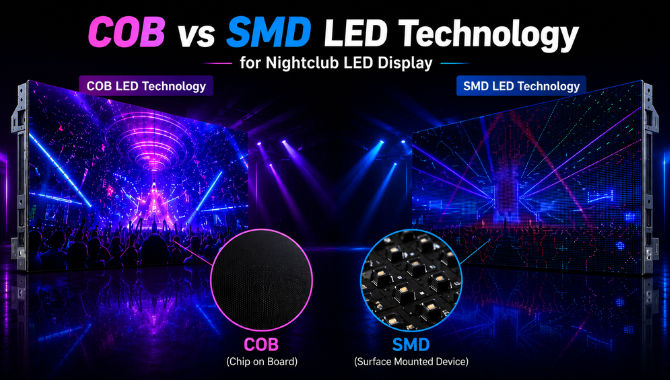
DIP LED competes primarily with SMD and COB technologies, but these technologies are not direct replacements. Each serves different application scenarios based on viewing distance, environmental exposure, and maintenance requirements. The correct decision depends on engineering fit rather than marketing comparison.
DIP LED vs SMD LED
DIP LED uses discrete LED lamps, while SMD integrates red, green, and blue into a single compact surface-mounted package. This structural difference affects brightness, durability, and maintenance cost significantly in real-world applications.
| Feature | DIP LED | SMD LED |
| Brightness | Higher peak output under sunlight | Moderate brightness level |
| Viewing Angle | Narrower, optimized for distance | Wider viewing angle for close range |
| Maintenance Cost | Lower due to modular replacement | Higher due to compact integration |
| Outdoor Durability | Strong resistance to harsh weather | Medium resistance depending on design |
| Pixel Density | Lower resolution capability | Higher resolution capability |
DIP LED vs COB LED
COB LED technology focuses on high-density pixel integration for indoor fine-pitch applications. It offers extremely high resolution but performs differently under thermal and environmental stress compared to DIP LED systems.
| Feature | DIP LED | COB LED |
| Application | Outdoor environments | Indoor fine-pitch displays |
| Heat Resistance | High thermal tolerance | Medium due to concentrated heat zones |
| Pixel Density | Low to medium | Extremely high |
| Maintenance Complexity | Simple module replacement | Complex repair process |
| Cost Efficiency | High for outdoor use cases | High for indoor premium displays |
Which LED technology is best for different applications
Technology selection should always follow application logic rather than specification comparison. DIP LED, SMD LED, and COB LED each serve distinct market segments based on viewing distance and environmental requirements.
- DIP LED is ideal for outdoor long-distance billboards and stadium perimeter displays
- SMD LED is suitable for indoor commercial advertising and medium-distance viewing environments
- COB LED is optimized for high-end indoor control rooms and ultra-fine pixel pitch installations
Advantages and Limitations of DIP LED
DIP LED remains widely used because it solves a specific engineering challenge: maintaining stable visibility in harsh outdoor environments where brightness and durability matter more than resolution or pixel density.
Key advantages of DIP LED
DIP LED provides strong brightness performance and excellent environmental resistance, making it suitable for long-term outdoor installations. It performs consistently under direct sunlight, rain exposure, and temperature fluctuations without significant degradation in visibility.
Key advantages include high peak brightness levels up to 10000 nits, strong UV resistance, long operational lifespan between 80,000 and 100,000 hours, and simple maintenance through individual lamp replacement. In factory testing environments, well-designed DIP LED modules maintain brightness decay rates below 0.02% per month under controlled outdoor conditions.
Limitations of DIP LED
Despite its strengths, DIP LED has structural limitations that must be considered during project planning. These limitations are not defects but inherent design characteristics related to pixel architecture and physical size.
The main limitations include low pixel density, larger module size, reduced suitability for close viewing applications, and increased cabinet weight compared to SMD systems. As a result, DIP LED is not suitable for environments requiring high-definition viewing at short distances such as retail stores or indoor exhibition spaces.
Trade-offs in real-world engineering decisions
In real-world LED projects, most failures occur due to incorrect application selection rather than product defects. Buyers often focus on brightness or price without considering viewing distance and operational environment, leading to inefficient system design.
Applications of DIP LED Displays
DIP LED displays are engineered for long-distance outdoor visibility rather than close-range image detail. This means their applications are concentrated in environments where viewers stay far from the screen, and where brightness stability and weather resistance matter more than pixel density. In factory-level project planning, we always evaluate application distance first, because it determines whether DIP LED is technically justified or simply over-specified.
Outdoor advertising billboards
Outdoor advertising is the most common application for DIP LED because it requires high brightness visibility under direct sunlight and long viewing distance from highways or urban roads. DIP LED billboard systems typically operate at brightness levels above 7000–10000 nits to maintain readability in daylight conditions.
In real engineering practice, we observe that billboard performance depends less on resolution and more on uniform brightness and color stability over time. For example, on highway installations in the Middle East, temperature can exceed 45°C during daytime. In these conditions, DIP LED systems with poor thermal design often show uneven brightness within 12–18 months. This is why we always recommend reinforced PCB copper thickness and high-grade epoxy sealing for such projects.
Stadium and sports arena displays
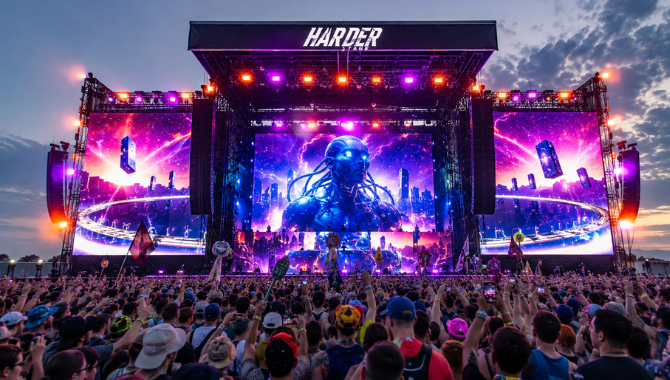
DIP LED is widely used in stadium perimeter advertising systems and scoreboards where content must remain visible from long distances under dynamic lighting conditions. In these environments, the display often operates under fast motion video, broadcast cameras, and continuous operational cycles during events.
Traffic and transportation signage
Traffic and transportation systems include highways, tunnels, airports, and railway stations. In these applications, DIP LED displays must operate continuously for 24 hours with minimal downtime. The key requirement is not visual performance alone, but operational reliability and failure resistance.
Public information systems
Public information systems include city communication boards, emergency message displays, and municipal information screens. These systems require stable operation, moderate brightness, and long lifecycle performance rather than ultra-high resolution.

Key Technical Parameters for DIP LED Selection
DIP LED selection is not a simple specification comparison exercise. It is a system-level engineering decision that connects viewing distance, brightness, power consumption, and environmental durability. In our factory evaluation process, we always reject “spec-first purchasing” because it leads to overdesign or underperformance in real projects.
Pixel pitch and viewing distance relationship
Pixel pitch determines the minimum viewing distance of an LED display. DIP LED is typically used in larger pixel pitches because its physical structure limits high-density arrangement. In engineering design, we apply a simple rule to guide selection.
Viewing Distance (meters) ≈ Pixel Pitch (mm) × 1.5 to 2
For example:
- P10 DIP LED → optimal viewing distance 15–20 meters
- P16 DIP LED → optimal viewing distance 24–32 meters
- P20 DIP LED → optimal viewing distance above 30 meters
Brightness requirements for outdoor use
Brightness is a critical parameter for DIP LED, especially in outdoor advertising applications. However, higher brightness does not always mean better performance. It must match environmental lighting conditions.
| Environment Type | Recommended Brightness | Engineering Purpose |
| Indoor shaded areas | 1500–3000 nits | Energy efficiency |
| Outdoor normal daylight | 6000–8000 nits | Visibility balance |
| Direct sunlight exposure | 8000–10000 nits | Anti-glare performance |
Refresh rate for video performance
Refresh rate directly affects image stability, especially in dynamic video content and camera recording environments. DIP LED systems typically operate at refresh rates above 1920Hz, while advanced systems reach 3840Hz for broadcast applications.
Low refresh rates cause visible flicker when captured by cameras, especially in slow-motion recording. This is a critical issue in stadium advertising and live events. In factory testing, we calibrate IC timing circuits to ensure stable synchronization across modules, because even small deviations can create visible scan lines.
IP rating and weather protection
IP rating defines how well a DIP LED system resists water and dust ingress. For outdoor applications, IP65 is the minimum requirement, while IP66 and IP67 are used in high-exposure environments such as coastal regions or heavy rainfall zones.
| IP Rating | Protection Level | Typical Application |
| IP65 | Rain and dust resistant | Standard outdoor billboards |
| IP66 | Strong water jet protection | Heavy rain environments |
| IP67 | Temporary immersion resistance | Extreme outdoor conditions |
Power consumption and energy efficiency
DIP LED power consumption typically ranges from 300W to 800W per square meter depending on brightness configuration and driver IC efficiency. Energy consumption is a major factor in long-term operational cost, especially for large billboard networks.

DIP LED Maintenance and Common Issues
DIP LED maintenance is a critical part of total lifecycle cost because outdoor LED systems operate under continuous stress from heat, humidity, dust, and voltage fluctuation. In factory practice, we treat maintenance design as part of product engineering, not after-sales service. A poorly designed system will always shift cost from manufacturing to maintenance, which directly increases long-term ownership cost for buyers.
LED failure and dead pixels
LED failure in DIP LED systems usually appears as dead pixels or partially dimmed colors. However, in factory analysis, LED chip failure is not the dominant cause. The real root causes often come from electrical stress, solder joint fatigue, or unstable current distribution from driver ICs.
In long-term outdoor operation, voltage fluctuation plays a major role in pixel failure. For example, unstable power supply in commercial billboard networks can increase micro-failure rates significantly over time. We also observe that improper heat dissipation accelerates epoxy aging, which eventually affects light output consistency.
Color inconsistency issues
Color inconsistency in DIP LED displays typically appears as uneven brightness or slight RGB imbalance across modules. This issue is often misunderstood as a LED defect, but in most cases it is caused by driver IC current drift or temperature variation across the cabinet structure.
When temperature distribution is uneven, red and green channels degrade at different speeds. This creates visible color shift over time, especially in large outdoor installations exposed to direct sunlight. In factory calibration, we use multi-point color correction systems to minimize this deviation before shipment.
Water and dust protection challenges
Water and dust protection is one of the most critical reliability factors for DIP LED systems. Although IP65 or higher ratings are commonly specified, real-world performance depends heavily on sealing workmanship rather than nominal certification.
Most waterproof failures occur at module edges, connector joints, or cable entry points. UV radiation and thermal expansion gradually weaken sealing materials, leading to micro-cracks that allow moisture penetration. Once moisture enters the PCB layer, corrosion spreads slowly and affects signal stability.
Maintenance methods for long-term stability
DIP LED maintenance is designed around modular replacement rather than full system shutdown. Each module or single LED lamp can be replaced individually, which reduces downtime and service cost significantly compared to integrated LED technologies.
Common maintenance practices include front-access module replacement, periodic waterproof inspection, and recalibration of color and brightness levels after long-term operation. In large-scale installations, we also recommend scheduled IC performance checks to ensure stable refresh synchronization.

How to Choose a Reliable DIP LED Supplier
Selecting a DIP LED supplier is not only about price comparison. It is a technical evaluation of manufacturing capability, quality control systems, and long-term engineering support. In factory experience, supplier selection directly determines project success rate more than product specification sheets.
Many procurement failures occur because buyers choose trading companies without understanding whether the supplier actually controls LED binning, PCB design, or IC sourcing. This creates inconsistency in long-term performance.
Manufacturer vs trading company
A real manufacturer controls the full production chain including LED selection, PCB fabrication, module assembly, and aging testing. A trading company typically resells products from multiple factories without controlling technical consistency.
| Factor | Manufacturer | Trading Company |
| Quality control | Full in-house control | Limited or outsourced |
| Product consistency | High | Variable |
| Customization | Strong OEM/ODM | Limited |
| Technical support | Engineering-based | Sales-based |
OEM/ODM customization capability
OEM/ODM capability is essential for large-scale DIP LED projects because every installation environment is different. Structural design, cabinet size, and thermal layout must be adjusted according to project conditions.
Custom engineering includes PCB thickness adjustment, driver IC selection, waterproof structure design, and brightness tuning. Without customization, standard products often fail in extreme environments such as high humidity or desert heat.
Quality control standards
Quality control in DIP LED production is not limited to visual inspection. It includes electrical testing, thermal cycling, aging simulation, and waterproof verification.
Key QC processes include:
- 72-hour continuous aging test
- High-temperature and humidity cycling
- Voltage fluctuation stress test
- Pixel uniformity calibration
Certification requirements for export markets
For international projects, certifications such as CE, RoHS, and FCC are often required. These certifications ensure compliance with electrical safety, environmental standards, and electromagnetic compatibility.
However, from engineering perspective, certification alone does not guarantee performance. Real reliability depends on internal manufacturing standards, not just compliance documents.
Total Cost of Ownership (TCO) of DIP LED Projects
Total Cost of Ownership (TCO) is the most important evaluation metric for DIP LED procurement. It includes not only initial purchase cost but also energy consumption, maintenance frequency, and replacement cycles over the system lifetime.
In many real projects, buyers underestimate long-term operational cost and focus only on initial price. This leads to higher total expenditure over a 3–5 year period.
Initial cost vs long-term cost
DIP LED systems with lower initial price often use lower-grade ICs, thinner PCBs, or less durable sealing materials. While upfront savings may seem attractive, long-term maintenance cost increases significantly due to higher failure rates.
Energy consumption impact
Energy consumption is a major component of DIP LED operational cost, especially for large billboard networks running 24/7. Power consumption depends on brightness settings, IC efficiency, and system design.
In typical outdoor installations, energy cost can exceed initial hardware cost within 2–3 years of operation. This makes power efficiency optimization a critical factor in procurement decisions.
Maintenance and replacement cost
Maintenance cost includes labor, spare modules, logistics, and system downtime. DIP LED has an advantage in this area due to modular design, which allows single-module replacement without shutting down the entire system.
However, poor-quality systems increase maintenance frequency, which significantly raises total lifecycle cost. In large-scale deployments, maintenance logistics often become more expensive than component replacement itself.
Why low price can lead to higher total cost
Low initial price often hides hidden costs such as higher failure rates, frequent maintenance, and shorter lifespan. These factors accumulate over time and increase total ownership cost significantly.
How NSELED Supports DIP LED Projects
NSELED provides full OEM/ODM DIP LED solutions for global B2B clients, covering design, production, testing, and delivery. Our factory integrates engineering control across all production stages to ensure stable performance in long-term outdoor applications.
OEM/ODM manufacturing capability
We control full production processes including LED binning, PCB design, module assembly, and driver IC selection. This allows us to maintain consistency across large-scale projects and reduce batch-to-batch variation.
Custom LED display solutions
We design DIP LED systems based on project requirements such as viewing distance, installation environment, and brightness conditions. This includes custom cabinet structure and thermal management optimization.
Quality assurance and testing
We apply strict testing processes including 72-hour aging, waterproof testing, and thermal stress testing. These procedures ensure early detection of defects before shipment and reduce field failure rates.
Global delivery and support
We support global logistics to North America, Europe, Australia, and the Middle East. Our technical team also provides installation guidance and long-term maintenance support for large-scale projects.
Conclusion
DIP LED is still one of the most reliable technologies for long-distance outdoor display applications due to its high brightness, strong environmental durability, and long operational lifespan. However, successful deployment depends on matching the system to the actual application environment, viewing distance, and long-term operating requirements rather than focusing only on specifications or price.
If you are planning a DIP LED or outdoor LED display project, working with an experienced manufacturer can help reduce technical risk and long-term operating cost. At NSELED, we provide OEM/ODM manufacturing, engineering support, and customized outdoor LED solutions tailored to your environment and budget. Contact our team today to discuss pixel pitch, brightness, and structural design for your project.
FAQs
What is the lifespan of DIP LED displays?
DIP LED displays typically have a lifespan of 80,000–100,000 hours depending on thermal design, IC quality, and environmental conditions. Proper maintenance can extend operational stability significantly in outdoor applications.
How to choose the right pixel pitch for DIP LED?
The selection should follow viewing distance logic. A practical rule is: Pixel Pitch (mm) × 1.5–2 = minimum viewing distance in meters. This ensures optimal visibility without unnecessary cost increase or resolution waste.