


The digital ad landscape has always been in a constant state of change. And right now, 3D billboards appear to be the latest in that evolutionary trend as more advertisers look to capitalize on their benefits.
But, what are these devices and how do they work? Let’s take a dive into them to understand their operating principles.
What Are 3D Billboards?
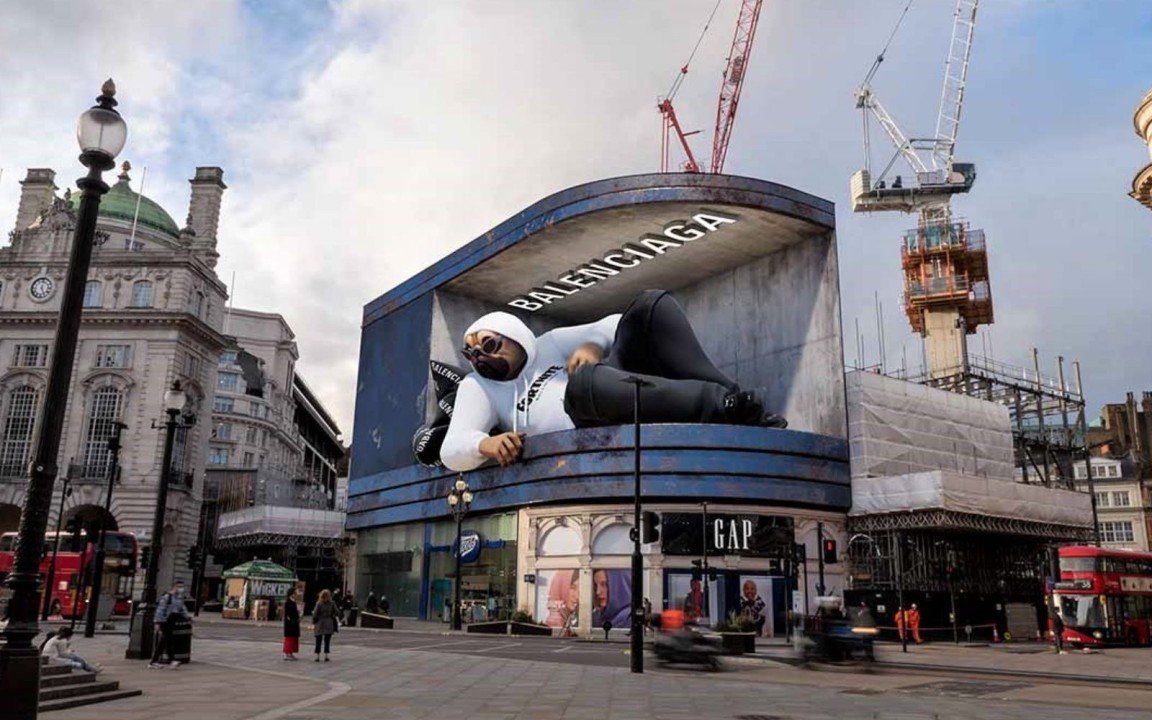
3D billboard technology has all but taken over the current digital advertising landscape. These are highly engaging billboards that create three-dimensional illusions or elements, essentially offering a more engaging viewing experience for the audience.
Instead of traditional digital boards that are stuck on two-dimensional surfaces and content, 3D billboards take things to a different level, with physical 3D objects that can extend beyond flat surface.
Understanding the Technology Behind 3D Billboards
In general, the technology behind 3D billboards can be broken down mainly into two:
- Software-Hardware Integration: A lot of software and hardware goes into the operation of 3D billboards. And as you can imagine, they need to be properly integrated for maximum efficiency
- Real-Time Rendering: The content to be shown also needs to be rendered in real time – a major software dependence for 3D content creation.
Working Principles Of 3D Billboards
To really understand how 3D billboards work, you’d need to take a look into their working principles. And this is quite important, because there’s a lot to unpack here.
Physical Billboards
Now, to make things easier, we’ll be breaking the board types. Considering that they’re the most popular 3D billboard type, let’s start with the physical ones.
The Work Of Sculptural Elements
Using Protruding Elements:
The entire premise of a physical 3D billboard is to create elements that look like they’re coming out of the surface. To do that, a physical 3D billboard will need to incorporate physical elements that are made from lightweight materials – fiberglass, plastic, and foam are usually the most prominent options.
Building The Right Structure
A Strong Support Framework
First, it’s important to have a very sturdy framework that helps to support the weight of the 3D elements. This is especially true if you’ll be placing the billboard in an outdoor environment where it will come in contact with wind and rain.
A Reliable Flat Surface
Remember that all 3D components will need to be integrated with the surface of the billboard, which is two-dimensional. In most cases, there will be hidden attachments and supports that will make it look like there’s enough continuity between the 3D sections and flat components.
Digital 3D Billboards
Next, let’s examine the digital 3D billboards. These ones use more advanced tools than the physical ones, so you can imagine that they will have more complex working principles.
The LED Technology Base
High-Resolution Displays
For digital 3D billboards to really pop, you need high-resolution LED displays that can deliver engaging and vibrant content. The higher the screen resolution, the more believable the 3D effect becomes.
Curved LED Screens
Interestingly, there are also digital 3D billboards that use curved LED screens. The benefit of these screens is simple – they improve depth perception, and their curved nature makes for a more immersive viewing experience overall.
The Importance Of Pixel Density
While there are several metrics that need to be considered in setting up a 3D digital billboard, pixel density is probably the most important. It directly affects the clarity of your image, and when gotten right, it helps you create a much more believable 3D effect.
Designing & Animating Content
The Notable Parallax Effect
When it comes to 3D billboards, you need to be able to create an illusion of depth. The parallax effect helps with this, as background images move slower than their counterparts in the foreground. This directly mirrors the movement of objects in real life, and it helps to boost the 3D effect considerably.
Angling & Perspective
Most digital 3D billboard manufacturers build them with a specific viewing angle in mind. So, they create content using this perspective, drawing objects larger or smaller to give that depth illusion.
Animation And Motion
Finally, motion designers animate their objects to move in specific forms – towards the audience, away from the audience, in a spinning fashion, etc. This allows the digital billboard to create a more believable sense of space, although it’s also important to ensure that the movement is smooth and realistic.
Engaging Design Software and Algorithms:
Tools For Object Rendering
All digital 3D billboards need specialized rendering software to create the all-important visual component. This software can simulate just about everything, from lighting to shadows and reflections, all to add that sense of realism to the effect being made.
Processing In Real Time
In the most advanced cases, 3D digital billboards will also be able to make adjustments to 3D content in real time based on things like audience interactions and even ambient conditions.

Principles Of Perception
Binocular Vision
Stereopsis
In order to achieve depth, the human eye focuses on the difference between the images that each eye sees – a phenomenon known as stereopsis. 3D billboards take advantage of this, creating the effects of stereopsis by using carefully-designed content
The Viewing Distance
This is another factor that heavily affects the efficiency of the 3D effect. When the viewing distance is optimal, you can easily maximize the illusion you’re creating.
The Principle Of Motion Parallax
Whenever a viewer moves past a 3D billboard, there’s a change in the relative motion of the objects lying within the display. This adds more depth cues and can have an effect on the perception of the object.
With digital 3D billboards, the general design ensures that they can easily maintain the illusion of depth from multiple distances and angles. In general, this means that you need to consider motion parallax seriously when designing the billboards.
The Addition Of Advanced Technologies
Even though we already have an interesting innovation in digital 3D billboards, there are new forms of innovative technology that are transforming these devices even more. A few of these technologies include the following:
- Holography: Billboards are now using holography to project 3D images that look like they float in space. With the use of lasers and projection systems, it’s possible to create true 3D imagery that viewers can see from different angles.
- Augmented Reality: AR can also help to create more interactive experience on 3D billboards, with viewers using their phones to see additional content that’s been overlaid on the physical billboards.
- Geolocation: An extension of AR, marketers can now show content based on the viewers’ locations – as well as time of day and other possible personalization parameters.
Conclusion
3D technology is still all the rage right now. And as marketers look to incorporate it into their work, we expect to see more 3D billboards being used in creative ways.
To learn more about these billboards and how they can transform your marketing, contact us at NSE LED Cloud.
Frequently Asked Questions
How much are 3D billboards?
The cost of 3D billboards generally varies based on the manufacturers. However, we recommend that you reach out to your chosen manufacturer to get a quote and possible discounts.
Also, remember that cost shouldn’t be your most critical factor. Consider the efficiency of the billboard, as well as how it can align with your goals.
Can I combine 3D billboards with traditional billboards?
Absolutely! As long as you can find the most creative ways to do so, this synergy is absolutely possible!
What are the best practices for installing 3D billboards?
When installing 3D billboards, we recommend that you get an expert to help you out. Ensure that the billboard is mounted on a sturdy structure, and test the electrical connection to make sure it’s reliable. Also, make sure you go through the manufacturer’s guidelines and focus on the safety of everyone involved.