


Introduction
An interactive LED wall can turn a passive display into an active digital experience.
Traditional screens mainly deliver information to viewers. However, modern brands, venues, retailers, museums, and corporate spaces increasingly want audiences to interact with visual content. An interactive LED wall combines large-format LED technology with touch, motion detection, gesture recognition, sensors, cameras, or interactive software to create a more engaging environment.
For B2B buyers, the challenge is not simply choosing a high-resolution LED screen. The display must also work reliably with the selected interactive technology, content system, control equipment, and installation environment. This guide explains how interactive LED walls work, where businesses use them, what specifications matter, how much they can cost, and how to choose a reliable manufacturer.
Why Interactive LED Walls Are Changing Digital Experiences
Digital signage has moved beyond static advertising and basic video playback. Businesses now use displays to encourage users to explore products, navigate spaces, participate in activities, and receive personalized information.
An interactive LED wall makes this possible by combining a large visual canvas with a responsive input system. For example, a retail customer can interact with product information, while a museum visitor can explore a digital map or animation by touching a designated area.
From a factory perspective, the LED display itself is only one part of the complete solution. The interactive experience also depends on processing equipment, signal transmission, sensors, software, and content design. Therefore, buyers should evaluate the entire system instead of focusing only on pixel pitch or screen price.
What You Can Expect From an Interactive LED Wall
A properly designed interactive LED wall should provide three things: high-quality visuals, accurate interaction, and stable long-term operation.
The LED screen needs sufficient brightness, contrast, refresh rate, and color consistency for the application. At the same time, the interactive system needs to recognize user input quickly and accurately.
NSELED’s factory experience shows that display stability becomes particularly important when an LED wall operates for long hours. Consistent LED packaging, reliable driving ICs, proper calibration, and effective heat management can directly influence long-term image quality.
What Is an Interactive LED Wall?
An interactive LED wall is a large LED display system that responds to user input or physical movement. Unlike a standard LED video wall that primarily displays pre-produced content, an interactive system can change its visual output based on what users do.
The interaction method can vary according to the project. A system may use infrared touch frames, capacitive or optical touch technology, cameras, motion sensors, radar, computer vision, or other detection equipment.
The LED wall then receives the interaction data through a control system. Software processes that information and triggers the corresponding visual response.
This architecture makes interactive LED walls suitable for applications where audience participation matters as much as image quality.
How Interactive LED Walls Work
An interactive LED wall normally contains several layers of technology.
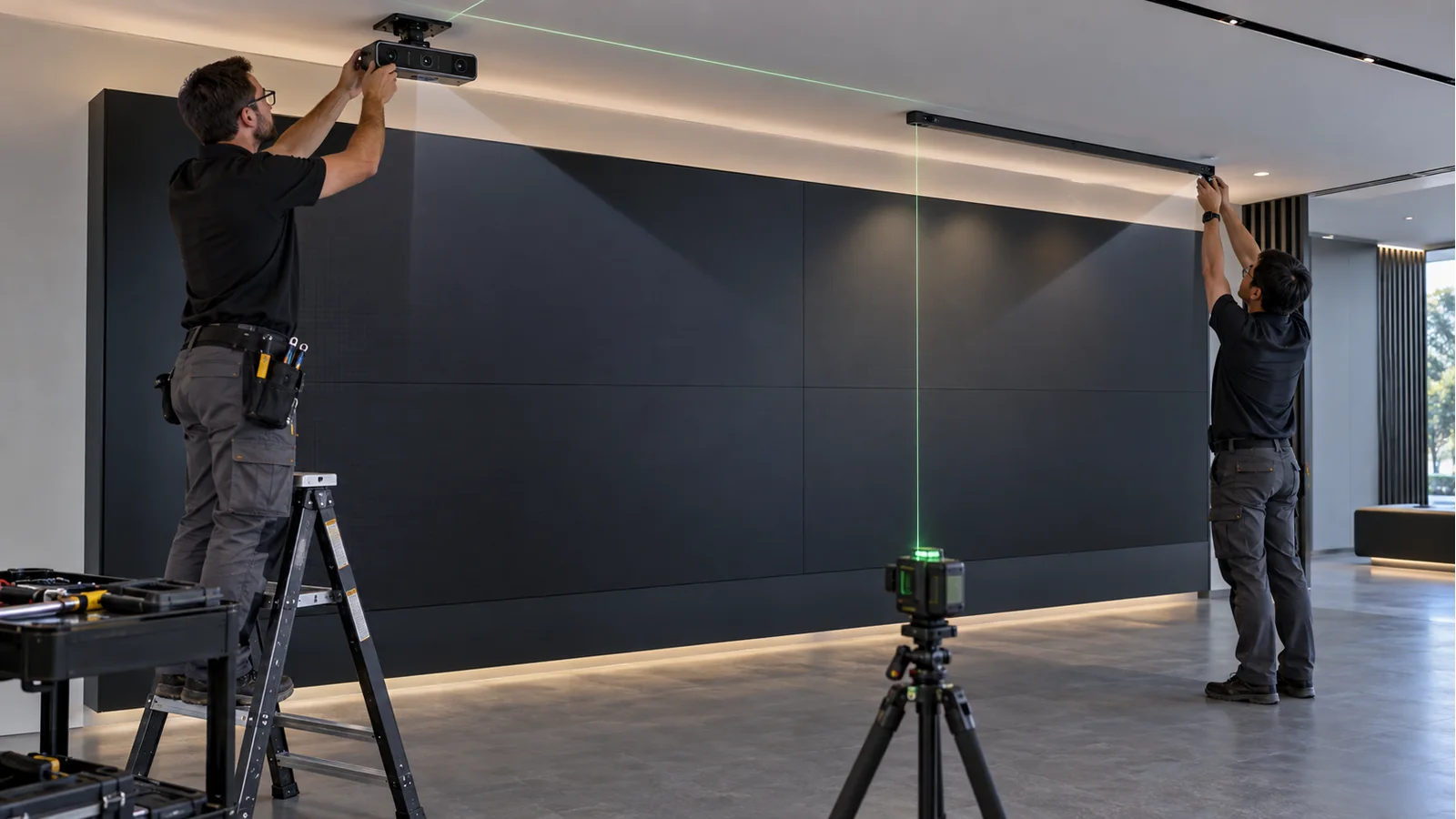
First, the LED modules create the visual surface. These modules contain LED pixels, driver ICs, PCBs, and other electronic components. Multiple modules form cabinets, and cabinets are assembled into the complete display.
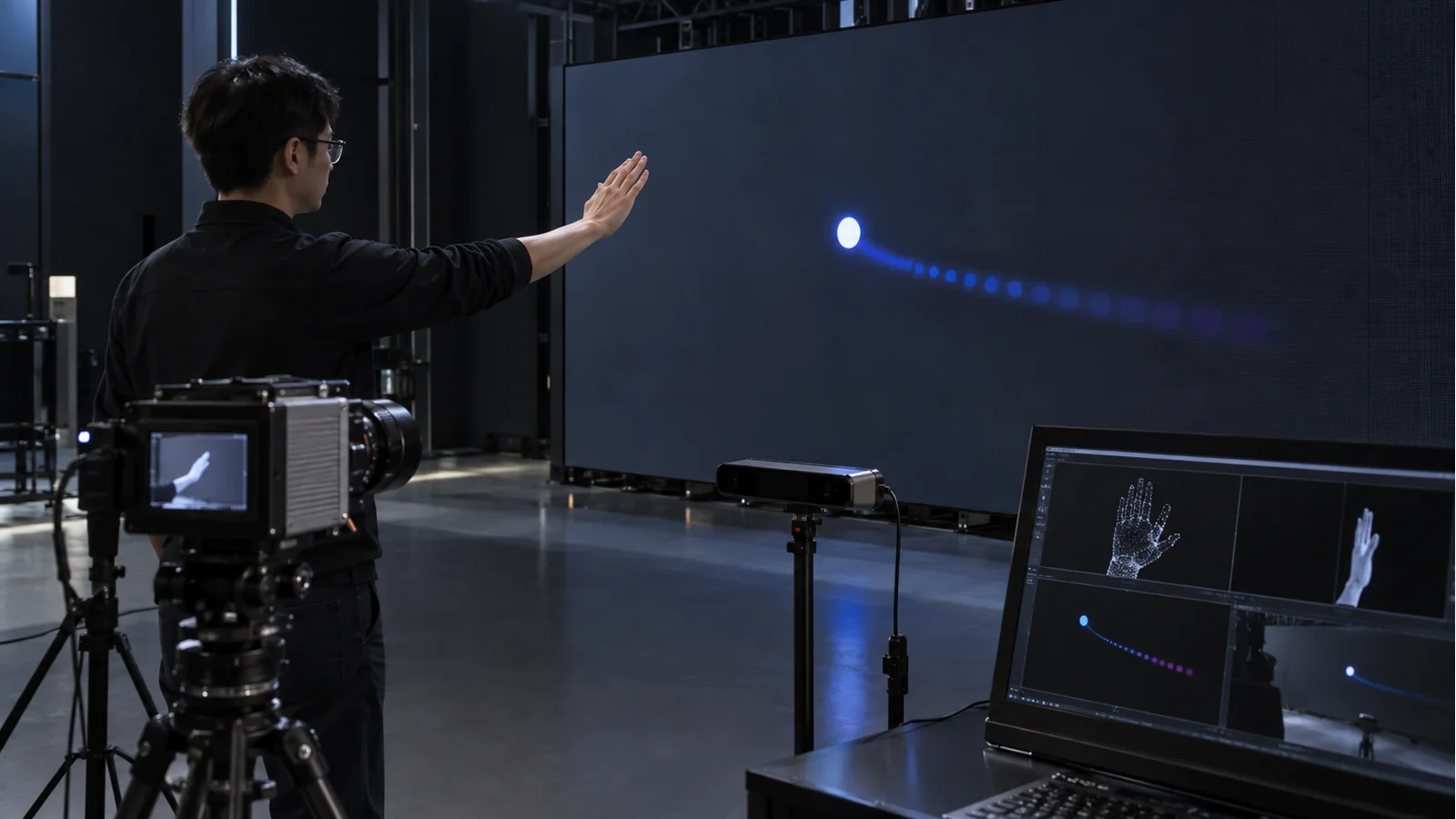
Second, an interaction system detects user input. A touch frame may identify where a person touches the screen. A camera-based system may track body movement. Sensors can also detect gestures or movement in front of the display.
Third, a media server or control computer processes the interaction information. It determines what should happen on the screen and sends the updated content to the LED display processor.
Finally, the LED controller distributes the processed image to the receiving cards inside the display.
For a professional installation, these components need to work together with minimal latency. A high-quality LED screen cannot compensate for an unreliable interactive control system.
Key Technologies Behind Interactive LED Walls
Interactive LED walls can use different technologies depending on the required experience.
Touch technology allows users to directly select, drag, zoom, or manipulate content. Infrared touch frames are commonly considered for large displays because they can support large interaction areas without requiring the LED modules themselves to contain touch-sensitive components.
Motion detection allows the system to respond when people move in front of the display. This approach works well for interactive advertising, exhibitions, museums, and entertainment installations.
Computer vision can analyze human position, movement, or gestures. More advanced systems can distinguish different types of interaction and trigger corresponding content.
AI-powered systems can add another layer of personalization. For example, an installation can use AI-based recognition and software logic to deliver different content based on user behavior.
AR and mixed reality integration can combine the physical environment with digital content. This approach is particularly useful for experience centers, entertainment venues, product demonstrations, and virtual production.
From a manufacturing standpoint, these technologies do not replace the importance of the LED hardware. The screen still needs appropriate pixel pitch, refresh rate, color calibration, viewing angle, and thermal performance.
Interactive LED Wall vs. Traditional LED Display
The main difference is the level of audience participation.
A traditional LED wall usually follows a one-way communication model. The content creator controls what appears on the screen, and the audience watches it.
An interactive LED wall introduces a feedback loop:
User action → detection → software processing → content response → LED display
This difference changes both the system design and the project budget.
A traditional LED wall may only require an LED display, sending system, controller, power system, and content source. An interactive installation can require additional sensors, cameras, touch equipment, computers, software, and custom content.
Therefore, buyers should not assume that every large LED wall can become interactive simply by adding software. The physical installation and system architecture must support the intended interaction method.
Benefits of Interactive LED Walls
Immersive Visual Experiences
Large LED displays already create a strong visual impact. Interactive functionality makes the experience more immersive because viewers can influence what they see.
A retail showroom can create a large product configurator. A museum can allow visitors to explore historical scenes. An experience center can display interactive maps or 3D visualizations.
Fine-pitch LED technology can further improve the experience when viewers stand close to the screen. However, the correct pixel pitch depends on viewing distance rather than simply choosing the smallest available pitch.
At the factory level, NSELED considers pixel pitch, LED package quality, calibration, and viewing distance together when recommending an indoor LED solution. This approach helps customers avoid paying for unnecessarily fine pixel pitches.
Higher Audience Engagement
Interactive content encourages people to spend more time with a display.
Instead of walking past a static advertisement, users can select products, play interactive games, explore information, or respond to visual effects.
This benefit makes interactive LED walls especially useful in environments where attention is valuable. Retail stores, trade shows, museums, and brand experience centers can use interaction to turn passive visitors into active participants.
The display therefore becomes part of the customer experience rather than simply a background screen.
Dynamic and Personalized Content
Interactive LED walls can provide different content based on user behavior.
For example, a visitor could select a product category and immediately receive relevant specifications, images, videos, or demonstrations. A company could also create an interactive corporate presentation where users choose different sections according to their interests.
This flexibility reduces the limitations of fixed playlists.
However, the quality of personalization depends heavily on software and content development. The LED display provides the visual platform, while the interactive application determines how users experience that platform.
Seamless Technology Integration
Interactive LED walls can integrate with other AV and digital systems.
Depending on the project, the display can connect with:
- Media servers
- Cameras
- Touch systems
- Motion sensors
- Digital signage platforms
- Content management systems
- Control rooms
- Audio systems
- Virtual production systems
- Smart building systems
This integration allows businesses to create a unified digital environment.
For B2B projects, system compatibility should be confirmed before production. NSELED recommends confirming the controller, receiving card, processor, signal source, cabinet structure, and interactive equipment requirements during the design stage. Early coordination reduces compatibility problems during installation.
Applications of Interactive LED Walls
Retail, Showrooms, and Trade Shows
Retail environments increasingly use interactive displays to make product discovery more engaging.
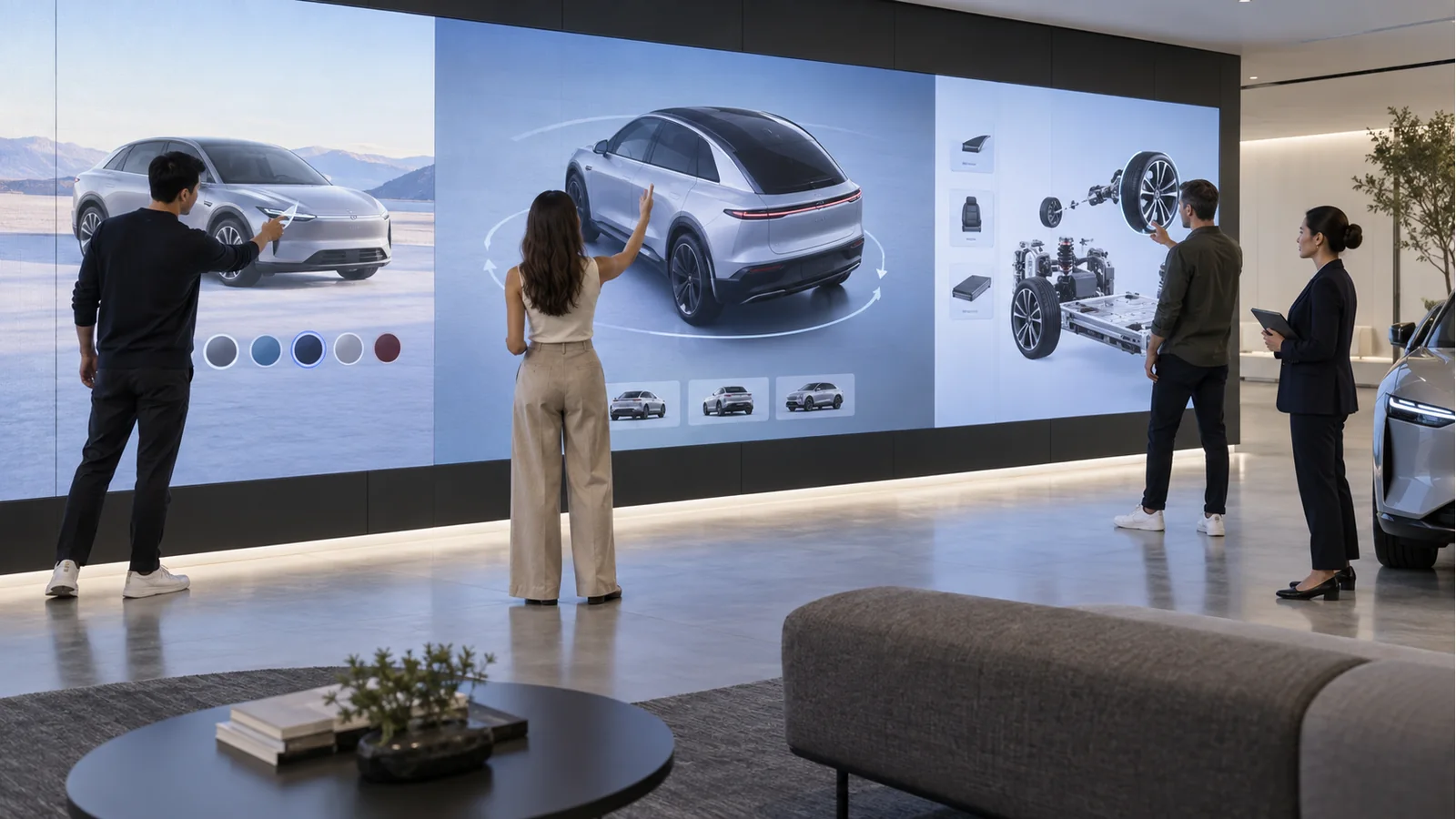
A clothing brand could allow customers to browse collections on a large screen. An automotive showroom could provide an interactive vehicle configurator. A technology company could demonstrate product features through touch or gesture-based content.
Trade shows can also use interactive LED walls to attract visitors. Instead of displaying a standard corporate video, exhibitors can allow visitors to explore products, projects, case studies, or technical information.
For these environments, screen appearance matters because the display becomes part of the brand image. Fine pixel pitch, high refresh rate, uniform brightness, and clean cabinet design can help create a premium appearance.
Corporate Spaces and Education
Corporate offices can use interactive LED walls in reception areas, innovation centers, meeting rooms, and presentation spaces.
For example, a company can create an interactive global map showing offices, projects, markets, or business operations. During meetings, presenters can use interactive content to explore data or presentations.
Educational institutions can also use large interactive displays for collaborative learning. Students can interact with maps, scientific models, timelines, and multimedia content.
In these applications, viewing distance and interaction height deserve special attention. Designers should position the interactive area so that users can comfortably reach or interact with it.
Entertainment and Houses of Worship
Entertainment venues can use interactive LED walls to create immersive environments. Digital attractions, gaming venues, themed spaces, and experience centers can use motion-responsive content to make visitors part of the visual environment.
Houses of worship can also use interactive technology for education, community engagement, or immersive presentations.
The technical requirements vary significantly between projects. Entertainment applications may prioritize high refresh rates and creative content effects, while educational or worship applications may place greater emphasis on reliability and easy content management.
Virtual Production and Experience Centers
Virtual production studios use large LED walls to create digital backgrounds and immersive environments.
Although not every virtual production LED wall requires direct audience interaction, interactive technologies can enhance real-time environments by allowing cameras, performers, or users to influence digital content.
Experience centers can combine LED walls with motion tracking, sensors, 3D content, and real-time rendering to create highly immersive installations.
For these applications, technical parameters such as refresh rate, scan mode, grayscale performance, color consistency, and camera compatibility become particularly important.
What to Consider Before Buying an Interactive LED Wall
Pixel Pitch, Size, and Viewing Distance
Pixel pitch determines the distance between adjacent LED pixels. A smaller pixel pitch generally provides greater pixel density and is more suitable for close viewing.
However, smaller pixel pitch also tends to increase the cost of the LED display.
The correct selection should consider:
- Minimum viewing distance
- Average viewing distance
- Screen dimensions
- Content type
- Camera usage
- Budget
- Installation environment
For example, a reception display viewed from several meters away may not need the same pixel pitch as an interactive wall where users stand directly in front of the screen.
Interactive Technology and Content Compatibility
The interaction method should match the application.
Touch interaction works well for direct navigation. Motion detection works better when users interact without physically touching the display. Camera-based tracking can support more advanced experiences.
Buyers should also confirm that the interactive software works with the selected media server, LED processor, operating system, and content platform.
From a factory perspective, this compatibility check should happen before the LED cabinets enter production. Changing cabinet dimensions, access methods, or electronic configurations late in a project can increase cost and delay delivery.
Maintenance, Reliability, and Installation
Interactive LED walls contain more components than standard displays. Therefore, maintenance planning becomes even more important.
The buyer should consider whether technicians can replace LED modules quickly, whether the display supports front maintenance, and how easily the interactive equipment can be accessed.
Manufacturing quality also influences reliability. LED packaging quality, PCB consistency, driving IC performance, power supply quality, and calibration accuracy all contribute to long-term stability.
NSELED’s production approach focuses on controlling these factors during mass production rather than relying only on final inspection. Consistent module performance makes later calibration and maintenance easier.
Customization and System Integration
Not every interactive LED wall should use a standard cabinet.
Projects may require curved structures, unusual aspect ratios, custom dimensions, special mounting systems, or front-maintenance designs.
Customization can also involve the control system and interactive hardware.
For B2B customers, a manufacturer that can support both LED display customization and engineering coordination can simplify project management. This is especially useful for distributors, system integrators, contractors, and AV companies handling multiple project requirements.
Interactive LED Wall Cost
Factors That Affect the Total Cost
There is no single price for an interactive LED wall because the total project cost depends on several variables.
The major factors include:
- Screen size – Larger screens require more LED modules, cabinets, power supplies, and structural components.
- Pixel pitch – Fine-pitch products generally require higher LED density and more precise manufacturing.
- LED components – LED package quality and driving IC selection affect performance and cost.
- Interactive hardware – Touch frames, cameras, sensors, and tracking systems add to the system price.
- Software and content – Custom interactive applications can represent a significant portion of the project investment.
- Installation – Structural work, electrical systems, signal cabling, and labor influence the final budget.
- Maintenance design – Front maintenance and specialized cabinet structures can affect initial costs.
For an accurate quotation, buyers should provide the required screen dimensions, pixel pitch, installation environment, viewing distance, interaction method, and project location.
How to Reduce Long-Term Operating Costs
The lowest purchase price does not always produce the lowest total cost of ownership.
A reliable interactive LED wall can reduce maintenance frequency and downtime. Good heat management can help protect electronic components during continuous operation. Stable LED packaging and calibration can also reduce image inconsistencies over time.
Maintenance access is another important consideration. A front-maintenance design may increase flexibility when the rear of the screen is inaccessible.
For large commercial projects, buyers should evaluate purchase cost + energy consumption + maintenance + downtime + expected service life instead of comparing initial quotations alone.
How to Choose an Interactive LED Wall Manufacturer
LED Display Quality and Manufacturing Capability
A professional manufacturer should be able to explain the key components used in the display instead of only providing a product specification sheet.
Ask about:
- LED package
- Driving IC
- Receiving card
- Power supply
- PCB quality
- Cabinet structure
- Refresh rate
- Calibration process
- Quality control
- Aging test
Driving IC selection deserves particular attention. Different IC designs can produce different heat characteristics and performance at high refresh frequencies. A factory with real production experience should be able to explain why a specific configuration suits your application.
Outdoor or high-duty-cycle projects also require attention to LED bead packaging and calibration consistency. Poor component consistency can make uniformity more difficult to maintain over several years.
Customization and Engineering Support
A reliable supplier should support more than standard product sales.
For interactive LED wall projects, the manufacturer may need to coordinate cabinet dimensions, installation structures, maintenance access, power distribution, signal architecture, and control equipment.
NSELED can provide customized LED display solutions for different project requirements, including OEM and ODM cooperation. This type of factory support can be particularly valuable for distributors and system integrators that need project-specific configurations.
Warranty and After-Sales Service
Interactive LED installations often represent a significant investment. After-sales support therefore matters as much as the initial hardware.
Before ordering, confirm:
- Warranty terms
- Spare parts policy
- Technical support
- Remote troubleshooting
- Module replacement procedures
- Software support responsibilities
- Training availability
A clear support process can reduce downtime when problems occur.
Frequently Asked Questions
What Is the Difference Between an Interactive LED Wall and a Regular LED Wall?
A regular LED wall mainly displays predetermined images or video content. An interactive LED wall can respond to user actions through touch, motion sensors, cameras, or other technologies. The interactive system connects user input with software and then changes the displayed content in real time.
Are Interactive LED Walls Expensive to Maintain?
Maintenance costs depend on screen size, LED quality, installation design, and interactive equipment. A well-designed system with reliable components and convenient maintenance access can control long-term costs. Front-maintenance LED cabinets can also simplify module replacement when technicians cannot access the rear of the display.
Can an Existing LED Wall Be Made Interactive?
An existing LED wall may support interaction when its mounting, viewing distance, processor, latency, service access and chosen sensor system are compatible. Buyers should validate the complete signal and interaction path before assuming that software alone is sufficient.
Conclusion
An interactive LED wall combines large-format LED technology with touch, motion detection, sensors, software, and real-time content to create a more engaging digital experience. It can help retailers, corporations, museums, entertainment venues, educational institutions, and experience centers move beyond traditional one-way digital signage.
However, the LED screen represents only one part of the complete solution. Pixel pitch, viewing distance, refresh rate, calibration, driving ICs, heat management, maintenance access, interactive hardware, software compatibility, and system integration all deserve attention before purchasing.
For B2B buyers, working directly with an experienced LED display manufacturer can simplify customization and technical coordination while improving long-term reliability. If you are planning an interactive LED wall project, please contact NSELED for customized LED display solutions, professional engineering support, and factory-direct service.