


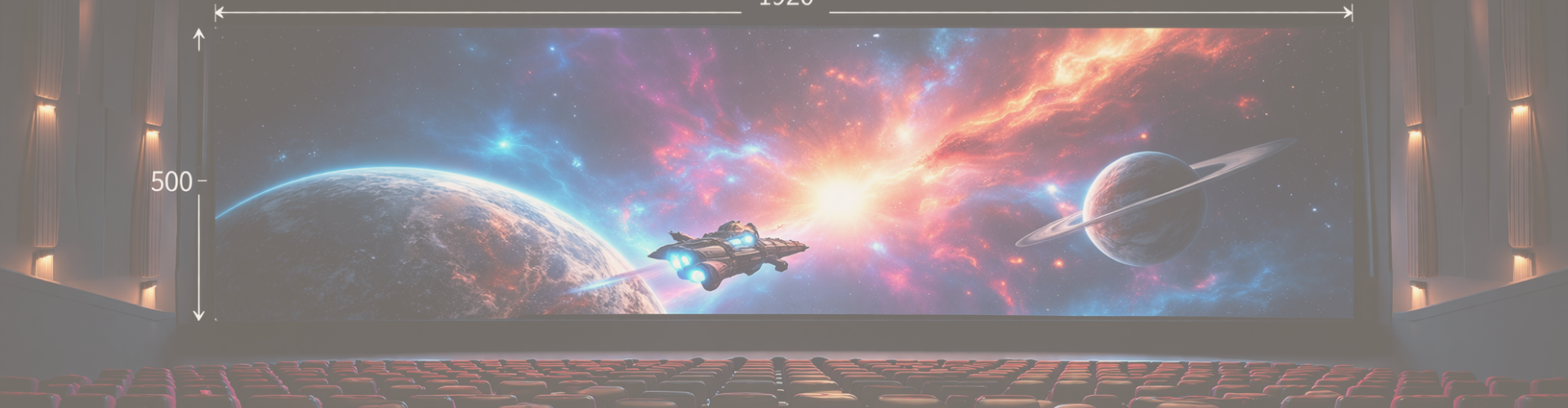
WHY CINEMAS ARE MOVING TO LED
Cinema technology is shifting from projection to direct-view display.
- Consistent brightness across the entire screen, no dim corners
- Higher contrast with true black levels for better visual depth
- No dependency on dark environments like projection systems
- Supports both movie playback and advertising content in one system
HOW TO CHOOSE THE RIGHT LED CINEMA SCREEN
Most buyers struggle here. The decision depends on viewing distance.

Designed for cinema advertising and audience engagement in lobby areas.
- Standard sizes for easy installation in cinema corridors and entrances
- Fine pixel pitch (P1.2–P2.5) for close viewing distance
- Plug-and-play system for quick content updates
- Ideal for movie posters, trailers, and promotions
- Can be used as single units or combined into video walls

Best choice for high-resolution cinema screens with close viewing distance.
- Pixel pitch options from P1.2 to P2.5 for sharp image detail
- Suitable for small to medium-sized cinema halls
- Delivers clear visuals without visible pixelation
- High refresh rate for smooth video playback
- Recommended when the audience seating is closer to the screen

Engineered for installations where space and structure matter.
- Lightweight and thin cabinet design for easier mounting
- Reduces structural load on cinema walls
- Seamless front installation and maintenance
- Clean, modern appearance for premium cinema environments
- Ideal for wall-mounted or space-limited theaters
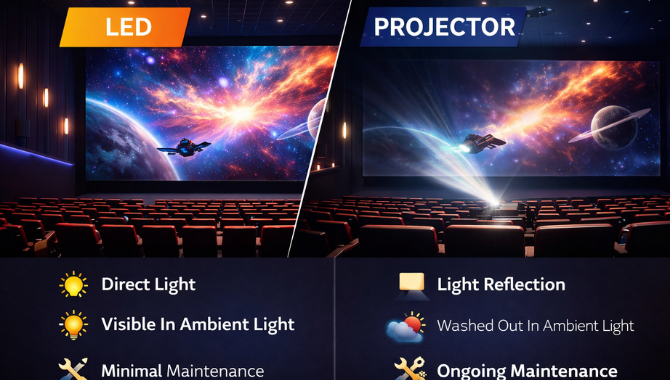
This is the key comparison for cinema investment.
LED emits light directly, while projectors rely on reflection
Better visibility in ambient light, no washed-out images
No lamp replacement, alignment, or optical maintenance
Projectors are cheaper upfront, but require ongoing maintenance
- LED = higher upfront
- Projector = higher long-term operational cost
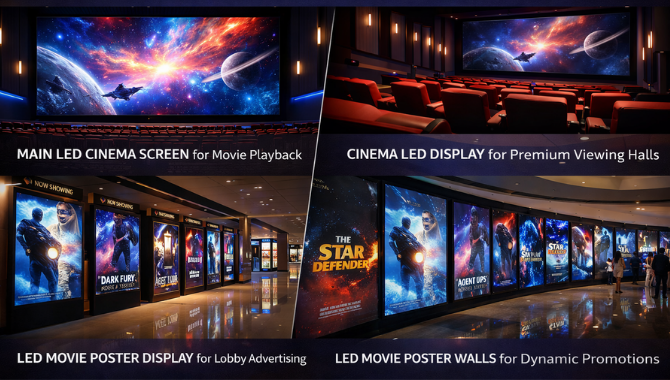
LED cinema systems are used across both screening and commercial areas.
Main LED Cinema Screen for Movie Playback
Cinema LED Display for Premium Viewing Halls
LED Movie Poster Display for Lobby Advertising
LED Movie Poster Walls for Dynamic Promotions
Focus on real cinema performance, not just specs.
High brightness with a uniform image across large screens
High contrast for HDR content and deeper blacks
Fine pixel pitch for detailed image rendering
High refresh rate for smooth motion playback
Long lifespan with stable performance and low maintenance
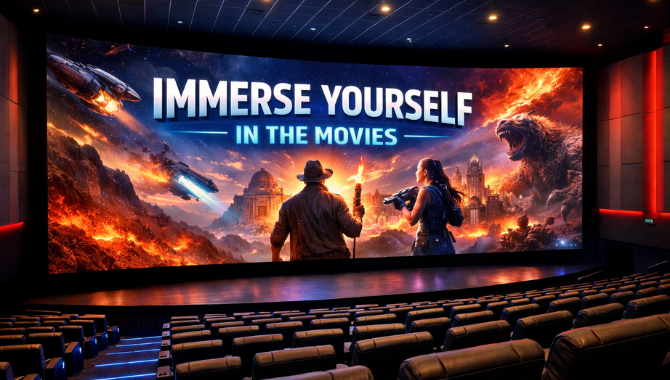

Main LED cinema screen for film playback
Side LED displays for branding or extended visuals
Lobby LED movie poster display for advertising
Fixed wall-mounted or frame-supported installation
Custom screen size and resolution configuration
Structure design based on the theater layout
Remote technical support and system debugging
Export-ready solutions for global deployment
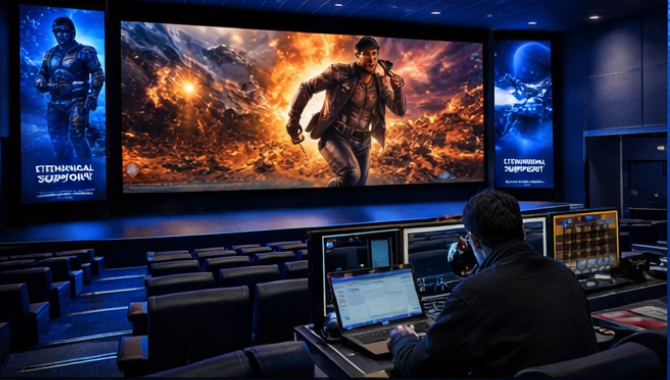
LED Cinema Display – Project Cases


An LED cinema display is a direct-view screen that emits light itself, instead of projecting images.
No projector or reflective screen required
Each pixel generates its own light for better brightness and contrast
Delivers consistent image quality across the entire screen
Suitable for both movie playback and advertising content
The price depends mainly on pixel pitch, size, and configuration.
Fine pixel pitch (P1.2–P1.5) costs more for higher resolution
Larger screens reduce average cost per square meter
Installation, structure, and control system may add to total cost
👉 Contact us for a detailed quotation based on your cinema project
Pixel pitch should match the viewing distance of your audience.
P1.2–P1.5: for close viewing (VIP or small halls)
P1.5–P2.5: for standard cinema seating
P2.5–P4: for large theaters with longer viewing distance
👉 Rule: the closer the audience, the smaller the pixel pitch
LED and projectors serve different needs, but LED offers long-term advantages.
Higher brightness and better visibility in ambient light
No lamp replacement or image fading over time
More stable image without alignment or shadow issues
Higher upfront cost, but lower maintenance over time
Yes, LED cinema screens are fully customizable based on your space.
Flexible screen size and aspect ratio
Custom structure for wall-mounted or frame installation
Integration with audio and control systems
Support for both movie playback and advertising display
👉 Share your cinema layout and requirements for a tailored solution