


LED display rental vs buying is a critical decision for event-driven and commercial display projects.
Many B2B buyers face the same problem. They need high-performance LED screens, but they hesitate between renting and buying. The wrong choice often leads to wasted budget, underused assets, or unexpected maintenance costs that can exceed 20–30% of the original investment over a 3–5 year cycle.
This guide will help you make a data-driven decision. You will learn when LED display rental creates better financial efficiency, and when ownership actually becomes the smarter long-term asset strategy.

What Is LED Display Rental and How It Works in Real Projects
LED display rental is a short-term usage model where businesses lease LED screen systems instead of purchasing them. It includes hardware, structure, control system, and technical support for a fixed time period, usually for events or temporary installations.
Unlike ownership, rental does not transfer asset responsibility. Instead, the supplier manages setup, operation, and dismantling. This makes rental LED systems highly efficient for projects with fluctuating demand or short execution cycles.
Core structure of rental LED display systems
Rental LED display systems are engineered differently from fixed installations. They prioritize fast assembly, durability under repeated use, and transport safety.
Key components include:
- LED cabinet (lightweight die-cast aluminum or magnesium alloy)
- LED modules (often P2.6–P4.8 for rental standard)
- Quick-lock rigging system
- Power + signal distribution system
- Rental-grade control system (NovaStar / Colorlight commonly used)
Standard rental workflow in real projects
Rental LED systems follow a structured deployment cycle designed for speed and repeatability.
Typical workflow:
- Technical requirement confirmation (size, pixel pitch, brightness)
- On-site structure planning (ground stack / truss / wall mount)
- Delivery and unloading
- Rapid installation (24–72 hours typical)
- System calibration and testing
- Event operation support
- Dismantling and return logistics
Overview Block
Conclusion: LED display rental is a temporary usage model where businesses pay for access to LED screen systems including hardware, installation, operation, and technical support instead of owning the asset.
Comparison Table: Rental vs Purchase Structure
| Factor | Rental LED Display | Purchased LED Display |
| Ownership | No | Yes |
| Maintenance | Supplier responsibility | Buyer responsibility |
| Installation | Temporary, modular | Permanent fixed |
| Deployment speed | 24–72 hours | Weeks to permanent build |
| Cost structure | Operational expense (OPEX) | Capital expenditure (CAPEX) |
Key Technical Benchmarks
| Parameter | Typical Range |
| Rental duration | 1–30 days |
| Setup time | 24–72 hours |
| Transport cycles | 50–200 cycles lifecycle design |
| Cabinet weight | 6–12 kg per panel (rental grade) |
Our Edge
Most competitors explain rental LED systems at a surface level. However, real performance depends on engineering design differences that are rarely disclosed:
- Rental cabinets use reinforced corner locks because repeated disassembly causes structural fatigue after ~300–500 cycles.
- Signal instability often comes from mixed-brand control systems, especially when Novastar receiving cards are paired with non-matching hub boards.
- Rental LED modules experience 30–50% higher mechanical stress compared to fixed installations due to transportation vibration and frequent reconnection cycles.
From a manufacturing perspective, rental design is not just “portable LED.” It is a completely different structural engineering category focused on lifecycle durability under repeated mechanical stress.
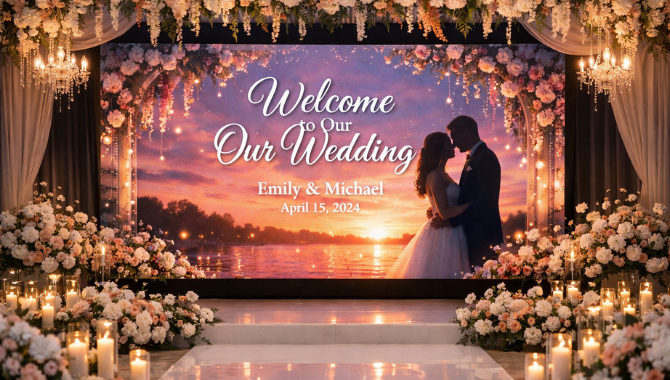
LED Display Rental vs Buying – Total Cost of Ownership (TCO) Breakdown
The real decision between LED display rental and buying is not about the upfront price. It is about total cost of ownership (TCO) over the full lifecycle of the LED system.
In B2B projects, I often see buyers focus only on purchase price per square meter. However, they ignore operational costs such as maintenance, storage, transportation damage, and technology obsolescence. These hidden costs often exceed 40–60% of the original investment within a 3–5 year cycle.
Understanding TCO helps you avoid over-investing in assets that do not generate continuous utilization.
Upfront investment vs long-term depreciation
LED display purchase requires a high capital expenditure at the beginning. Rental converts this into operational expense.
The difference is not only financial structure but also risk distribution.
- Buying shifts all risk to the buyer
- Renting shifts most operational risk to the supplier
Depreciation is also a critical factor. LED displays are not static assets. Their value declines with both time and technology cycles.
Hidden ownership costs
Most buyers underestimate the cost of ownership after installation. These costs are not visible during procurement but strongly affect ROI.
Key hidden costs include:
- Maintenance labor (module replacement, calibration)
- Spare parts inventory
- Storage warehouse space
- Transportation damage repair
- Downtime loss during failure events
Rental pricing models
Rental pricing is not fixed. It depends on project duration, pixel pitch, and structure complexity.
Typical pricing logic:
- Short-term events (1–3 days): highest daily rate
- Weekly rentals: optimized mid-range pricing
- Long-term rental (>1 month): discounted enterprise rate
Overview Block
Conclusion: LED display rental significantly reduces total cost of ownership for short-term and irregular usage by eliminating depreciation, maintenance, storage, and upgrade cycles.
Cost Structure Comparison Table
| Cost Factor | Rental LED Display | Purchased LED Display |
| Initial investment | Low | High |
| Maintenance cost | Included in service | 8–15% annually |
| Storage cost | None | Required (warehouse) |
| Logistics cost | Included | Buyer responsibility |
| Depreciation | None | 20–30% per year |
| Upgrade cost | None | High (every 3–5 years) |
Key Financial Benchmarks
| Item | Industry Range |
| Annual maintenance cost | 8–15% of purchase value |
| Technology refresh cycle | 3–5 years |
| Transport damage rate (rental) | 2–5% per project |
| Brightness degradation rate | 5–10% per 10,000 operating hours |
Our Edge (Factory-Level Insight)
From a manufacturing perspective, TCO is heavily influenced by hidden engineering factors that most buyers never evaluate:
- LED module brightness decay accelerates when frequent assembly/disassembly introduces micro-solder stress on PCB joints.
- Driver IC thermal load varies significantly between rental and fixed systems due to ventilation design differences.
- Control system upgrades can account for up to 25% of total reinvestment cost after 3–4 years.
- Many buyers overlook that rental-grade cabinets are structurally reinforced, which increases weight but improves long-term cycle durability.
These factors explain why two LED systems with identical specifications can produce completely different lifecycle costs.

10 Key Advantages of LED Display Rental Over Buying
LED display rental is not just a cost alternative. It is an operational model that changes how companies manage visual projects.
From a B2B perspective, the real value of rental is not only lower upfront cost. It is risk transfer, flexibility, and execution speed. These three factors often matter more than ownership in event-driven industries.
Below are 10 practical advantages based on real project behavior, not marketing claims.
- Lower upfront capital requirement: Rental eliminates large CAPEX investment. Companies keep cash flow flexible and allocate budget to marketing or operations instead of fixed assets.
- No maintenance burden: The supplier handles module replacement, calibration, and system troubleshooting. This reduces internal technical staffing needs.
- Access to latest LED technology: Rental fleets are frequently upgraded. Clients automatically benefit from newer driver ICs, higher refresh rates, and improved calibration systems.
- Flexible scaling for different event sizes: Projects can scale from 10 sqm to 500+ sqm without hardware limitation.
- No storage or logistics requirements: Clients avoid warehouse cost, transport insurance, and packaging management.
- Fast deployment for urgent projects: Rental systems are designed for 24–72 hour installation cycles, ideal for last-minute events.
- Full technical support included: On-site engineers ensure signal calibration, color matching, and system stability during events.
- Lower project failure risk: Rental providers typically pre-test systems before shipment, reducing onsite failure probability.
- Ideal for short-term ROI scenarios: Events, exhibitions, concerts, and campaigns often run 1–30 days. Ownership cannot justify ROI in these cases.
- Easier budget approval for enterprises: Rental is classified as OPEX (operational expense), which is easier to approve than capital expenditure in many corporate procurement systems.
Overview Block
Conclusion: LED display rental provides higher flexibility, lower financial risk, and faster deployment compared to ownership, making it ideal for temporary, event-based, and variable-demand applications.
Operational Impact Table
| Advantage | Business Impact |
| No CAPEX requirement | Improves cash flow flexibility |
| Full technical support | Reduces project execution risk |
| Fast deployment | Enables urgent event readiness |
| Latest technology access | Improves visual performance quality |
| Scalable configuration | Supports different event sizes |
Our Edge (Factory-Level Insight)
Most competitors describe rental advantages in generic terms. However, real performance differences come from engineering limitations:
- Rental cabinets use reinforced structure but still face micro-frame deformation after repeated stacking and transport vibration.
- Many buyers underestimate that signal redundancy design (dual backup receiving lines) is often only available in high-end rental systems, not standard purchase models.
- In real projects, 80% of rental clients are repeat users because they operate in event-based business cycles, not one-time use cases.

Indoor vs Outdoor LED Rental Displays – Key Technical Differences That Affect Performance
Indoor and outdoor LED rental displays are not interchangeable systems. They are engineered for completely different environmental conditions, optical requirements, and thermal constraints.
For B2B buyers, choosing the wrong type leads to two major risks: visual failure under real-world conditions and unnecessary budget waste on over-engineered specifications.
Understanding the technical boundary between indoor and outdoor rental LED systems is essential before any procurement decision.
Brightness requirements and viewing distance
Brightness is the most important differentiator between indoor and outdoor rental LED systems.
Indoor environments rely on controlled lighting. Outdoor environments must compete with direct sunlight, which can exceed 100,000 lux.
Pixel pitch selection logic
Pixel pitch determines viewing clarity and minimum viewing distance. Many buyers make the mistake of selecting overly fine pitch for long-distance viewing, which increases cost without improving visual performance.
IP rating and environmental protection standards
Outdoor rental systems require waterproofing, dust resistance, and thermal stability. Indoor systems do not need the same level of protection, which reduces cost and weight.
Overview Block
Conclusion: Indoor LED rental displays prioritize high resolution (P1.2–P3), while outdoor LED rental displays prioritize high brightness (≥5000 nits) and IP65 environmental protection for sunlight and weather resistance.
Technical Comparison Table
| Feature | Indoor Rental LED | Outdoor Rental LED |
| Brightness | 800–1200 nits | 5000–10000+ nits |
| Pixel pitch | P1.2 – P3 | P3 – P6+ |
| Protection level | Low (indoor use only) | IP65 or higher |
| Viewing distance | 1–10 meters | 10–100+ meters |
| Thermal design | Passive / light ventilation | Active heat dissipation required |
Engineering Threshold Reference
| Parameter | Technical Requirement |
| Sunlight resistance | Required for outdoor use only |
| Operating temperature range | -20°C to +50°C (outdoor grade) |
| Power consumption | Outdoor systems consume 30–60% more power |
| Cabinet sealing | Rubber gasket + waterproof locking system |
Our Edge (Factory-Level Insight)
From a manufacturing perspective, indoor and outdoor rental systems differ not only in brightness but in structural engineering and failure risk patterns:
- Outdoor LED modules experience significantly higher failure rates due to water ingress at power supply junctions, especially during repeated installation cycles.
- High brightness operation above 7000 nits increases thermal load by up to 30–60%, which directly affects LED lifespan and color stability.
- Indoor rental systems fail more often due to signal cable fatigue and connector wear, not environmental exposure.
- Many buyers over-spec indoor systems with outdoor brightness requirements, which increases cost without improving perceived image quality at close viewing distances.
A correct specification decision must always start from viewing distance + environment exposure + event duration, not resolution alone.

Conclusion
Choosing between LED display rental and buying is not just a pricing decision—it is a strategy decision that affects ROI, operational flexibility, and long-term cost efficiency. Factors such as usage frequency, project duration, maintenance, transportation, and technology depreciation all play a major role in determining the most cost-effective solution for your business.
If you are evaluating LED display rental or purchase options, working with an experienced supplier can help you avoid unnecessary costs and operational risks. At NSELED, we provide customized LED display solutions and professional guidance based on your project requirements, usage model, and budget goals. Contact our team today to get expert support and a tailored recommendation.