


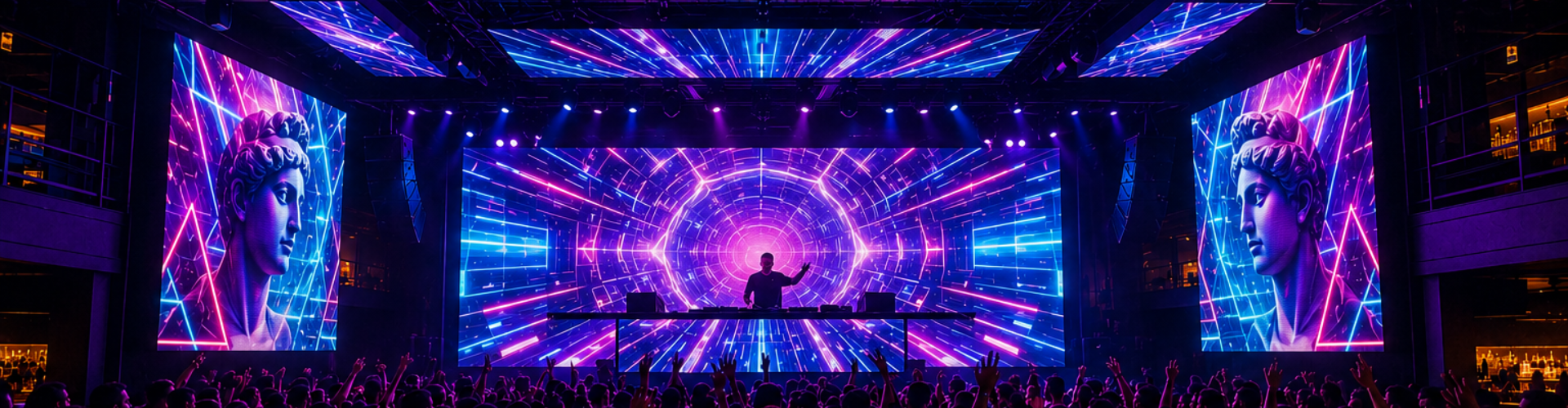
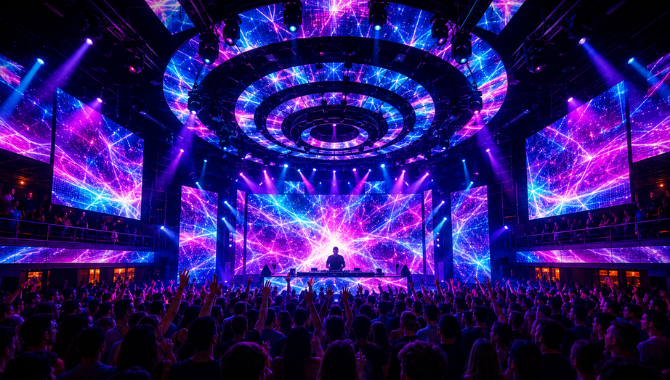
From DJ booth backdrops to synchronized dance floor visuals, nightclub LED screens have become a core part of entertainment venue design, branding, and revenue generation.
Unlike traditional projection systems or LCD video walls, LED display systems provide higher brightness, flexible installation options, seamless large-format visuals, and reliable operation under demanding nightclub conditions such as smoke, vibration, low ambient light, and continuous operation.
Application Scenarios for Nightclub LED Screens
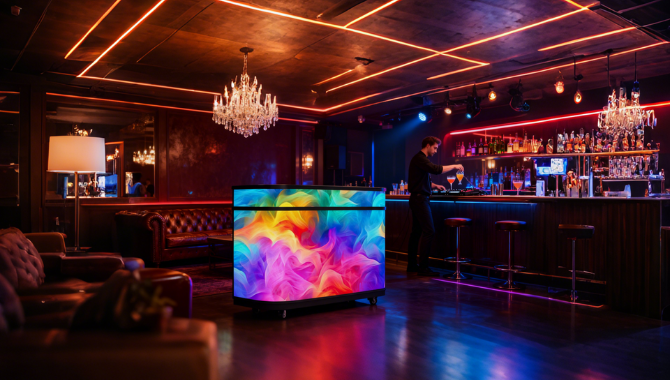
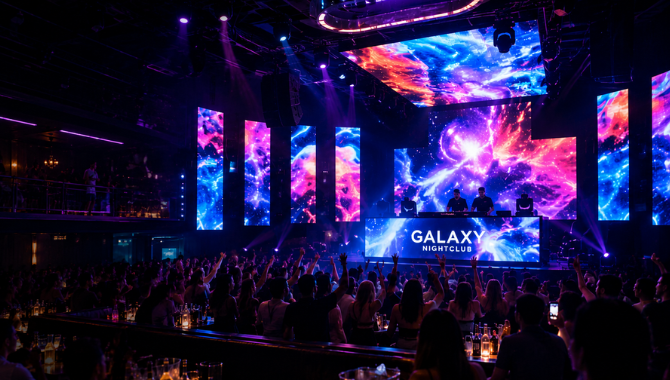
DJ booth LED installations are one of the most common nightclub applications.
Primary Functions
- Visual synchronization with music
- DJ branding
- Live visual effects
- Event promotion
- Interactive crowd engagement
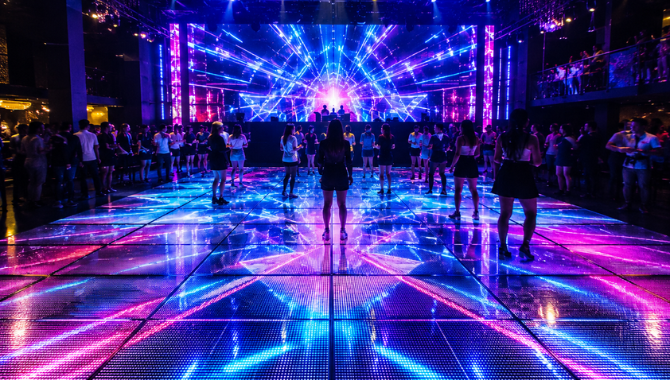
Interactive dance floors help venues create immersive experiences and increase visitor engagement.
Common Uses
- Motion-reactive visuals
- Interactive lighting patterns
- Themed event environments
- VIP zone enhancement

Ceiling-mounted LED systems create a fully immersive visual environment.
Suitable For
- EDM clubs
- High-energy dance venues
- Performance stages
- Festival-style indoor venues
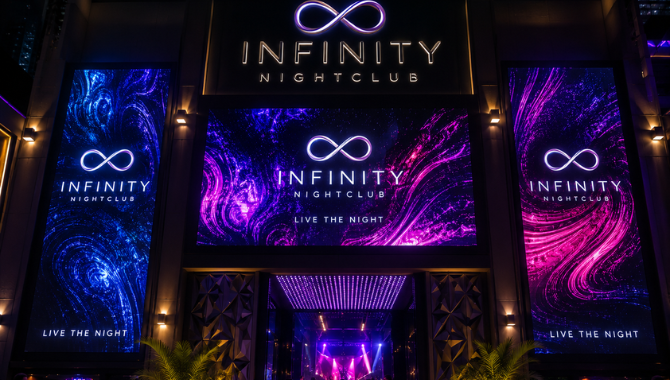
Entrance LED systems help venues improve visibility and foot traffic.
Common Applications
- Event promotion
- Queue entertainment
- Dynamic branding
- Outdoor attraction displays
Recommended LED Solutions for Nightclubs

Fine-pitch LED delivers detailed visuals at short viewing distances, making it suitable for premium indoor spaces.
Key Characteristics
- High image clarity
- Low pixel visibility
- Wide viewing angles
- Smooth video playback

Advantages: Fast installation, Lightweight cabinets, Flexible configuration, Easy transportation
Typical Features
- Die-casting aluminum cabinets
- Quick-lock systems
- Front and rear maintenance
- Rigging compatibility

Creative LED systems help venues differentiate visually and build memorable environments.
Best For:
- Curved walls
- Cylindrical columns
- Tunnel installations
- Artistic stage concepts
- Why Nightclubs Use It
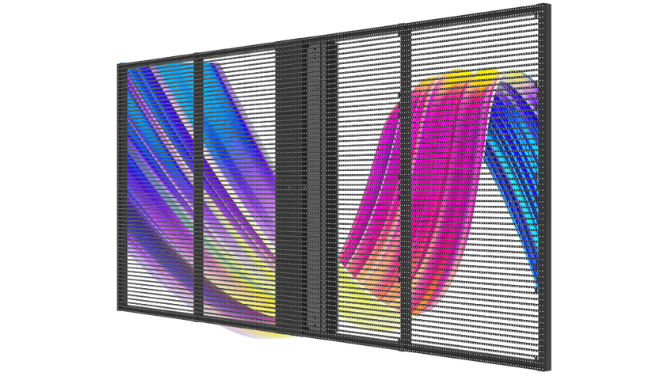
Best For: Glass installations, Modern luxury clubs, Entrance windows, Architectural integration
Operational Advantages
- Maintains open interior design
- Allows visibility through glass
- Supports branding without blocking light
- Creates futuristic aesthetics
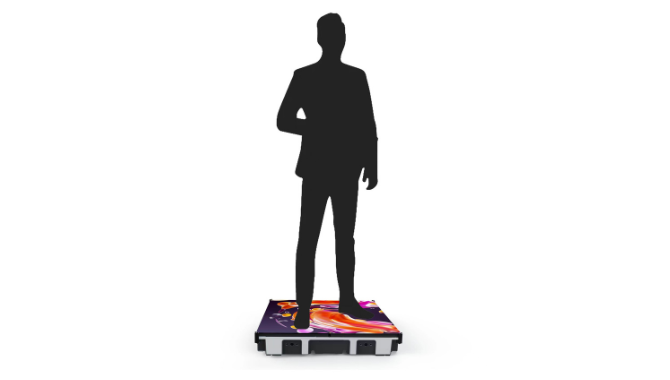
Best For: Interactive entertainment spaces, Performance venues, EDM clubs
Key Requirements
- High impact resistance
- Waterproof protection
- Anti-slip surface
- Stable load-bearing structure
Technical Considerations Before Buying Nightclub LED Displays

Choosing overly fine pitch increases project cost unnecessarily, while large pitch may reduce image quality for close viewers.

Recommended Standard ≥3840Hz. Low refresh displays may flicker on cameras or during strobe lighting effects,


Front service access, Modular replacement structure, Tool-free maintenance, Operational Benefit, Reduces downtime during venue operation.

Smoke, Vibration, Continuous operation, Humidity, Heat accumulation, Recommended Features, Stable driver ICs, Efficient heat dissipation…
Many clubs originally relied on:
- Projectors
- LCD displays
- Static lighting effects
- Printed branding panels
| Limitation | Operational Impact |
|---|---|
| Low brightness | Poor visibility under stage lighting |
| Visible bezels | Interrupted visual experience |
| Limited scalability | Difficult to create immersive layouts |
| High maintenance | Frequent replacement and calibration |
| Fixed formats | Restricted creative freedom |
| Motion blur | Reduced visual quality during fast content playback |
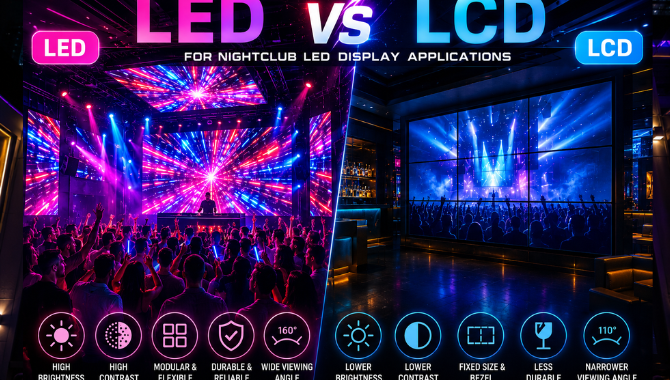
| Feature | LED Display | LCD Video Wall |
|---|---|---|
| Seamless large format | Yes | No |
| Brightness performance | Excellent | Moderate |
| Flexible shapes | Yes | Limited |
| Viewing angle | Wide | Moderate |
| Durability | High | Moderate |
| Suitable for stage visuals | Excellent | Limited |
| Scalability | High | Restricted |
| Long-term maintenance | Lower | Higher bezel-related servicing |
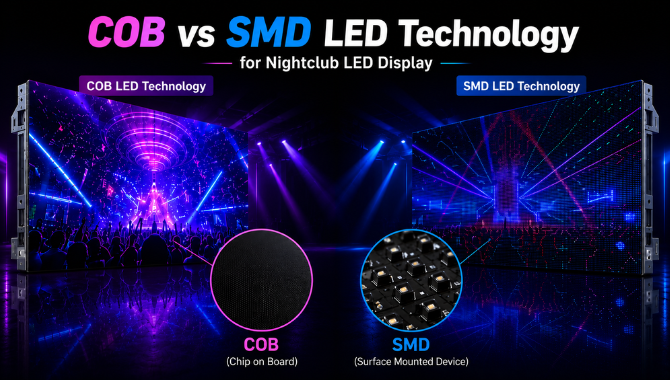
| Feature | COB LED | SMD LED |
|---|---|---|
| Surface protection | Higher | Standard |
| Contrast performance | Excellent | Good |
| Close-viewing quality | Excellent | Very good |
| Repair flexibility | Moderate | Easier |
| Cost | Higher | More economical |
| Recommended for | Premium clubs | Standard nightclub installations |
Stronger Audience Engagement
Dynamic LED visuals increase audience immersion and improve overall venue atmosphere.
Practical Impact
- Higher customer retention
- Increased repeat visits
- More social media exposure
- Better event memorability
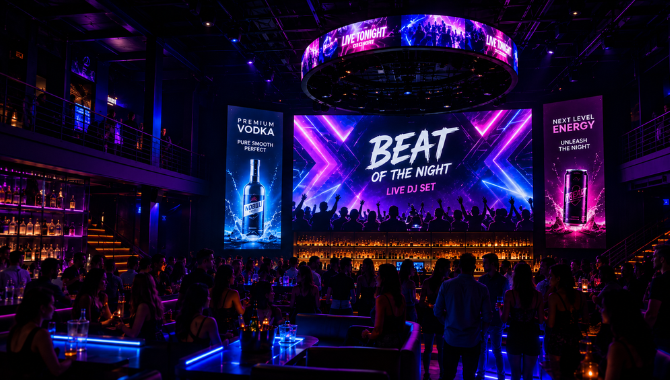
LED systems can also function as digital advertising platforms
Revenue Opportunities
- Beverage promotions
- Brand sponsorships
- Event partnerships
- VIP promotions
Custom LED environments help clubs establish recognizable visual identities.
Branding Advantages
- Signature visual aesthetics
- Consistent event themes
- Enhanced luxury perception
- Stronger online marketing content
Compared with projector-based systems, LED displays typically require:
- Less calibration
- Lower replacement frequency
- Reduced downtime
- Lower maintenance intensity
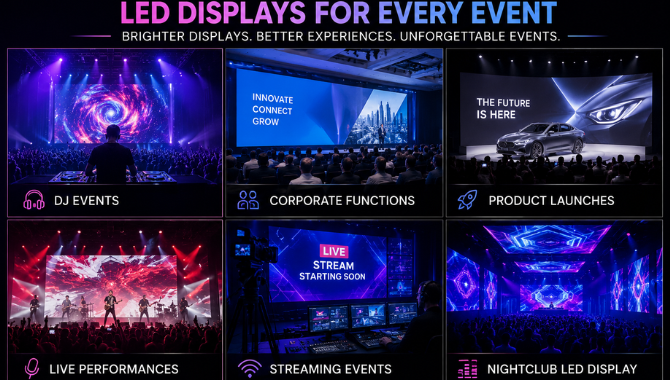
Modern venues increasingly host:
- DJ events
- Corporate functions
- Product launches
- Live performances
- Streaming events
LED systems allow rapid visual reconfiguration without physical redesign.
NSE support LED display projects for:
- Nightclubs
- DJ stages
- Music venues
- Bars
- Live entertainment environments
- Event production companies
For most indoor nightclub applications, P2.5 to P3.9 is commonly used. Fine-pitch LED below P2.0 is typically selected for VIP or close-viewing environments.
Indoor nightclub environments generally require 800–2000 nits depending on stage lighting intensity and installation location.
Yes. Modern modular LED systems support curved, circular, cylindrical, and custom creative structures for immersive venue designs.
Professional LED dance floors are designed with reinforced structures, anti-slip surfaces, and high load-bearing capacity for commercial entertainment use.
Most professional LED systems support widely used control platforms such as Novastar and Colorlight for synchronized content management and stage integration.
Commercial-grade LED systems commonly provide 50,000–100,000 hours of operational lifespan depending on usage conditions and maintenance practices.
Yes. Professional LED solutions can integrate with stage control systems, media servers, and lighting controllers for synchronized visual performance.
Rental LED systems prioritize portability, fast assembly, and repeated installation, while fixed LED systems are optimized for permanent venue integration and long-term operation.