


Introduction
Outdoor display projects face a simple but costly problem: a screen must stay bright, reliable, and readable while facing sunlight, rain, dust, heat, and long operating hours.
A professional outdoor LED display screen solves this problem through high brightness, weather-resistant construction, modular design, and dedicated control systems. However, buyers still need to choose the right pixel pitch, protection level, cabinet design, power system, and maintenance method for each project.
The wrong specification can create unnecessary costs. A screen with excessive brightness may waste energy, while an unsuitable pixel pitch can increase the budget without improving the viewing experience. Therefore, B2B buyers should evaluate the complete system instead of comparing only the price per square meter.
This guide explains how outdoor LED display screens work, where businesses use them, which specifications matter, how much they may cost, and how to choose a reliable manufacturer.
What Is an Outdoor LED Display Screen?
An outdoor LED display screen is a large-format digital display built from thousands of LED pixels. Unlike conventional indoor displays, outdoor models must maintain image visibility under strong ambient light while protecting electronic components from rain, dust, temperature changes, and other environmental conditions.
The screen normally consists of multiple LED modules assembled into cabinets. Each cabinet contains the display modules and supporting components such as power supplies, receiving cards, cables, and structural parts. A control system sends image data to the cabinets and manages brightness, grayscale, refresh rate, and other display functions.
From a factory perspective, the outdoor label should never mean simply “a brighter LED screen.” A reliable outdoor product requires coordinated design across the LED package, PCB, cabinet, power system, waterproofing, heat dissipation, and calibration process.
How Outdoor LED Display Screens Work
An outdoor LED display receives video or image content from a media player, computer, or control system. The controller processes the content and distributes the required data to receiving cards inside the LED cabinets.
The receiving cards then control individual LED modules. Each pixel normally combines red, green, and blue LED components. By adjusting the intensity of these three colors, the display can reproduce a wide range of colors and create moving images, advertisements, text, or video.
Brightness control is especially important outdoors. The display must produce enough luminance to remain visible during daylight, but it should also reduce brightness when ambient light becomes lower. Excessive brightness does not automatically mean better performance. It can increase power consumption, visual discomfort, and light pollution.
The control system also influences image quality. Modern systems can manage grayscale, refresh rate, color calibration, and brightness adjustment. These functions become increasingly important when the screen is used for high-quality advertising, live events, or camera-facing applications.
From a manufacturing perspective, the final image depends on more than the controller. LED binning, module consistency, PCB quality, driving IC performance, and factory calibration all influence the uniformity of the finished screen.
Main Components of an Outdoor LED Display Screen
A complete outdoor LED display screen normally includes several interconnected components:
- LED modules: The primary visual units containing LED pixels and driver circuits.
- LED cabinets: Structural enclosures that hold modules and internal electronics.
- Power supplies: Convert incoming electrical power into the voltage required by the display system.
- Receiving cards: Distribute image data to individual modules or cabinet sections.
- Sending and control systems: Process and transmit video signals to the display.
- Cabinet structure: Provides mechanical support and environmental protection.
- Cables and connectors: Carry power and data between system components.
- Cooling and heat-dissipation components: Help control operating temperature.
For outdoor applications, the cabinet deserves particular attention. An IP-rated enclosure helps protect internal electronics from water and dust, while the mechanical structure must also withstand wind and long-term environmental exposure. Outdoor commercial displays commonly use IP65-level protection, although the appropriate protection level depends on the specific project and installation environment.
A factory should also test complete cabinets rather than relying only on individual module performance. Water protection, electrical connections, thermal behavior, and calibration consistency can change after assembly.

Types and Applications of Outdoor LED Display Screens
Outdoor LED technology covers a wide range of products. The best option depends on whether the project requires permanent advertising, temporary event use, stadium visibility, architectural integration, or closer viewing.
Outdoor Advertising and Digital Billboard Displays
Outdoor advertising remains one of the most common applications for LED display screens. Businesses, media operators, shopping centers, roadside advertisers, and property owners use large LED displays to replace static signs with dynamic content.
Digital billboards provide several advantages over printed advertising. Operators can update content remotely, schedule different advertisements, and use animation or video to attract attention. This flexibility makes LED technology particularly useful for advertising networks with multiple campaigns.
Large roadside displays normally require a relatively large pixel pitch because viewers may be tens of meters away. P8, P10, P12, or larger pitches can be appropriate depending on the screen size and viewing distance. However, buyers should not select pixel pitch from a standard product list alone. The actual audience distance should drive the decision.
For example, a P4 screen may deliver excellent image quality at a relatively close viewing distance, but its additional pixel density may provide little visible benefit for a billboard viewed from 50 meters away. In that situation, the buyer could spend more without gaining meaningful visual improvement.
Stadium, Event, and Commercial LED Displays
Stadiums use outdoor LED screens for scoreboards, advertising, live video, replays, and audience engagement. These applications require strong brightness, wide viewing angles, high refresh rates, and reliable operation.
Perimeter displays introduce additional requirements. Players, spectators, cameras, and advertisers may all view the screen from different positions. Therefore, consistent brightness and color across the entire display become important.
Outdoor events and concerts have different priorities. Rental screens must support frequent assembly and transportation. Cabinets need to be lightweight enough for handling while maintaining adequate structural strength and weather protection.
Commercial buildings and shopping centers may use LED screens on façades, entrance areas, plazas, and outdoor advertising structures. These installations often remain in place for years, so maintenance access, energy consumption, and structural safety become more important than portability.

Fixed, Rental, Transparent, and Small-Pitch Outdoor LED Display Options
Fixed outdoor LED displays are designed for long-term installation. They are common in advertising, commercial buildings, transportation areas, and public spaces. Buyers normally prioritize durability, weather protection, structural stability, and easy maintenance.
Rental outdoor LED displays are designed for temporary events. Their cabinets usually prioritize fast installation, transportation efficiency, and repeated assembly.
Transparent LED displays use a more open structure that allows some light and visibility to pass through. They can work well for architectural façades and glass structures where a conventional solid cabinet would block too much of the building’s appearance.
Small-pitch outdoor LED displays provide higher pixel density for applications where viewers stand closer to the screen. Industry development has continued toward smaller outdoor pixel pitches as businesses seek better image quality without moving entirely to indoor-style displays.
The key point is that “smaller pitch” does not automatically mean “better choice.” Buyers should match pixel density to the actual viewing environment.
Key Specifications of Outdoor LED Display Screens
Specifications determine whether an outdoor LED display can perform reliably in a specific environment. Buyers should evaluate these parameters as a system rather than choosing individual numbers in isolation.
Pixel Pitch, Brightness, and Viewing Distance
Pixel pitch is the distance between the centers of adjacent pixels. A smaller pixel pitch creates higher pixel density and generally produces sharper images at shorter viewing distances.
However, the correct pitch depends on the application. Outdoor advertising viewed from a long distance can use a larger pitch, while a commercial façade or event screen may require a smaller pitch.
Brightness is equally important. Outdoor displays need significantly more brightness than typical indoor screens because sunlight can wash out low-brightness images. Current outdoor products commonly offer brightness levels around several thousand nits, with the required level depending on installation orientation, local sunlight, content, and regulations.
From a factory perspective, buyers should look beyond the maximum brightness number. A reliable display should maintain brightness consistency across modules and support appropriate brightness adjustment. A screen that reaches a very high peak brightness but has poor uniformity does not necessarily deliver better real-world performance.
Viewing distance should therefore guide the specification process:
Viewing distance → pixel pitch → screen resolution → required budget
This approach is more practical than selecting the smallest available pixel pitch.
IP Rating, Refresh Rate, and Grayscale
The IP rating indicates the enclosure’s protection against the entry of solids and water. Outdoor LED displays often use IP65-level protection, but the exact protection requirements depend on whether the screen is fully exposed, partially sheltered, or installed in a demanding environment.
Buyers should also understand that an IP rating does not describe every aspect of outdoor durability. Cabinet sealing, module design, connectors, cable entry points, drainage, coatings, and installation quality also influence long-term performance.
Refresh rate affects how smoothly the display handles moving content and how it appears on cameras. A high refresh rate is particularly important for stadiums, concerts, live broadcasts, and commercial installations that may be filmed.
Grayscale determines how accurately the display reproduces different levels of brightness within each color. Higher grayscale capability can help the screen produce smoother gradients and more detailed images.
These specifications work together. A display with strong brightness but poor calibration can still show visible differences between modules.
Power Consumption, Heat Dissipation, and Service Life
Outdoor LED displays can consume substantial electricity because they operate at high brightness and often cover large areas. Therefore, buyers should consider both maximum and typical power consumption.
Power consumption also creates a thermal challenge. Electrical energy ultimately becomes heat, and outdoor cabinets may receive additional heat from direct sunlight. Poor thermal management can accelerate component aging and reduce system stability.
A professional factory should consider:
- Power supply efficiency
- PCB design
- Driving IC characteristics
- Cabinet ventilation
- Heat paths
- Brightness control
- Operating temperature
- Component quality
The driving IC deserves particular attention. Different IC designs can have different power and thermal characteristics when the display operates at high refresh rates. In mass production, these details can influence long-term reliability even when two products appear identical on a basic specification sheet.
Service life should therefore be evaluated together with operating conditions. A manufacturer’s claimed lifespan does not guarantee identical performance in every environment. Continuous operation at high brightness, extreme temperatures, poor ventilation, or unstable power can change the actual service conditions.
How to Choose the Right Outdoor LED Display Screen
Choosing an outdoor LED display should start with the project environment rather than the product catalog.
Choose Based on Installation Environment, Viewing Distance, and Screen Size
First, identify where the screen will be installed.
Consider:
- Direct sunlight or shade
- Rain and humidity
- Dust exposure
- Coastal or corrosive environments
- Ambient temperature
- Wind conditions
- Audience distance
- Installation height
- Screen dimensions
Next, determine the typical viewing distance. The distance helps determine pixel pitch, while screen size determines the total pixel count required for the desired image quality.
For example, a large roadside billboard viewed from far away does not necessarily need a fine-pitch display. A smaller commercial screen positioned near pedestrians may need higher pixel density.
The screen’s orientation also matters. A south-facing or west-facing installation can experience strong direct sunlight during parts of the day, which may require different brightness planning from a screen installed under a building canopy.
Evaluate Image Quality, Protection, Power, and Maintenance
After defining the environment, evaluate the display as a complete system.
Check brightness, pixel pitch, refresh rate, grayscale, viewing angle, color consistency, and calibration quality for image performance.
Then evaluate IP protection, cabinet construction, power supply design, heat dissipation, and component quality for reliability.
Maintenance also deserves early consideration. A screen that requires extensive dismantling to replace a single module can create high labor costs over its operating life.
From a factory perspective, this is where product design creates a major difference. Good manufacturers consider module replacement, cable routing, cabinet access, spare-part compatibility, and calibration during the original engineering stage.
Compare Manufacturers, Quality, and After-Sales Support
Do not compare outdoor LED screen manufacturers only by price per square meter.
A professional B2B evaluation should include:
- LED package quality
- Production capacity
- Factory testing procedures
- Calibration process
- Aging tests
- Dead pixel control
- Power supply quality
- Cabinet construction
- Warranty terms
- Spare parts availability
- Technical support
- OEM and ODM capability
Ask the manufacturer how it controls quality during mass production. For example, dead-pixel performance depends not only on the LED lamp itself but also on soldering, PCB quality, module assembly, environmental stress, and final inspection.
A supplier should be able to explain its production and testing process rather than simply providing a product specification sheet.
Outdoor LED Display Screen Installation and Maintenance
A high-quality display can still fail if the installation environment and engineering design are inadequate.
Structural, Electrical, and Weather Protection Requirements
Large outdoor LED displays create significant wind-load considerations. Wall-mounted, pole-mounted, and freestanding displays require different structural solutions.
The installation structure should account for:
- Screen weight
- Wind load
- Building structure
- Mounting method
- Local environmental conditions
- Maintenance access
- Electrical requirements
Electrical planning is equally important. Large displays may require dedicated power distribution, appropriate grounding, surge protection, and stable electrical connections.
Weather protection should cover more than the front of the LED module. Cabinet joints, cable connections, power inputs, drainage, and rear structures also need proper protection.
Maintenance Methods and Common Outdoor Display Problems
Regular maintenance helps prevent small problems from becoming major failures.
Common outdoor display issues include:
- Dead pixels
- Module failures
- Uneven brightness
- Color differences
- Water ingress
- Power supply failures
- Overheating
- Loose cables
- Control-system interruptions
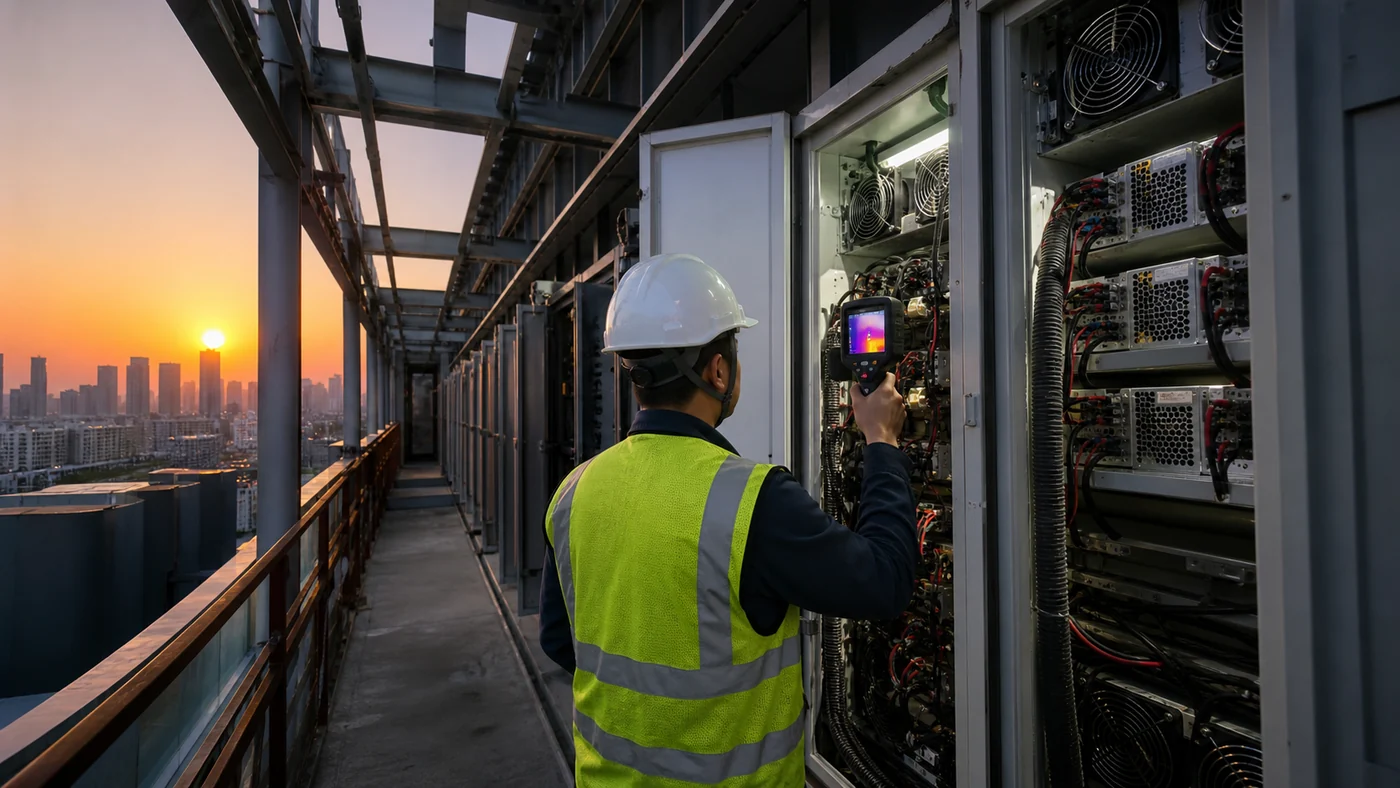
Front maintenance can simplify servicing when the rear of the display is difficult to access. Rear maintenance can be practical when sufficient space exists behind the screen.
Factory calibration also plays an important role in long-term image consistency. When a replacement module has a different optical performance from the original modules, visible color or brightness differences can appear. Professional manufacturers should maintain appropriate module binning and calibration procedures to reduce these differences.
How Much Does an Outdoor LED Display Screen Cost?
There is no single standard price for an outdoor LED display screen. The final project cost depends on the display specification, screen dimensions, installation method, control system, structure, transportation, and maintenance requirements.
Main Factors Affecting Outdoor LED Display Screen Price
The most important factors include:
- Pixel pitch
- Screen size
- LED package
- Brightness
- Cabinet material
- IP protection
- Refresh rate
- Control system
- Power supply
- Maintenance method
- Installation structure
Pixel pitch has a direct impact on pixel density. A smaller pitch requires more LED pixels per square meter, which generally increases component requirements and cost.
Screen size also matters. A large display requires more modules, cabinets, power supplies, cables, structural materials, and installation work.
The LED package is another important cost variable. Different packages can have different optical performance, reliability, brightness, and long-term consistency.
Therefore, two screens with the same pixel pitch can still have significantly different prices because their components and engineering standards differ.
Initial Cost vs. Total Cost of Ownership
B2B buyers should distinguish between purchase price and total cost of ownership (TCO).
TCO can include:
Display + transportation + installation + electricity + maintenance + spare parts + replacement costs
A low-cost display may look attractive during quotation comparison. However, higher power consumption, difficult maintenance, frequent module replacement, or poor technical support can increase the long-term cost.
For distributors and project contractors, reliability also has commercial value. A display that performs consistently reduces service calls and protects the buyer’s relationship with the end customer.
Outdoor LED Display Screen Manufacturer Buying Guide
Choosing the right manufacturer can be as important as choosing the right product.
Manufacturer vs. Supplier vs. System Integrator
An LED display manufacturer produces the display hardware and controls key aspects of product design, assembly, testing, and quality control.
A supplier or distributor may purchase products from manufacturers and resell them to customers. Distributors can provide local inventory and service, but buyers should understand where the products are actually manufactured.
A system integrator focuses on combining LED displays with control systems, structures, installation, content management, and other project components.
For complex projects, working with an experienced manufacturer and integrator can provide advantages. The manufacturer understands the hardware, while the integrator can manage site-specific engineering.
For B2B buyers, the important question is not simply “factory or supplier?” It is whether the company can provide reliable products, technical support, customization, documentation, and long-term service.
What B2B Buyers Should Check Before Placing an Order
Before placing an order, buyers should request detailed technical information rather than relying on a short quotation.
Check:
- Exact pixel pitch and LED package
- Brightness specification and measurement conditions
- IP protection for front and rear sections
- Cabinet dimensions and weight
- Maximum and typical power consumption
- Refresh rate and grayscale
- Operating temperature
- Maintenance method
- Warranty terms
- Spare-parts policy
- Quality-control and testing process
- Delivery and installation support
Buyers should also request samples or arrange product testing for large projects when practical.
For distributors, consistency is especially important. A manufacturer should be able to reproduce similar color, brightness, mechanical dimensions, and electrical performance across different production batches.
Outdoor LED Display Screen Trends
Outdoor LED technology continues to move toward higher image quality, lower operating costs, and smarter system management.
Smaller Pixel Pitches and Higher Image Quality
Outdoor displays are gradually moving toward smaller pixel pitches in applications where audiences stand closer to the screen. This trend allows businesses to use LED technology in locations that previously required other display technologies.
However, the market is not simply moving toward the smallest possible pitch. Practical projects still need to balance resolution, viewing distance, screen size, and budget.
Better calibration and improved LED packaging are also important. Higher pixel density only creates real value when the display can maintain consistent brightness and color across the entire screen.
Energy Efficiency, Smart Monitoring, and Sustainable Designs
Energy consumption has become an increasingly important consideration for large outdoor displays. Manufacturers are working to reduce operating power through more efficient components, better power management, brightness adjustment, and improved thermal design.
Smart monitoring is also becoming more useful. Remote systems can monitor temperature, power status, cabinet conditions, and display faults. This approach allows operators to identify problems before they cause extended downtime.
For large advertising networks and public displays, remote monitoring can reduce unnecessary site visits and maintenance costs.
Sustainability is therefore not limited to using less electricity. Buyers should also consider product lifespan, component replacement, repairability, spare parts, and the ability to maintain the display over many years.
Frequently Asked Questions About Outdoor LED Display Screens
What Is the Best Pixel Pitch for an Outdoor LED Display Screen?
There is no single best pixel pitch for every outdoor project. P4–P6 can suit closer viewing, while P8–P10 or larger pitches can work well for distant advertising and large venues. The final choice should consider viewing distance, screen size, content, brightness, and budget rather than pixel pitch alone.
How Long Does an Outdoor LED Display Screen Last?
A professional outdoor LED display can provide many years of service when manufacturers use reliable components and users maintain the system properly. Actual lifespan depends on brightness, operating hours, temperature, power quality, environmental exposure, and maintenance. A factory’s component selection and production quality also strongly influence long-term reliability.
Conclusion
An outdoor LED display screen is more than a collection of bright LED modules. It is a complete system that must balance image quality, weather protection, power consumption, thermal performance, structural safety, maintenance, and long-term reliability.
For B2B buyers, the best product is not necessarily the screen with the smallest pixel pitch or the lowest quotation. The better choice is the display that matches the installation environment, viewing distance, content requirements, operating conditions, and total cost of ownership.
NSELED provides customized outdoor LED display solutions for distributors, system integrators, contractors, rental companies, and commercial project buyers. With factory-based production, customization support, engineering assistance, and long-term after-sales service, NSELED can help you select the right pixel pitch, cabinet design, brightness, protection level, and control configuration for your project. If you are planning an outdoor LED display project, contact NSELED to discuss your requirements and get a customized solution.