


Introduction
Outdoor LED video walls have become a practical choice for businesses that need large, bright, and reliable visual communication in open-air environments. Unlike conventional signs or LCD screens, LED technology can cover very large areas while maintaining strong visibility in direct sunlight.
Why Outdoor LED Video Walls Are Becoming a Preferred Display Solution
Outdoor environments create demanding conditions for any display. Sunlight can wash out an image, rain can damage electronics, and temperature changes can affect system stability. At the same time, advertisers and venue operators expect displays to run for long hours with consistent image quality.

Outdoor LED video walls address these challenges through high-brightness LEDs, weather-resistant cabinets, modular construction, and scalable control systems. They can support advertising, live events, public information, sports, transportation, and architectural applications.
Another advantage is flexibility. A display can be built to match the available wall, billboard structure, or architectural space instead of forcing the project to follow a fixed screen size.
For B2B buyers, however, choosing an outdoor LED video wall is not simply about finding the highest brightness or lowest price. Pixel pitch, cabinet construction, LED quality, heat dissipation, power consumption, maintenance access, and structural requirements all affect the long-term value of the project.
What Makes Outdoor LED Video Walls Different from Indoor LED Displays
The most obvious difference is environmental protection. Outdoor LED displays must operate under sunlight, rain, dust, wind, and changing temperatures. Their cabinets and electrical components therefore require stronger protection than indoor products.

Brightness is another major difference. Outdoor displays generally need much higher brightness because ambient sunlight can significantly reduce perceived image contrast.
Thermal management also becomes more important. High brightness requires more electrical power, which produces additional heat. A well-designed outdoor cabinet must move heat away from the LEDs, driving ICs, and power supply efficiently.
These requirements mean that an outdoor LED video wall should be designed as a complete system rather than simply placing an indoor LED product outside.
What Is an Outdoor LED Video Wall?
An outdoor LED video wall is a large-format display made from multiple LED modules or cabinets assembled into one continuous visual surface. Each LED pixel contains light-emitting diodes that produce red, green, and blue light. By controlling these LEDs at different intensities, the display can reproduce images, videos, text, and other digital content.
The modular design allows manufacturers to create screens in different sizes and aspect ratios. It also simplifies transportation, installation, replacement, and maintenance.
Outdoor LED Video Wall Components and How They Work
A typical outdoor LED video wall contains several interconnected components.

LED modules form the basic visual units. Each module contains LEDs, a PCB, driver components, and supporting electronics.
LED cabinets hold multiple modules and provide the mechanical structure for the screen. Outdoor cabinets also help protect internal components from moisture and dust.
Receiving cards process image data and distribute it to the appropriate LED modules. The sending and control system manages the overall content signal.
Power supplies convert incoming electrical power into the voltage required by the LED modules and control electronics.
The cabinet structure, cooling design, connectors, sealing components, and maintenance mechanism are equally important. A screen can use high-quality LED chips but still experience reliability problems if the cabinet design cannot manage heat or moisture properly.
In operation, the content source sends a video signal to the control system. The system processes the signal and distributes the image data across the receiving cards. The LED modules then illuminate individual pixels according to that data.
Outdoor LED Video Wall vs. Outdoor LED Display
The terms “outdoor LED video wall” and “outdoor LED display” are often used interchangeably. In practice, the distinction usually depends on application and structure rather than a completely different technology.
An outdoor LED display can refer to almost any LED screen designed for outdoor use. An outdoor LED video wall often emphasizes a larger, modular display system capable of showing dynamic video content.
For example, an LED billboard, stadium perimeter display, and large outdoor advertising screen can all technically be classified as outdoor LED displays. When multiple cabinets are combined into a large continuous video surface, the term outdoor LED video wall becomes more appropriate.
Types of Outdoor LED Video Walls
Different projects require different cabinet structures, protection levels, and mechanical designs. Selecting the right type at the beginning can reduce installation and maintenance costs later.
Fixed Outdoor LED Video Walls for Billboards and DOOH
Fixed outdoor LED video walls are designed for permanent installations. They are widely used for digital billboards, roadside advertising, shopping centers, commercial buildings, and DOOH networks.

These displays normally prioritize structural strength, long operating hours, weather resistance, and easy service access.
A fixed installation also requires a suitable steel structure. The structure must support the weight of the screen while handling wind loads and local environmental conditions.
For advertising networks, reliability is particularly important. A screen that repeatedly develops dead pixels or power problems can reduce advertising value and increase service costs.
Rental and Mobile Outdoor LED Video Walls for Events
Rental and mobile LED video walls are designed for repeated transportation and rapid installation. Concerts, festivals, outdoor conferences, sporting events, and temporary brand activations often use this type of display.

Rental cabinets are usually lightweight and designed with fast-locking systems. They also need to withstand repeated assembly and disassembly.
For rental companies, mechanical durability matters as much as image quality. Frequent transportation can damage connectors, cabinet corners, modules, and locking mechanisms if the product is not designed for this operating model.
Creative and Custom Outdoor LED Video Walls
Some projects require more than a conventional rectangular screen. Creative outdoor LED displays can use curved, irregular, corner, or customized cabinet structures.

These solutions can integrate an LED display into a building facade, architectural feature, retail installation, or special event structure.
Custom projects require closer cooperation between the LED manufacturer, structural engineer, installer, and content designer. The screen shape should be considered together with pixel pitch, viewing distance, maintenance access, and signal distribution.
Where Are Outdoor LED Video Walls Used?
Outdoor LED technology supports a wide range of applications because it combines high visibility with flexible screen dimensions.
Advertising, Retail, and Commercial Spaces
Advertising remains one of the largest applications. Outdoor LED video walls can display dynamic advertisements, promotional campaigns, brand videos, and real-time information.
Retail centers can use large LED displays on building exteriors, storefronts, and public areas. Unlike static signs, digital displays allow operators to change content remotely without physically replacing printed materials.
For DOOH operators, screen reliability and operating cost are especially important. A display may run for many hours every day, so power consumption, maintenance frequency, and component reliability directly influence return on investment.
Stadiums, Concerts, and Outdoor Events
Outdoor LED video walls are also widely used in sports and entertainment. They can serve as scoreboards, giant screens, stage backdrops, advertising displays, or audience information systems.

Concert and event applications place additional demands on refresh rate and image performance. Cameras may capture the LED screen from short distances, making low refresh rates or poor processing more visible.
Rental applications also require cabinets that are easy to transport and install. The best product for a permanent billboard is not necessarily the best product for a touring event company.
Transportation, Public Spaces, and Corporate Applications
Transportation hubs, airports, stations, plazas, and public facilities can use outdoor LED displays for schedules, directions, public announcements, and commercial advertising.
Corporate campuses and commercial properties can also use them for branding and communication.
These applications often require reliable operation under changing weather conditions. Content management is another consideration because the display may need to integrate with scheduling, information, or emergency communication systems.
Key Specifications of Outdoor LED Video Walls
Technical specifications should be evaluated as a complete system. A single impressive parameter does not guarantee good long-term performance.
Pixel Pitch, Resolution, and Viewing Distance
Pixel pitch refers to the distance between the centers of two adjacent pixels. A smaller pixel pitch provides higher pixel density and can produce a sharper image when viewers stand close to the screen.

Outdoor displays commonly use larger pixel pitches than indoor fine-pitch products because viewing distances are often greater.
The correct choice depends on the actual viewing distance and screen size. Choosing an unnecessarily small pixel pitch can increase project cost without creating a meaningful visual improvement.
For example, a roadside billboard viewed from a long distance does not necessarily benefit from the same pixel density as a commercial display viewed from a few meters away.
Brightness, Refresh Rate, and Color Performance
Outdoor LED video walls need sufficient brightness to remain visible in daylight. However, maximum brightness is not automatically the best choice.
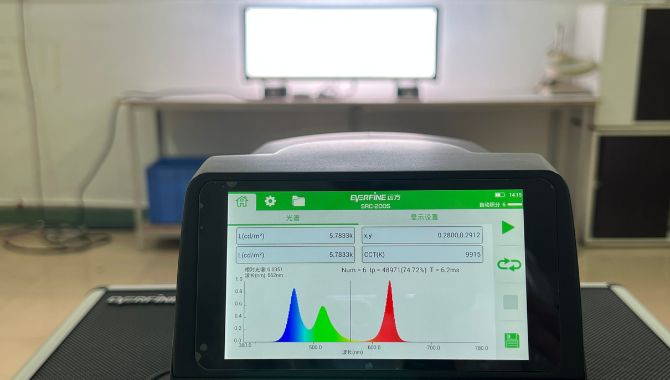
Excessive brightness can increase power consumption and thermal load. A better approach is to select a brightness level suitable for the actual ambient light conditions and use brightness control when appropriate.
Refresh rate is important for live events, camera recording, and fast-moving content. A higher refresh rate can help reduce visible flicker and improve camera performance.
Color consistency also matters. High-quality LEDs, accurate calibration, and stable driving electronics help maintain uniform colors across the entire screen.
IP Rating, Weather Resistance, and Operating Temperature
Outdoor displays must protect electronic components from rain, dust, and other environmental factors. IP ratings provide a standardized way to describe protection against solids and water.

However, an IP rating alone does not tell the complete story.
Cabinet sealing, connectors, cable entry points, drainage, coating, and assembly quality also affect real-world weather resistance.
Operating temperature should also be considered. Outdoor displays can experience large temperature swings between day and night or between seasons.
LED Chips, Driving ICs, and Heat Dissipation
This is an area where buyers should look beyond a basic specification sheet.
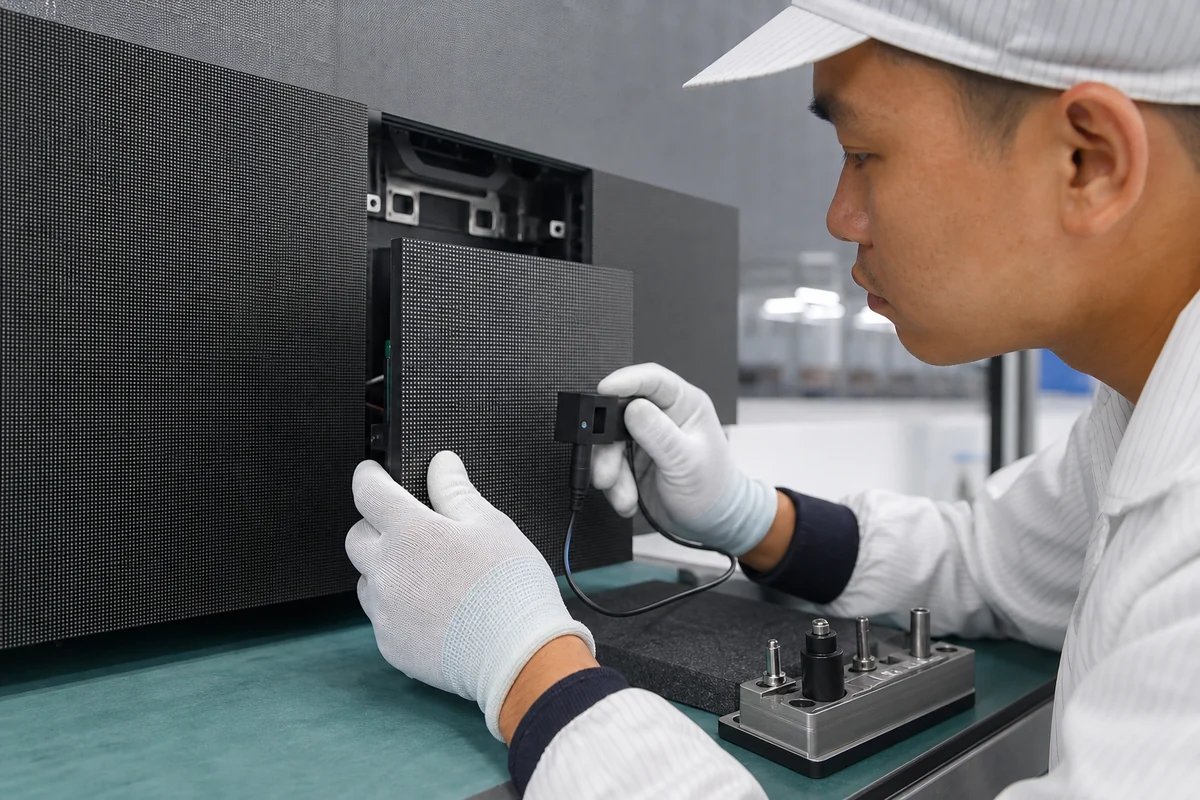
LED chips determine important aspects of brightness, efficiency, color consistency, and long-term stability. Driving ICs control LED current and directly influence grayscale performance, refresh behavior, and display stability.
Heat dissipation is equally important. During high-brightness operation, LEDs and electronic components generate heat. If heat remains inside the cabinet, component temperatures can rise and accelerate aging.
From a factory perspective, good thermal performance comes from several elements working together: efficient power supplies, appropriate PCB design, cabinet ventilation, component layout, and thermal paths.
A lower-cost product may use acceptable components but still perform poorly if the overall thermal design is weak. This is why buyers should evaluate system engineering rather than comparing component names alone.
How to Choose the Right Outdoor LED Video Wall
The best outdoor LED video wall is the one that matches the project environment, viewing conditions, content requirements, and operating model.
Match Pixel Pitch and Screen Size to Viewing Distance
Start with viewing distance rather than choosing a pixel pitch based only on market trends.
Measure the closest and typical viewing positions. Then consider screen dimensions and the type of content being displayed.
Large advertising screens viewed from dozens of meters away can use a different pixel pitch from outdoor displays installed near pedestrians.
The content also matters. Text-heavy applications generally benefit more from appropriate pixel density than simple large-format advertising viewed from a distance.
Choose the Right Cabinet, Maintenance Method, and Installation Design
Cabinet selection affects installation, transportation, maintenance, and structural requirements.
For permanent projects, a robust fixed cabinet may provide better long-term value. Rental projects usually need lighter cabinets with fast assembly mechanisms.
Maintenance access should also be planned before installation. Front maintenance is useful when the rear of the screen is inaccessible. Rear maintenance can provide easier access for larger fixed installations when sufficient space is available.
The mounting structure must account for screen weight and local wind conditions. A professional project should therefore involve structural assessment rather than treating the LED cabinet as an isolated product.
Consider Content, Environment, Power Consumption, and Total Cost
A buyer should evaluate the entire operating environment.
Consider:
- How many hours will the display run each day?
- How much direct sunlight will it receive?
- What weather conditions are expected?
- How close will viewers stand?
- Will cameras record the screen?
- Is front or rear maintenance possible?
- What is the available electrical capacity?
Power consumption deserves particular attention. Two displays with similar brightness and image quality can have different operating costs because of LED efficiency, driving ICs, power supply efficiency, and control strategies.
Outdoor LED Video Wall vs. LCD and Other Display Technologies
The choice between LED and other technologies depends heavily on the environment and screen size.
Outdoor LED vs. LCD Video Walls
LCD video walls can provide high image quality in controlled indoor environments, but large outdoor applications create limitations.
Direct sunlight can make LCD images difficult to view unless the display has very high brightness. Large LCD video walls also require visible bezels between panels.
LED technology creates a much more continuous image surface because the cabinets can be assembled with minimal visible separation.
LED is also easier to scale to very large dimensions. A billboard-sized LED display does not require the same panel-by-panel constraints as an LCD wall.
Why LED Is Better for Large-Scale Outdoor Applications
LED combines high brightness, modular construction, large screen sizes, and outdoor protection.

It can also be customized for different aspect ratios and physical dimensions. This flexibility makes LED particularly suitable for advertising, stadiums, architectural displays, and public spaces.
However, LED is not automatically the best solution for every project. A small display with a short viewing distance may require a different technology. Buyers should compare the complete system based on application rather than choosing a technology only because it is popular.
Outdoor LED Video Wall Cost and Total Cost of Ownership
Outdoor LED video wall pricing varies significantly depending on pixel pitch, cabinet design, brightness, components, screen size, protection level, and project requirements.
Outdoor LED Video Wall Price per Square Meter
Price per square meter is useful for initial budgeting, but it should not be the only purchasing metric.
A quotation may include only LED cabinets while excluding the control system, steel structure, installation, transportation, electrical work, spare parts, or commissioning.
A lower unit price can therefore result in a higher final project cost if additional components are required later.
Installation, Structure, Power, and Control System Costs
The complete project can include:
- LED cabinets and modules
- sending and receiving systems
- video processors
- power distribution
- steel structure
- installation
- cabling
- transportation
- commissioning
- spare parts
Large fixed displays may require substantial structural engineering because wind load can become a major factor.
Power infrastructure should also be included during planning. A high-brightness outdoor LED wall can consume significant electrical power, particularly during extended daily operation.
Hidden Costs That Buyers Should Consider
Buyers should consider long-term operating costs rather than focusing only on the initial quotation.
Common hidden costs include unexpected structural modifications, additional control equipment, replacement modules, power supply replacements, difficult maintenance access, and energy consumption.
Warranty conditions also matter. A supplier offering a low initial price but weak after-sales support may create greater risk over the product’s service life.
Outdoor LED Video Wall Installation and Maintenance
Correct installation is essential because outdoor LED displays operate under significantly harsher conditions than indoor products.
Structural and Electrical Requirements
The installation structure must support the screen and resist environmental loads.
For permanent outdoor projects, engineers should evaluate wind exposure, mounting method, building conditions, screen dimensions, and local regulations.
Electrical planning should include power distribution, grounding, surge protection, cable capacity, and control equipment.
The installation should also provide adequate drainage and prevent water from accumulating around electrical components.
Front and Rear Maintenance Options
Front maintenance allows technicians to remove modules and access components from the front of the screen. It is particularly useful when the display is mounted directly against a building or where rear access is limited.

Rear maintenance can provide more working space and can be practical for large fixed installations with accessible service areas.
The right choice should be made during the design stage. Retrofitting maintenance access after installation can be expensive and inconvenient.
How to Improve Outdoor LED Video Wall Lifespan and Reliability
Long service life depends on both product quality and operating conditions.
Regular inspections should check modules, power supplies, cables, connectors, cabinet sealing, and ventilation. Dust and debris should not be allowed to block ventilation paths.
Brightness should also be managed appropriately. Running a display continuously at maximum brightness when it is not necessary can increase energy use and thermal stress.
From a manufacturing perspective, reliability should begin before the product reaches the installation site. Component screening, aging tests, calibration, cabinet sealing checks, and quality-control procedures can reduce problems after delivery.
A practical factory quality system should also monitor production consistency rather than relying only on final inspection. For large projects, even a small pixel failure rate can become significant when thousands or millions of LED pixels are installed.
Outdoor LED Video Wall Buying Checklist
A professional purchasing process should evaluate both the product and the manufacturer behind it.
Questions to Ask an LED Display Manufacturer
Before placing an order, buyers should ask:
- What LED chips and driving ICs are used?
- What brightness can the display maintain in real operation?
- What is the cabinet’s IP protection level?
- How is heat managed?
- What is the typical power consumption?
- Is front or rear maintenance available?
- What tests are performed before shipment?
- What spare parts are recommended?
- What does the warranty cover?
- How does the manufacturer handle technical support?
The answers should be supported by technical documentation rather than general marketing claims.
How to Evaluate Quality Beyond the Product Specification Sheet
A specification sheet provides useful information, but it cannot fully describe manufacturing quality.

Buyers should request product samples when possible and examine cabinet assembly, module alignment, connectors, locks, sealing, and maintenance access.
For larger projects, it is also useful to ask about factory testing procedures. Aging tests can identify early component failures. Calibration testing can help verify brightness and color consistency.
Driving IC performance, power supply efficiency, PCB quality, and thermal design should also receive attention.
Most importantly, buyers should evaluate whether the manufacturer understands the intended application. A factory that can recommend the appropriate pixel pitch, cabinet structure, protection level, control system, and maintenance method can reduce project risk significantly.
For distributors, integrators, and engineering contractors, this capability can be more valuable than a small difference in the initial unit price.
FAQ
What Is the Best Pixel Pitch for an Outdoor LED Video Wall?
There is no single best pixel pitch for every outdoor LED video wall. The right choice depends mainly on viewing distance, screen size, content type, and project budget. Larger pixel pitches are often suitable for billboards viewed from long distances, while smaller pitches work better when viewers stand closer to the screen. Buyers should calculate the actual viewing environment before selecting a pixel pitch.
How Long Does an Outdoor LED Video Wall Last?
A well-designed and properly maintained outdoor LED video wall can provide many years of service, but its actual lifespan depends on LED quality, operating brightness, thermal management, power supply stability, weather exposure, and maintenance. Consistent manufacturing quality is also important. High-quality components, proper aging tests, effective heat dissipation, and regular maintenance can help reduce premature failures and preserve image performance over time.
Conclusion
An outdoor LED video wall is more than a collection of LED modules. It is a complete display system that must balance image quality, brightness, weather resistance, thermal performance, structural safety, power consumption, maintenance, and long-term reliability.
For buyers, the right approach is to start with the application and viewing environment, then select pixel pitch, brightness, cabinet design, protection level, control system, and maintenance method accordingly. Comparing only the price per square meter can lead to costly compromises later.
A reliable LED manufacturer should provide more than standard cabinets. The manufacturer should understand project requirements, provide customized solutions, maintain consistent production quality, and offer technical support throughout installation and operation.
For distributors, rental companies, system integrators, contractors, and commercial project owners, working directly with an experienced LED display manufacturer can make it easier to build an outdoor LED video wall that delivers reliable performance and long-term value. If you are planning an outdoor LED project, contact NSELED to discuss your screen size, pixel pitch, installation environment, and customized LED display requirements.