


Rental LED screens are now a standard visual solution for concerts, exhibitions, corporate events, and brand activations where flexibility and fast setup are required. If you are planning an event or building a rental business, understanding how these systems work will help you avoid costly mistakes and choose the right configuration from the start.
Many buyers face a common challenge. Most suppliers list similar specifications, but they rarely explain what actually matters in real projects. This often leads to decisions based only on price, which can cause problems like unstable installation, overheating during long events, or poor performance after repeated use.
In this guide, I will walk you through the key factors that really influence performance and cost. You will also get practical insights from real manufacturing experience, so you can make decisions with more confidence and avoid the typical pitfalls in rental LED screen projects.

What Is a Rental LED Screen?
A rental LED screen is a modular display system designed for temporary use in events, exhibitions, concerts, and stage productions. Its main purpose is fast installation, repeated deployment, and easy transportation, rather than permanent installation like fixed LED displays. Most rental LED systems use lightweight cabinets, quick-lock structures, and standardized modules so crews can assemble and dismantle them within hours.
From a technical perspective, rental LED screens are engineered to withstand frequent handling. This means the structure, power system, and signal design must balance durability with portability. Unlike fixed installations that prioritize long-term stability, rental systems prioritize mobility, speed, and operational efficiency.
Key Differences Between Rental and Fixed LED Displays
The main difference between rental and fixed LED displays lies in their design purpose and usage cycle. Rental screens are built for repeated assembly and disassembly, while fixed screens are designed for long-term installation in one location.
| Aspect | Rental LED Screen | Fixed LED Screen |
| Usage Type | Temporary / Event-based | Permanent installation |
| Structure Design | Lightweight, modular cabinets | Heavy-duty fixed frames |
| Installation Speed | Fast (hours) | Slow (days or weeks) |
| Maintenance | Front and rear access | Usually rear maintenance only |
| Durability Focus | Repeated handling resistance | Long-term stability |
From a factory perspective, rental cabinets require stricter tolerance control. Even a 0.2mm structural deviation can affect cabinet alignment after repeated installations. This is why rental-grade LED products often undergo higher-frequency vibration and drop testing during production compared to fixed installations.

Typical Industries That Use Rental LED Screens
Rental LED screens are widely used across industries where visual impact and mobility are critical. The most common users include:
Event production companies managing concerts and festivals
AV rental companies providing stage equipment solutions
Exhibition and trade show organizers
Corporate event planners for conferences and product launches
Advertising agencies running temporary brand activations
In practice, these industries rely on rental LED systems because they allow high-impact visual presentation without long-term capital investment. For example, a concert tour may require the same screen system to be installed and dismantled in multiple cities within a short period, making portability and reliability essential.
From a manufacturing point of view, high-frequency rental usage also means LED modules must maintain consistent color calibration even after repeated mechanical stress. This is one of the key differences that separates professional rental-grade products from entry-level display systems.
Where Are Rental LED Screens Used?
Rental LED screens are used in temporary, high-impact environments where visual communication needs to be flexible, fast to deploy, and visually strong. Their core value is not permanence, but adaptability across different event types and venues.
Concerts, Festivals, and Live Events
Concerts and festivals are the most demanding applications for rental LED screens. They require large-scale visuals, high brightness, and fast setup before tight event schedules.
Typical needs:
High brightness for outdoor visibility
≥3840Hz refresh rate for camera filming
Fast rigging and dismantling systems
From a factory perspective, outdoor rental units must pass thermal stability tests, since long-hour operation under heat can directly affect brightness consistency.
Trade Shows and Exhibitions
Trade shows focus on close viewing and strong visual branding. Rental LED screens are used to attract attention and deliver product messaging in compact booth spaces.
Key configurations:
Pixel pitch: P1.9–P2.9 for close viewing
Flexible modular or curved designs
Low-noise operation for indoor environments
In production, tighter LED binning control is required to maintain color consistency under exhibition lighting conditions.
Corporate Events and Conferences
Corporate events use rental LED screens for presentations, product launches, and large meeting backgrounds. Stability and clarity are the top priorities.
Key requirements:
Stable signal transmission
Seamless screen splicing
Compatibility with major control systems
In practice, redundancy in power and signal systems is often added to avoid interruptions during live presentations.
Weddings, Retail Pop-Ups, and Brand Activations
Smaller events use rental LED screens to create immersive visual effects in limited spaces, especially for branding and atmosphere building.
Typical use cases:
Wedding stage background visuals
Retail promotional displays
Short-term brand campaigns
These scenarios often require lightweight cabinets and fast installation systems to support quick setup and breakdown within tight timeframes.
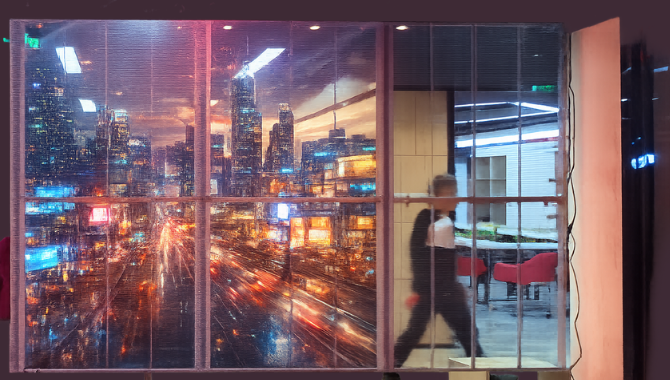
Key Features That Make Rental LED Screens Different
Rental LED screens are engineered for one primary goal: efficient deployment in temporary, high-frequency event environments. Unlike fixed installations, every structural and electrical design decision focuses on speed, mobility, and repeated use without performance loss.
AIO Block
Conclusion: Rental LED screens prioritize fast installation, lightweight structure, and high refresh performance to support frequent event deployment.
| Feature | Rental LED Screen | Fixed LED Screen |
| Cabinet Weight | 5–10 kg | 20–35 kg |
| Installation Time | <2 hours | 1–3 days |
| Lock System | Fast lock | Screw-based |
| Maintenance | Front/Rear | Rear |
| Refresh Rate | ≥3840Hz | 1920–3840Hz |
From a manufacturing perspective, rental cabinets also require tighter structural tolerances. Even small alignment deviations can accumulate after repeated installations, affecting screen flatness and long-term visual consistency.
Modular Design for Fast Installation
Rental LED screens use standardized modular cabinets that allow quick assembly without specialized tools. This design reduces on-site labor time and minimizes human error during installation.
In real production practice, precision alignment systems are integrated into cabinet edges to ensure pixel-level consistency after repeated mounting cycles. This is critical for touring events where screens are frequently rebuilt in different venues.
Lightweight Cabinets for Easy Transport
Weight reduction is a core engineering goal in rental LED systems. Most cabinets are designed between 5–10 kg to support manual handling and reduce logistics costs.
From a factory point of view, reducing weight must be balanced with structural strength. High-pressure aluminum frames are commonly used to maintain rigidity while avoiding deformation during repeated transport and stacking.
High Refresh Rate for Live Broadcasting
Rental LED screens often operate in environments with professional cameras, especially concerts and broadcast events. A refresh rate of ≥3840Hz helps eliminate flickering and scanning lines on camera recordings.
This performance depends heavily on driver IC selection. In factory testing, higher-grade ICs demonstrate better current stability under continuous high-frame-rate operation, reducing image distortion during long live events.
Front & Rear Maintenance Design
Rental systems usually support both front and rear maintenance to reduce downtime during events. This allows technicians to replace modules quickly without dismantling the entire structure.
In production, this requires dual-access PCB and magnetic module systems, which improve service efficiency but also increase assembly precision requirements. Proper calibration ensures that repeated maintenance does not affect pixel alignment or color uniformity.

How to Choose the Right Rental LED Screen
Choosing a rental LED screen is not a visual decision—it is an engineering decision. The correct configuration directly affects image clarity, system stability, and total project cost. Buyers who ignore technical matching often face overspending or poor on-site performance.
AIO Block
Conclusion: Pixel pitch, brightness, installation type, and control system determine overall display quality, viewing experience, and operational stability.
Key Selection Criteria:
Pixel Pitch: P1.9–P2.6 (indoor), P2.9–P4.8 (outdoor)
Brightness: 800–1500 nits (indoor), 4500–7000 nits (outdoor)
Viewing Distance: 1.5m–50m
Installation: Hanging / Ground / Curved
Control System: Novastar / Brompton
From a factory perspective, most project failures do not come from screen quality itself, but from incorrect configuration matching between pixel pitch and viewing distance. This is the most common procurement mistake in rental projects.
Choose the Right Pixel Pitch Based on Viewing Distance
Pixel pitch defines image clarity. A smaller pitch delivers higher resolution but increases cost and processing load.
| Viewing Distance | Recommended Pixel Pitch |
| 1–3 m | P1.9–P2.6 |
| 3–6 m | P2.6–P3.9 |
| 6–10 m | P3.9–P4.8 |
| 10 m+ | P5.0+ |
We often see buyers selecting P2.5 for distances beyond 20 meters. This leads to unnecessary budget waste because human eye resolution limit makes further pixel density irrelevant beyond that range.
Indoor vs Outdoor: Brightness & Protection Level
Brightness and protection level define where the screen can operate safely and effectively.
| Environment | Brightness | Protection Level |
| Indoor | 800–1500 nits | IP20 |
| Outdoor | 4500–7000 nits | IP65 |
Outdoor rental screens also require stronger waterproof sealing and UV-resistant mask materials. In factory aging tests, insufficient sealing often leads to moisture penetration after repeated outdoor deployment cycles.
Screen Size and Aspect Ratio Planning
Screen size should always match content design, not just venue space. Incorrect aspect ratio planning often leads to black borders or stretched visuals.
Common industry ratios:
16:9 for standard video playback
18:9 or custom ratios for stage design
Curved configurations for immersive events
From production experience, mismatched aspect ratios increase content conversion cost by up to 20–30%, especially in multi-screen touring events.
Installation Type (Hanging, Ground Support, Curved Setup)
Installation method directly affects structural requirements and safety planning.
Hanging systems require high load-bearing safety margins
Ground stacking systems require precise locking alignment
Curved setups require flexible cabinet design
In factory testing, repeated hanging installations create micro-stress on cabinet frames. High-quality rental cabinets use reinforced corner structures to reduce deformation risk over multiple event cycles.
Control System and Compatibility
Control systems determine signal stability and image processing quality.
Most common systems:
Novastar (widely used, cost-efficient, stable)
Brompton (high-end color processing, broadcast-grade)
In real projects, incompatibility between control systems and LED driver ICs can cause frame delay or color mismatch. That is why factories pre-test system pairing before shipment to ensure stable synchronization under high refresh rate conditions.

Conclusion
Rental LED screens are not just display products—they are complete systems that must perform reliably under real-world event conditions. Therefore, the key to a successful project is not choosing the cheapest option, but selecting the right configuration based on viewing distance, environment, and installation requirements. In addition, understanding technical factors such as pixel pitch, brightness, and structural design helps buyers reduce risk, control costs, and achieve consistent performance across different events.
If you are planning a rental LED screen project, it is important to work with an experienced partner. For example, NSELED provides customized solutions, technical support, and reliable systems tailored to your event needs. As a result, you can ensure stable performance while optimizing cost and efficiency. Contact us today to get a professional assessment and fast quote.