


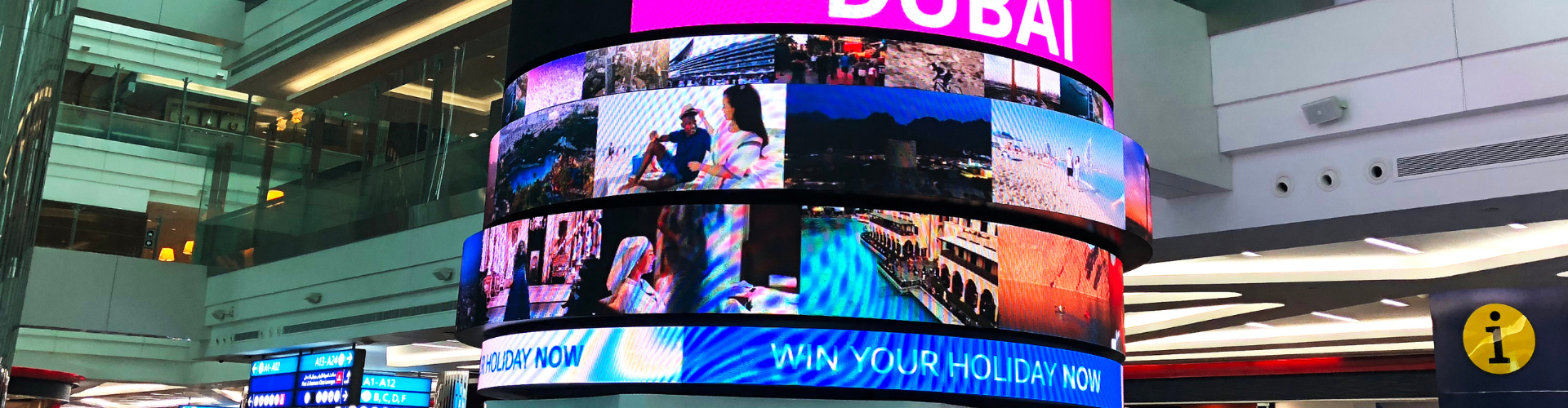
Shopping Mall LED Display Solutions
A professional Shopping Mall LED Display system helps retail operators improve advertising visibility, strengthen brand presence, guide visitors efficiently, and create dynamic digital environments that increase customer engagement.
Unlike traditional static signage or LCD video walls, LED displays offer scalable sizing, higher brightness consistency, seamless visuals, flexible installation, and long-term operational reliability for complex retail environments.
This solution page explains how LED technology is used across shopping malls, retail centers, luxury stores, atriums, food courts, and commercial plazas — including recommended display types, technical considerations, and procurement guidance for B2B buyers.
Application Scenarios for Shopping Mall LED Displays
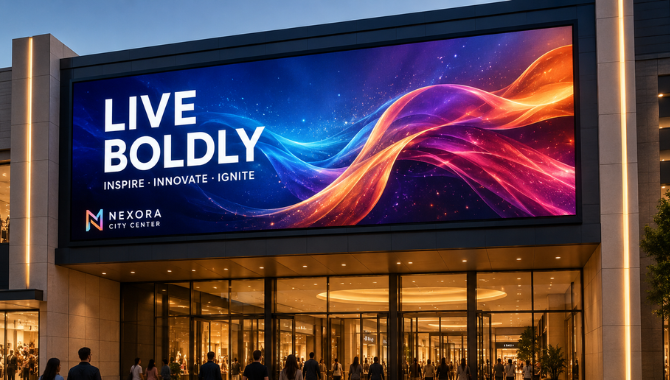
Large-format entrance displays are commonly installed above entrances or façade structures to create immediate visual impact.
Typical Uses
- Promotional campaigns
- Seasonal branding
- New store announcements
- Luxury retail advertising
- Event promotion
Business Value
- Improves first impression for visitors
- Increases advertising exposure time
- Supports premium retail branding
- Enhances architectural identity
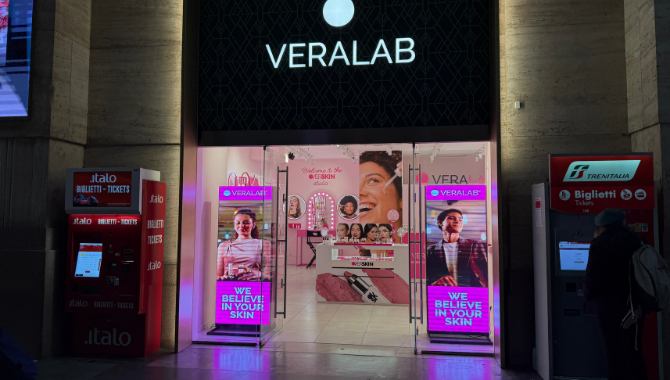
Retail storefront displays help brands attract foot traffic inside shopping malls.
Typical Uses
- Product launches
- Fashion campaigns
- Dynamic visual merchandising
- Interactive promotions
This is especially valuable for:
- Fashion brands
- Beauty stores
- Electronics retailers
- Sportswear chains
- Pop-up stores
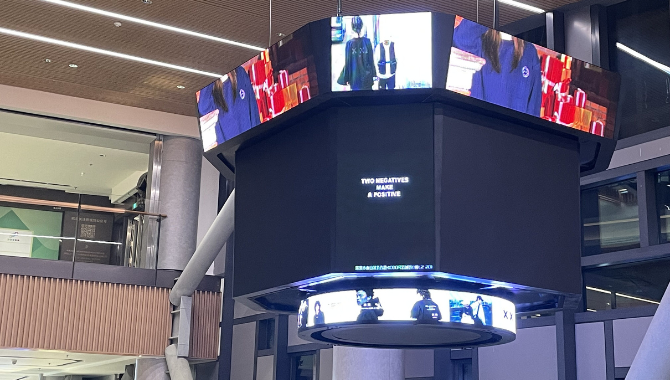
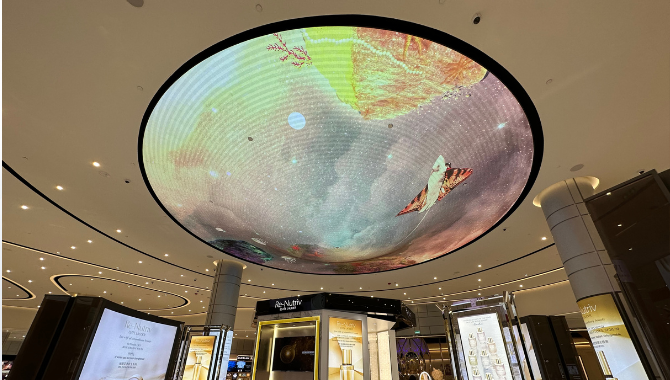
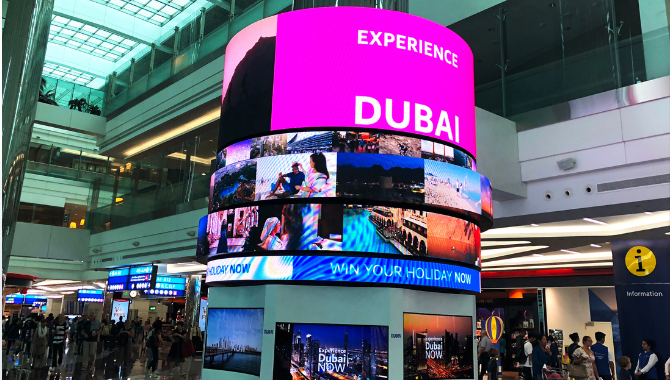
Large suspended LED displays are widely used in shopping mall atriums where visibility from multiple floors is important.
Common Configurations
- Cube LED displays
- Ring-shaped creative LED structures
- Cylindrical LED screens
- Large suspended video walls
Operational Advantages
- Centralized advertising visibility
- Multi-direction viewing
- Stronger audience engagement
- Event-ready digital infrastructure
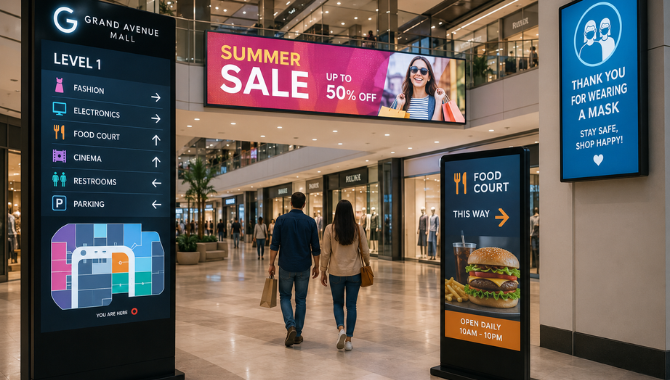
Shopping malls increasingly use LED systems for navigation and visitor communication.
Typical Content
- Floor maps
- Store directories
- Parking guidance
- Event schedules
- Queue information
Business Benefits
- Reduces visitor confusion
- Improves navigation efficiency
- Supports multilingual communication
- Enhances customer experience
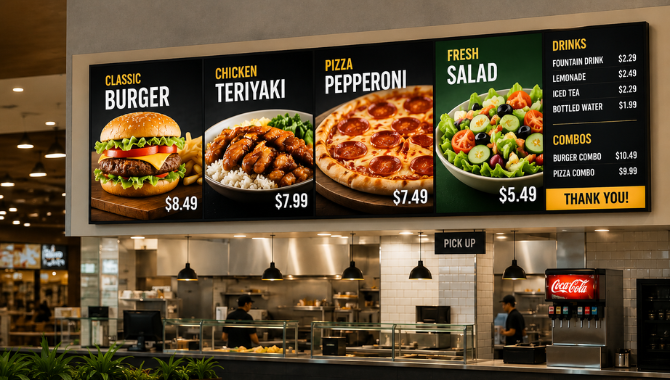
Food courts require displays capable of long daily operating hours and high brightness consistency.
Applications
- Digital menu systems
- Promotional advertising
- Entertainment content
- Live sports playback
Why LED Works Well
LED systems provide:
- Better visibility at wide viewing angles
- Flexible screen sizing
- Seamless content presentation
- Easier centralized content management
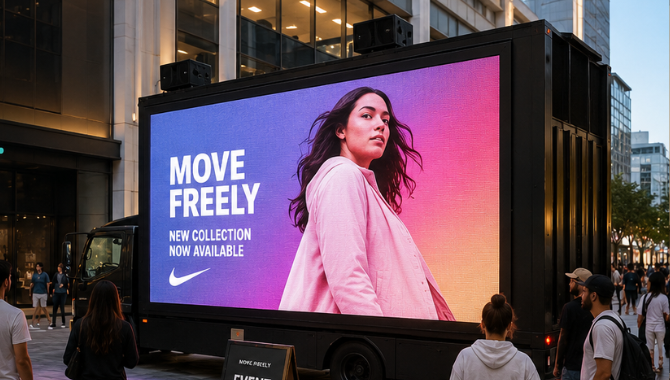
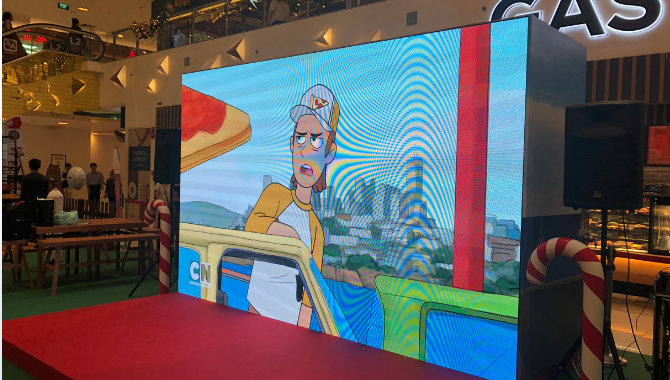
Temporary retail activations increasingly rely on mobile LED systems.
Recommended Solutions
- LED posters
- Portable indoor LED displays
- Rental LED screens
- Creative LED installations
Typical Scenarios
- Brand roadshows
- New product launches
- Fashion campaigns
- Interactive marketing events
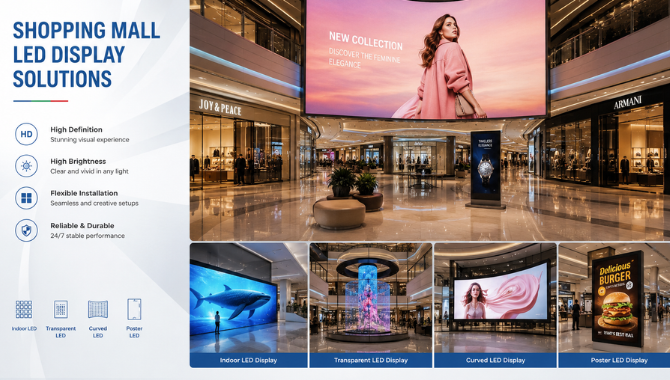
Recommended LED Display Solutions for Shopping Malls

Best For
- Luxury retail
- Atriums
- Information displays
- Corporate advertising
Key Advantages
- High-definition close viewing
- Seamless large-format visuals
- Better image consistency than LCD walls
- Suitable for premium indoor environments
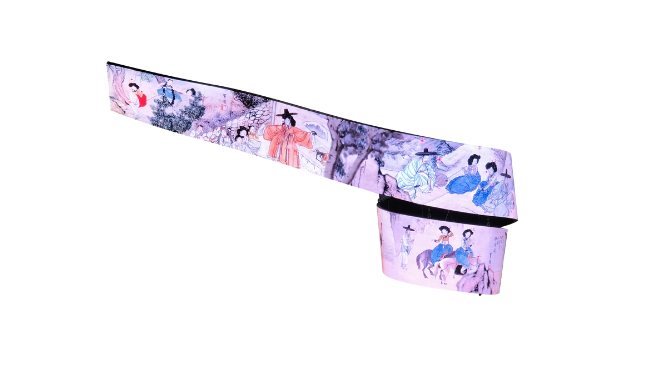
Best For
- Architectural integration
- Atrium centerpiece installations
- Brand experience zones
Typical Formats
- Curved LED
- Cylindrical LED
- Ribbon LED
- Wave-shaped displays

Best For
- Storefront advertising
- Temporary promotions
- Retail campaigns
- Pop-up stores
Key Benefits
- Plug-and-play deployment
- Easy relocation
- Fast content updates
- Space-efficient installation

Best For
- Glass storefronts
- Luxury retail windows
- High-end commercial façades
Advantages
- Maintains natural light transmission
- Reduces visual blockage
- Supports modern architectural aesthetics
- Suitable for premium branding environments
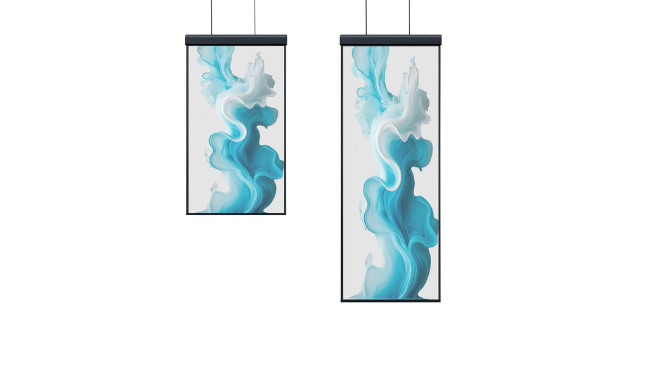
Best For
- Interactive retail experiences
- Product showcases
- Cosmetic and jewelry displays
- Technology-focused retail stores
Commercial Value
These displays are designed to create immersive visual experiences that increase customer attention and dwell time.
Technical Considerations Before Purchasing a Shopping Mall LED Screen

Indoor shopping malls typically require:
- 800–1500 nits for standard indoor environments
- Higher brightness near glass façades or skylights

Excessive brightness may create glare and visual discomfort indoors, while insufficient brightness reduces advertising visibility under ambient lighting.
Many shopping malls have limited maintenance access behind walls or decorative structures, making front-service designs more practical.

Commercial mall displays often operate:
- 12–18 hours daily
- 7 days per week

Remote content management, Multi-screen synchronization, Scheduled advertising playback, Interactive media integration, CMS platform compatibility…

- Front Maintenance: Wall-mounted indoor displays. Saves rear service space
- Rear Maintenance: Large fixed installations. Easier large-scale servicing
Retail traffic patterns have changed significantly in recent years. Shopping centers are no longer only transactional spaces — they function as hubs for entertainment, lifestyle, and brand interaction.
Traditional advertising systems often struggle with:
- Limited content flexibility
- Low visual impact in large spaces
- High maintenance for multi-screen systems
- Visible bezels in LCD walls
- Weak performance under strong ambient lighting
- Difficulty updating promotions in real time
A modern Shopping Mall LED screen solves these issues through centralized content management, seamless large-format visuals, and adaptable installation designs.


- Continuous advertising playback
- High-footfall audience visibility
- Architectural integration
- Interactive retail experiences
- Real-time promotional campaigns
- Long operational hours
- Flexible creative display formats
For mall operators, this means improved advertising monetization and stronger tenant branding opportunities.
For retailers, it means higher visibility and improved customer attention in competitive commercial environments.
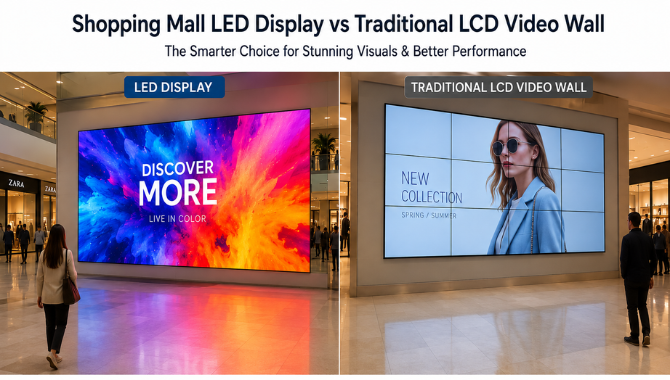
| Comparison Factor | LED Display | LCD Video Wall |
|---|---|---|
| Seamless Visuals | Yes | Visible bezels |
| Large Custom Sizes | Flexible | Limited by panel size |
| Brightness Uniformity | Better for large spaces | May vary between panels |
| Viewing Experience | Wide-angle seamless viewing | Bezel interruption |
| Creative Shapes | Supported | Limited |
| Long-Term Scalability | High | Moderate |
| Maintenance Complexity | Module-based replacement | Panel replacement required |
| Architectural Integration | Flexible | More restrictive |
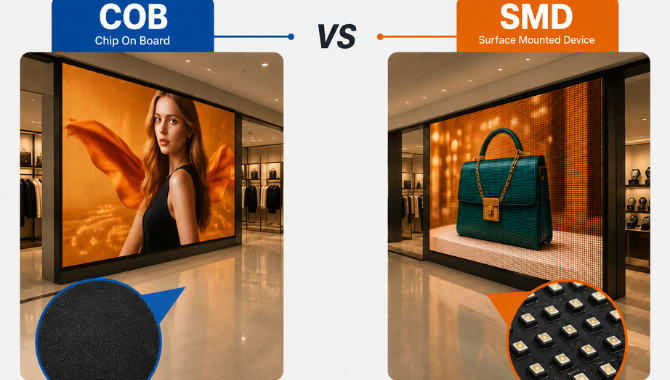
| Technology | COB LED | SMD LED |
|---|---|---|
| Surface Protection | Higher | Standard |
| Contrast Performance | Excellent | Good |
| Close-View Experience | Better | Good |
| Cost | Higher | More economical |
| Maintenance | More specialized | Widely serviceable |
| Retail Application | Luxury flagship installations | General commercial use |
Increased Advertising Revenue
Digital LED advertising enables:
- Multiple advertisers on one screen
- Scheduled campaigns
- Dynamic pricing models
- Real-time promotional updates
This creates higher monetization efficiency compared with static signage.
Stronger Customer Engagement
Motion visuals naturally attract more attention than printed graphics.
This helps:
- Increase visitor dwell time
- Improve campaign recall
- Support experiential retail environments
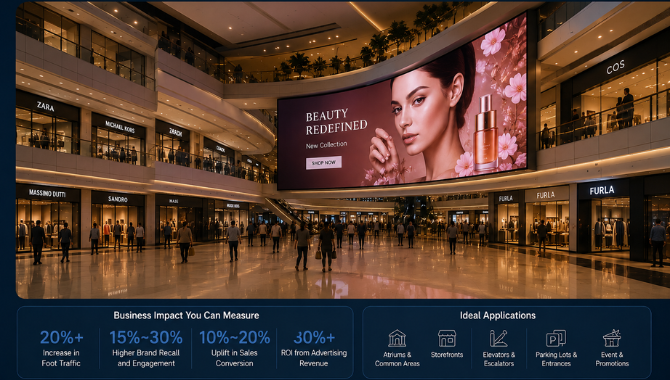
Mall operators can:
- Update campaigns remotely
- Manage multiple displays centrally
- Reduce print replacement costs
- Deploy seasonal content quickly
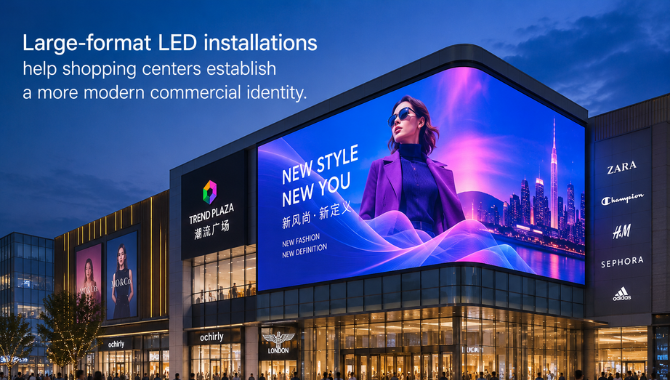
Large-format LED installations help shopping centers establish a more modern commercial identity.
This is particularly important for:
- Luxury retail destinations
- Mixed-use commercial developments
- Lifestyle shopping centers
- High-traffic urban malls
- Commercial Project Experience
- Flexible OEM & Customization Capability
- Factory Manufacturing Control
- International Project Support
- Certification & Compliance
Case Show
For most indoor retail environments, P1.8 to P2.5 provides a balanced combination of image clarity and project cost. Luxury close-view applications may require P1.2 or finer.
Large commercial spaces generally prefer LED displays because they provide seamless visuals, flexible sizing, and better architectural integration compared with LCD walls with visible bezels.
Yes. Commercial-grade LED systems are designed for long operating schedules, often exceeding 12 hours daily in retail environments.
Most indoor malls require 800–1500 nits, depending on ambient lighting conditions and nearby glass exposure.
Yes. Transparent LED displays are commonly installed behind glass storefronts because they preserve visibility while supporting dynamic advertising content.
Most indoor installations use front-service maintenance systems, allowing modules and power supplies to be serviced without rear access space.
Yes. Modern LED control systems support CMS platforms, remote scheduling, synchronized playback, and centralized content management.
Pricing depends on:
- Pixel pitch
- Screen size
- Installation structure
- Control system
- Brightness requirements
- Maintenance configuration
- Customization complexity