


Giant LED screens are transforming commercial spaces worldwide. Many companies invest in large digital displays but fail to maximize their impact. They underestimate technical requirements.As a result, projects exceed budget, underperform visually, or create ongoing maintenance issues. Decision-makers then struggle to justify the investment internally.
At the same time, global demand for LED video walls continues to grow. According to industry data published by organizations such as the U.S. Department of Energy , solid-state lighting technologies improve energy efficiency and operational performance across commercial environments. Businesses now expect more than visibility. They expect measurable ROI, reliability, and architectural integration.
In this strategic buyer’s guide, I will break down the technical foundations, real-world applications, hidden risks, and manufacturer selection criteria behind giant LED screens. You will gain practical insights to make confident, ROI-driven decisions for your next commercial LED display project.

Why Giant LED Screens Are Reshaping Modern Commercial Environments
Giant LED screens reshape modern commercial environments because they combine architectural flexibility, high brightness, and seamless scalability in one integrated system. Businesses no longer treat displays as accessories. They now treat them as core infrastructure for communication, branding, and engagement.
The Shift from Static Architecture to Digital Experiences
Traditional walls communicate nothing. Digital LED surfaces communicate everything. Companies use giant LED screens to turn lobbies, retail floors, and stadium façades into dynamic storytelling platforms.
According to research from Deloitte on digital transformation trends, organizations that integrate digital engagement tools into physical environments improve customer interaction and brand perception. LED displays enable real-time content updates, data visualization, and immersive brand experiences without structural renovation.
Why Traditional LCD and Projection Systems Are Becoming Limited
To understand the shift clearly, compare LED technology with traditional alternatives:
| Comparison Factor | Giant LED Screens | LCD Video Walls | Projection Systems |
| Brightness (Nits) | 800–8000+ | 500–700 | 200–500 |
| Seam Visibility | Seamless modular panels | Visible bezels | No bezel but image distortion |
| Scalability | Virtually unlimited | Limited by panel size | Limited by projection distance |
| Ambient Light Performance | Excellent | Moderate | Weak in bright spaces |
| Lifespan (Hours) | 80,000–100,000 | 50,000–60,000 | 20,000–30,000 |
LED screens outperform LCD and projection systems in brightness, scalability, and durability, which explains why high-traffic environments increasingly choose direct-view LED solutions.
The Business Case Behind Large LED Installations
The business logic is straightforward. A giant LED screen increases visibility, extends content flexibility, and reduces long-term hardware replacement cycles. Retailers use LED to increase dwell time. Sports venues use LED to enhance fan engagement. Corporate headquarters use LED to reinforce brand authority.
When decision-makers evaluate investment from a lifecycle perspective, they often find that LED delivers stronger long-term ROI despite higher upfront cost. The shift is not about size alone. It is about strategic digital infrastructure.

Where Giant LED Screens Deliver Maximum Value
Giant LED screens deliver maximum value in environments where visibility, engagement, and real-time communication directly impact revenue, safety, or brand perception. When you align screen size and specifications with operational goals, you convert visual infrastructure into measurable business performance.
Below are key sectors where large LED displays consistently create strategic advantage.
Corporate Headquarters and Lobby Displays
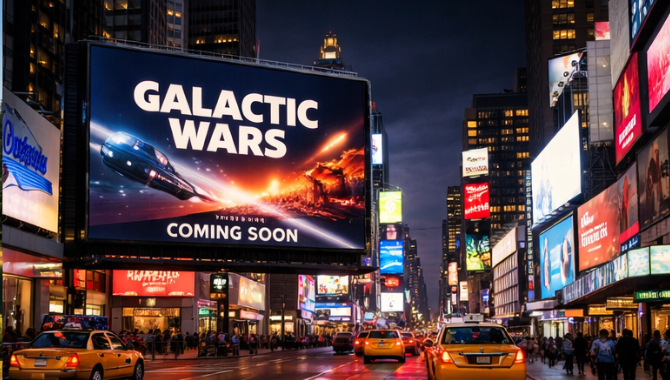
Corporate lobbies serve as brand statements. A giant LED screen transforms a static entrance into a digital identity platform. Companies use LED walls to display brand films, ESG reports, investor milestones, and live data dashboards.
According to studies referenced by Forbes on experiential branding (forbes.com), immersive visual storytelling increases brand recall and visitor engagement. A well-designed LED lobby display reinforces authority and innovation perception.
Retail Flagship Stores and Experiential Marketing
Retail environments compete for attention. Giant LED screens create immersive storefronts, interactive product storytelling, and seasonal campaign flexibility without physical reconstruction.
| Retail Objective | LED Screen Impact |
| Increase Foot Traffic | High brightness attracts passersby |
| Improve Dwell Time | Dynamic content holds attention |
| Promote Campaigns | Instant content updates |
| Enhance Brand Image | Premium visual environment |
Retailers increasingly shift toward digital-first physical spaces. LED enables rapid content rotation and reduces printed signage waste.
Event Venues and Stage Backdrops
Event organizers demand modularity and visual impact. Giant LED screens provide seamless stage backdrops, high refresh rates for broadcast, and quick assembly systems.
| Event Requirement | LED Advantage |
| Fast Setup | Modular locking systems |
| Broadcast Quality | ≥3840Hz refresh rate |
| Flexible Size | Stackable cabinet design |
| Touring Durability | Reinforced frames |
Rental-grade LED screens prioritize precision alignment and structural strength, which ensures stable performance during frequent installation cycles.
Stadiums and Sports Arenas
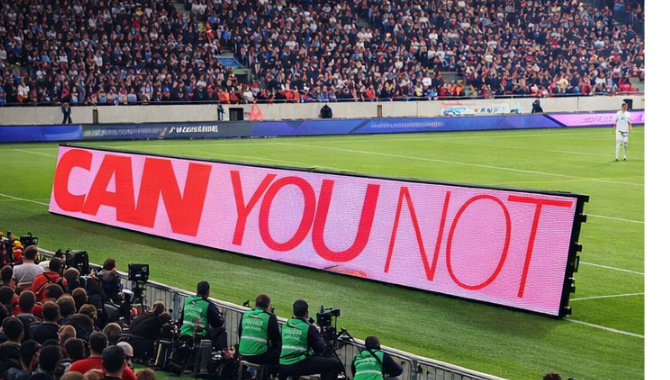
Sports venues require ultra-bright outdoor displays, long viewing distance clarity, and real-time content integration. LED scoreboards and perimeter displays improve fan engagement and sponsorship revenue.
According to publicly available information from FIFA stadium guidelines , modern stadiums rely on advanced display systems for audience information and event branding. LED technology meets these visibility and durability standards.
Control Rooms and Government Facilities
Control rooms require continuous operation, high resolution, and reliability. Operators depend on LED video walls for surveillance feeds, traffic monitoring, and emergency coordination.
| Control Room Need | LED Feature |
| 24/7 Operation | Long lifespan |
| Data Clarity | Fine pixel pitch |
| Wide Viewing Angles | 140°–160° visibility |
| Low Failure Risk | Modular redundancy |
In mission-critical environments, stability and clarity outweigh aesthetic considerations.
Hospitality and Tourism Environments
Hotels, resorts, and entertainment venues use giant LED screens to elevate guest experiences. Digital welcome walls, immersive décor, and event promotions create premium atmospheres without structural renovation.
LED screens allow hospitality operators to adjust messaging instantly based on occupancy, events, or promotions. This flexibility supports both marketing and operational efficiency.
How to Choose the Right Giant LED Screen Manufacturer
Choosing the right giant LED screen manufacturer determines product reliability, project success, and long-term support. Technology alone does not guarantee performance. Manufacturing standards, quality control systems, and service structure make the real difference.
Many buyers compare price sheets. Smart decision-makers evaluate manufacturing capability.
OEM Factory vs Brand Reseller
You must understand whether you are dealing with a direct manufacturer or a trading brand. The difference affects customization, cost transparency, and response time.
| Comparison Factor | OEM Factory | Brand Reseller |
| Production Control | Direct control | Outsourced |
| Customization | High flexibility | Limited to catalog |
| Price Structure | Factory-based | Includes brand markup |
| Technical Adjustment | Faster | Depends on supplier chain |
| Private Label Support | Strong | Varies |
If your project requires custom cabinet sizes or structural adaptation, work directly with a factory.
Production Capacity and Quality Control
Large LED projects require consistent batch quality. Production scale and QC systems indicate reliability.
| Quality Indicator | What to Verify |
| Aging Test | 48–72 hour full-load test |
| Incoming Material Inspection | LED chips, driver IC validation |
| Calibration Process | Factory brightness & color tuning |
| Automated Assembly | SMT precision lines |
| Failure Rate Data | Transparent reporting |
According to industry best practices referenced by IPC standards , electronics manufacturing must follow strict inspection protocols to ensure reliability. Strong QC reduces pixel failure rates and color inconsistency.
Export Experience and Certifications
For international projects, certification compliance matters.
| Certification | Purpose |
| CE | European safety compliance |
| FCC | U.S. electromagnetic compliance |
| RoHS | Hazardous substance restriction |
| ETL/UL | North American electrical safety (when required) |
You should always request valid certificates and verify them through official regulatory databases. Compliance protects both project approval and long-term liability.
Customization Capabilities
Every commercial space has structural differences. A capable manufacturer should support:
- Custom cabinet dimensions
• Curved or flexible LED structures
• Front-access design
• Lightweight solutions for load-sensitive walls
• Branding or OEM labeling
Customization flexibility indicates strong engineering capability rather than simple product distribution.
After-Sales Support Structure
Long-term support determines lifecycle value.
| Support Element | Why It Matters |
| Spare Parts Availability | Reduces downtime |
| Remote Technical Assistance | Fast troubleshooting |
| Clear Warranty Terms | Protects investment |
| Training & Documentation | Supports local teams |
A giant LED screen is a long-term infrastructure asset. Choose a manufacturer who plans for 5–10 years, not just delivery day.
Conclusion
LED display failures can originate from multiple sources — power supply issues, signal transmission instability, module damage, environmental conditions, or control system misconfiguration. Accurate troubleshooting requires a structured approach rather than random component replacement.
For B2B buyers, contractors, and system integrators, understanding root causes reduces downtime, avoids unnecessary costs, and protects long-term project reliability. A professional LED system is not only defined by brightness and resolution, but also by stability, durability, and ease of maintenance.
If you are sourcing LED displays for commercial, rental, stadium, or outdoor advertising projects, choosing a manufacturer that provides technical documentation, remote support, and spare part availability is critical. Contact Us today to discuss your project requirements and receive expert technical consultation tailored to your application.
FAQs
Why is my LED display powered on but showing a black screen?
This is typically caused by signal transmission failure, incorrect input source selection, or sending card configuration errors. First, verify the input signal source and check Ethernet connections between cabinets.
What causes LED screens to flicker randomly?
Flickering is usually related to unstable power supply, grounding issues, or signal interference. Using a voltage stabilizer and checking grounding connections often resolves the problem.
How long should an LED display normally last?
High-quality LED displays can last 80,000–100,000 hours under proper maintenance conditions. Environmental control and regular cleaning significantly extend lifespan.