


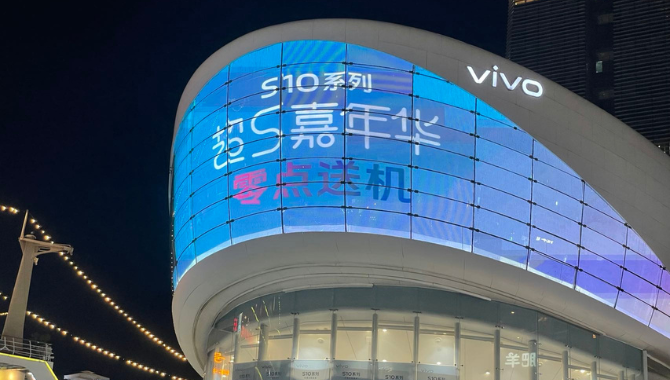
Flexible LED screens are reshaping how modern commercial environments use digital visual systems in architecture, retail design, and immersive branding spaces. They are no longer just flat display products, but structural visual tools that integrate into buildings, curves, and custom-shaped surfaces.
Many buyers struggle when selecting LED solutions for curved walls, cylindrical columns, or creative installations. The real challenge is not product availability, but understanding engineering limits, structural design constraints, and long-term reliability risks behind flexible LED systems.
In this guide, we explain flexible LED screens from a manufacturing and engineering perspective. You will understand how they work, how they differ from traditional LED systems, and how to avoid costly mistakes in real B2B procurement decisions.
What Is a Flexible LED Screen?
A flexible LED screen is a display system built on bendable circuit materials that allow controlled curvature without damaging LED modules or electrical performance. Unlike traditional rigid LED cabinets, flexible LED uses soft PCB structures combined with magnetic or elastic mounting systems to achieve curved, wave-shaped, or irregular installations.
From a manufacturing perspective, flexibility is not simply a design feature. It is a controlled engineering property defined by PCB thickness, copper layer structure, solder reliability, and LED encapsulation stability. These factors determine how far and how often a screen can safely bend without long-term degradation.
In real production environments, flexibility must be balanced with heat dissipation and structural stability. If a design focuses too heavily on bending capability without thermal optimization, long-term failure rates increase significantly after installation.
What Makes an LED Screen Flexible
Flexibility is achieved through several structural changes compared to traditional LED systems.
- Soft PCB replaces rigid aluminum boards
- Flexible solder mask materials reduce cracking under stress
- Magnetic or silicone-based module systems allow curved assembly
- Lightweight module frames reduce mechanical tension during installation
However, flexibility introduces engineering trade-offs. The more flexible the module becomes, the more sensitive it is to mechanical stress during transportation and installation.
In factory testing, we simulate bending cycles to evaluate durability. When modules exceed their rated curvature repeatedly, micro-cracks may form in solder joints. These issues often appear after 3–6 months of continuous operation in poorly designed installations.
For this reason, flexibility must always be defined together with a clear mechanical limit, not treated as an unlimited feature.
Core Structure and Working Principle
Flexible LED screens still follow the same core display architecture as traditional LED systems, including LED chips, driving ICs, power systems, and control units. The main difference lies in how these components are integrated and supported structurally to allow bending and curved installation.
However, the key difference lies in how electrical and thermal behavior changes under curved conditions. When a screen bends, PCB trace resistance slightly shifts, which can affect brightness uniformity if the driving system is not properly optimized.
In factory-level testing, we have observed that mismatched IC configurations can increase localized thermal accumulation by 8–12% during continuous operation. Over time, this may lead to color drift or uneven brightness in curved zones.
To prevent this, manufacturers must carefully match:
- IC driving capability
- PCB copper thickness
- LED bin consistency
- Heat dissipation structure
This is why flexible LED systems require more precise engineering control than flat LED displays, especially in terms of structural design, module alignment, and stress distribution during both installation and long-term operation.
Key Technical Considerations
When evaluating flexible LED screens, many buyers focus only on pixel pitch. However, pixel pitch alone does not determine system performance in curved installations.
Key engineering factors include:
- Minimum bending radius (structural safety limit)
- IC stability under continuous curved stress
- LED binning consistency for color matching
- Heat dissipation efficiency in compact curved layouts
A critical manufacturing insight is that ultra-fine pixel pitch (below P1.2) is often unsuitable for tight curvature applications. Higher LED density increases thermal load, which reduces long-term stability under bending conditions.
In real project evaluations, we often recommend slightly larger pixel pitch for curved installations because it improves structural reliability and reduces maintenance risk over time.
Quick Question
Is a flexible LED screen always better than a traditional LED screen?
No. Flexible LED is not a universal upgrade. It only provides real value when the installation requires curved, cylindrical, or irregular geometry.
For flat walls or long-distance viewing environments, traditional LED displays offer better thermal stability, lower cost, and more predictable long-term performance. Choosing flexible LED in those cases often increases cost without improving visual results.
Flexible LED vs Traditional LED Displays
Flexible LED and traditional LED systems differ not only in shape but also in engineering structure, manufacturing complexity, and lifecycle reliability. Compared with rigid LED displays, flexible LED requires different materials and structural design, making it more suitable for curved or irregular installations, but also more technically demanding.
From a factory production perspective, flexible LED modules have a lower yield rate due to stricter mechanical stress requirements during assembly and testing. Small deviations in bending or alignment can affect display quality. This increases production cost and can impact pricing and long-term stability in commercial use.
Structural and Performance Differences
| Feature | Flexible LED | Traditional LED |
| Structure | Soft PCB, bendable | Rigid aluminum cabinet |
| Shape capability | Curved, irregular | Flat only |
| Mechanical stability | Medium | High |
| Manufacturing yield | Lower | Higher |
| Maintenance behavior | Modular but sensitive | Stable and predictable |
Flexible LED enables architectural integration, but rigid LED remains superior in environments where long-term calibration stability is critical, such as control rooms or high-brightness outdoor displays.
Installation and Project Complexity
Flexible LED installation requires more engineering preparation than standard LED walls. Compared with conventional flat LED systems, flexible displays need more precise structural planning, especially in terms of curvature design and load-bearing support.
Unlike flat systems, curved installations require:
- Precise curvature mapping before production
- Structural steel frame stress analysis
- Module alignment compensation during installation
In real-world projects, installation time can increase by 20–35% when curvature exceeds 120 degrees. This is mainly driven by higher structural precision requirements rather than product complexity itself.
Improper frame design is one of the most common causes of early deformation or uneven module stress after installation, which can affect display stability over time.
Cost and Value Comparison
Flexible LED systems are typically 15–40% more expensive than standard LED systems with similar resolution. This cost difference mainly comes from higher material requirements, more complex manufacturing processes, and stricter quality control standards needed to ensure bending performance and reliability..
This cost difference comes from:
- Lower production yield due to bending stress testing
- Specialized flexible PCB material
- Additional structural and installation components
| Cost Factor | Flexible LED Impact |
| Material cost | Higher |
| Production complexity | Higher |
| Installation engineering | More demanding |
| Maintenance cost | Medium |
However, value is not purely cost-based. According to industry reports from Digital Signage Federation, immersive curved displays can increase audience engagement time by up to 30% in retail environments.
Quick Question
Why does flexible LED cost more even with the same pixel pitch?
Because flexibility adds manufacturing complexity, reduces production yield, and requires additional engineering materials that flat LED systems do not need. The cost is driven by structure, not just resolution.

Key Benefits for Commercial Projects
Flexible LED screens are most valuable in environments where visual design directly influences customer perception and engagement behavior. This is especially true in commercial spaces such as retail stores, exhibition halls, and branded experience zones, where unique screen shapes can significantly enhance visual impact and audience attention.
Creative Design Freedom
Flexible LED allows designers to move beyond flat geometry and create immersive visual environments such as waves, curves, or 360-degree structures. This makes it possible to integrate the display directly into architectural elements, rather than treating it as a separate screen, resulting in a more seamless and engaging visual effect.
This capability is especially important in flagship retail stores, where visual identity plays a key role in brand differentiation and customer experience. By using curved or irregular LED structures, brands can create stronger spatial impact, guide customer attention more effectively, and reinforce a premium, high-tech brand image.
Lightweight and Space Efficiency
Flexible modules reduce system weight by approximately 30–50% compared to traditional cabinet-based LED systems. This lighter structure reduces the burden on supporting frameworks and simplifies overall installation requirements.
This weight reduction makes integration into architectural structures easier, especially for columns, ceilings, and curved surfaces where load-bearing capacity is limited. It also expands design possibilities in projects where structural constraints previously made LED installation difficult or impractical.
Easy Maintenance and Long-Term Value
Most flexible LED systems use front-service magnetic modules, which allow technicians to remove and replace individual modules directly from the front side without dismantling the entire display structure. This design simplifies maintenance procedures and reduces the need for complex disassembly work.
In commercial environments, this significantly reduces downtime during repairs or servicing and improves overall operational efficiency over long-term use, especially in high-traffic locations such as retail stores, exhibition spaces, and public installations.
Applications and Design Possibilities
Flexible LED is widely used in environments where visual experience directly affects engagement, such as retail spaces, exhibitions, and entertainment venues. Its ability to form curved and creative shapes helps create stronger visual impact compared to traditional flat displays.
- Retail environments use curved LED walls to attract customer attention
- Event stages use cylindrical structures for immersive storytelling
- Exhibitions use wave-shaped displays for interactive experiences
- Corporate lobbies use custom installations to strengthen brand identity
However, in low-traffic environments, ROI may not justify the additional investment required for flexible systems.
Cost Factors and Pricing Considerations
Flexible LED pricing is highly dependent on engineering complexity rather than only display size or resolution. Factors such as curvature requirements, structural design, installation environment, and customization level all play a significant role in determining overall cost.
Key cost drivers include:
- Pixel pitch selection
- Curvature radius requirements
- Control system configuration
- Structural steel engineering cost
A commonly underestimated factor is structural design cost, which can account for up to 20% of total project budget in large curved installations.
Pixel Pitch and Viewing Distance
| Viewing Distance | Recommended Pixel Pitch |
| 2–3 meters | P1.5–P2.0 |
| 3–5 meters | P2–P2.5 |
| 5+ meters | P3+ |
Using ultra-fine pixel pitch for long viewing distances does not improve visual performance significantly but increases cost and thermal load.
Customization and Structural Complexity
Non-standard shapes such as spherical or wave designs require additional engineering time and production adjustment. Each custom structure reduces manufacturing efficiency and increases lead time.
Components, Installation, and Hidden Costs
Hidden costs often include:
- Steel structure design and fabrication
- On-site calibration and adjustment
- Control system tuning and testing
These costs are frequently excluded from initial quotations but can significantly impact the total project budget. In many cases, additional expenses such as structural reinforcement, customized installation frames, on-site engineering adjustments, and extended labor requirements only become clear during project execution.

How to Choose the Right Flexible LED Screen
Flexible LED selection should start from application requirements rather than specifications alone. In B2B projects, factors like installation environment, viewing distance, curvature, and maintenance needs are more important than resolution or pixel pitch. Pricing is also influenced by engineering complexity, not just size. Defining the use case first helps ensure better performance, cost control, and long-term reliability.
Key evaluation factors include:
- Viewing distance vs pixel pitch balance
- Curvature requirements vs structural feasibility
- Supplier engineering capability and production experience
From manufacturing experience, most project failures occur due to over-specification rather than product limitations.
Matching Display to Application
Retail environments prioritize visual impact, while corporate environments prioritize clarity and stability. Matching design intent with technical capability is essential for long-term success.
Balancing Creativity and Budget
Excessive curvature or ultra-fine resolution often increases cost without delivering measurable performance improvement. In many real-world applications, these upgrades add engineering complexity and production cost, but provide limited visual benefit from a normal viewing distance, making them less cost-effective for most commercial projects.
Selecting the Right Supplier
A qualified supplier should provide:
- Structural feasibility analysis
- Heat dissipation evaluation
- Installation support documentation
Installation and Practical Considerations
Flexible LED installation requires precise coordination between structural engineering and module assembly. The supporting frame must be accurately designed to match the required curvature, while module installation needs to ensure consistent alignment and controlled mechanical stress. Any mismatch between structure and modules can directly affect display uniformity and long-term stability.
Installation Methods and Requirements
Common methods include magnetic mounting systems and custom steel frame integration. Each method requires accurate curvature pre-design to avoid installation stress.
Common Challenges and Solutions
Typical issues include:
- Uneven curvature stress distribution
- Module alignment deviation
- Cable tension issues
Proper engineering planning significantly reduces these risks by ensuring that structural design, load distribution, and module layout are fully aligned before installation begins. This helps prevent issues such as deformation, uneven stress, and display inconsistency during long-term operation.

Conclusion
Flexible LED screens are advanced engineering systems designed for creative architectural integration rather than simple display applications. Their real value does not come from flexibility alone, but from how effectively they integrate into complex architectural environments while maintaining performance stability. As this discussion has highlighted, success depends heavily on balancing structural design, thermal management, and long-term operational reliability. Without considering these engineering constraints, projects can easily suffer from reduced lifespan, unstable performance, or unnecessary cost escalation.
If you are planning to use flexible LED for architectural façades, immersive spaces, or commercial installations, working with an experienced manufacturer is critical to achieving the right balance between design ambition and engineering feasibility. At NSELED, we provide customized flexible LED screen solutions tailored to your installation environment, structural conditions, and budget requirements. From initial consultation and technical design to mass production and delivery, our team supports global projects across retail, exhibitions, commercial buildings, and creative installations. Reach out to NSELED to get a professional project assessment and fast quotation for your next flexible LED display project.
FAQ
How flexible can an LED screen be?
Flexibility depends on PCB design and module engineering limits. Most systems support controlled curvature ranging from moderate curves to full cylindrical structures depending on design specifications.
What affects the lifespan of flexible LED displays?
Lifespan is influenced by thermal management, driving IC stability, installation quality, and mechanical stress control. Poor installation often reduces lifespan more than component quality.
Are flexible LED screens suitable for outdoor use?
Yes, but only when designed with waterproof protection (IP65 or above) and reinforced structural support. Outdoor curved installations require stricter engineering control than indoor applications.