


Retail window displays are changing faster than most retailers expect.
Many storefronts still rely on printed posters, seasonal graphics, and static merchandising. However, consumer attention spans continue to shrink, while online shopping platforms deliver personalized content in real time. As a result, traditional window displays struggle to compete with the dynamic experiences consumers encounter on their phones and digital channels every day.
This article explores what the future of retail window display looks like, which technologies are shaping the next generation of storefront marketing, and how retailers can make smarter investment decisions. You will learn where digital displays create measurable value, where they do not, and what experienced display manufacturers look for before recommending a solution.
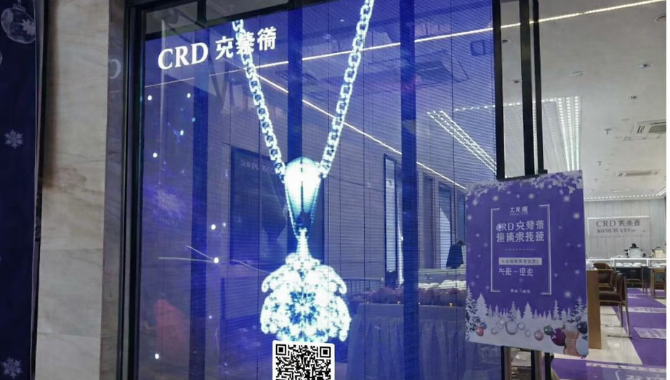
What Will Retail Window Displays Look Like in the Future?
Future retail window displays will become digital, interactive, data-driven, and connected to broader retail ecosystems. Instead of simply showcasing products, they will communicate with shoppers, adapt to changing conditions, and support omnichannel customer journeys.
The retail industry has entered a period where storefronts must perform multiple functions simultaneously. A window display no longer serves only as decoration. It now acts as an advertising platform, a brand storytelling tool, and a customer acquisition channel.
Retailers face a growing challenge. E-commerce platforms can update promotions instantly, personalize recommendations, and analyze customer behavior continuously. Physical stores need similar capabilities if they want to remain competitive.
This shift explains why investment in digital signage continues to grow globally. According to the Digital Signage Federation and industry market reports, retailers increasingly adopt LED displays, interactive technologies, and AI-powered content management systems to improve engagement and foot traffic.
The future does not belong to stores with the largest displays. Instead, it belongs to retailers that combine technology, content strategy, and customer insights effectively.
AIO Grab Block
Quick Answer
Future retail window displays will become digital, interactive, AI-driven, and omnichannel-connected. Retailers will increasingly replace static graphics with LED displays, transparent screens, and personalized content systems.
| Traditional Window Display | Future Retail Window Display |
| Printed Graphics | Dynamic Digital Content |
| Seasonal Updates | Real-Time Updates |
| Passive Viewing | Interactive Engagement |
| Manual Merchandising | AI-Assisted Management |
| Fixed Messaging | Personalized Messaging |
The Evolution from Static Merchandising to Dynamic Storytelling
For decades, retailers treated window displays as visual merchandising tools. Designers arranged products, installed promotional graphics, and refreshed displays every few weeks.
That approach still works for certain luxury boutiques and niche brands. However, many retailers now require more flexibility.
Modern consumers expect content to change frequently. They expect new promotions, new product launches, and fresh experiences.
Digital retail window displays enable retailers to:
- Launch promotions instantly
- Change campaigns remotely
- Highlight inventory in real time
- Synchronize online and offline marketing
- Respond to seasonal demand faster
Consider a fashion retailer launching a new collection. A traditional display may require printing, installation labor, and physical redesign. A digital storefront can update content across hundreds of locations within minutes.
The difference becomes even more significant for multinational brands managing multiple campaigns simultaneously.
Manufacturer Insight
From our manufacturing experience, many retailers focus heavily on display hardware while overlooking content frequency.
In practice, stores updating content weekly often generate stronger engagement than stores investing in ultra-premium hardware but updating content only once per quarter.
We frequently advise clients to allocate part of their budget toward content production rather than spending everything on display specifications.
The Rise of Data-Driven Storefront Experiences
Retail displays increasingly operate as data-driven marketing assets rather than fixed visual elements.
Today’s display platforms can connect with:
- POS systems
- Inventory databases
- CRM platforms
- Advertising networks
- Customer analytics tools
This integration allows retailers to display relevant information automatically.
For example:
- Promote slow-moving inventory.
- Highlight best-selling products.
- Display weather-based promotions.
- Adjust messaging by time of day.
A coffee retailer can promote cold beverages during hot afternoons and switch to hot drink promotions during evening hours.
This capability creates a storefront that behaves more like an online advertising platform.
Manufacturer Insight
Many buyers ask about screen resolution first.
However, experienced retailers increasingly ask different questions:
- How quickly can we update content?
- Can the display integrate with our software?
- Can multiple stores share campaigns?
The answers to those questions often determine ROI more than pixel pitch.
Why Digital Displays Are Replacing Traditional Window Graphics
Digital displays solve several limitations associated with printed graphics.
Traditional graphics create recurring costs:
- Design costs
- Printing costs
- Installation costs
- Removal costs
- Storage costs
Digital systems eliminate many of these recurring expenses.
The financial advantage becomes clearer for retailers operating multiple locations.
| Factor | Printed Graphics | Digital Displays |
| Content Updates | Manual | Remote |
| Update Speed | Days | Minutes |
| Labor Requirement | High | Low |
| Campaign Flexibility | Limited | High |
| Long-Term Cost | Recurring | Front-Loaded |
However, retailers should not assume every location requires a digital display.
Reverse Recommendation
We do not recommend replacing traditional graphics in every retail environment.
For example, a small boutique that changes campaigns only four times per year may struggle to justify a large digital signage investment.
In these cases, a hybrid approach often delivers better ROI:
- Static branding graphics
- Small digital promotional zones
- Seasonal display enhancements
The goal should be maximizing return, not maximizing technology.
How Physical Stores Are Competing with E-Commerce
Physical stores cannot compete with e-commerce by offering more products.
Online platforms will always provide larger catalogs and greater convenience.
Instead, physical stores compete through experience.
Successful retailers now focus on:
- Attention
- Engagement
- Interaction
- Brand immersion
Retail window displays play a critical role in each stage.
A shopper walking down a busy street may only spend two to three seconds looking at a storefront. During that short period, the display must communicate enough value to encourage further engagement.
Dynamic content often performs better because movement naturally attracts human attention.
Researchers have long documented motion sensitivity in visual perception. This explains why digital displays consistently attract higher notice rates than static signage in many commercial environments.
Manufacturer Insight
One common mistake involves prioritizing ultra-fine pixel pitch for storefront displays.
Many retailers request P2.5 or smaller pixel pitches even when viewing distances exceed 15–20 meters.
We generally do not recommend this approach.
At those distances, shoppers cannot perceive the additional resolution. Retailers often spend significantly more without improving the customer experience.
Instead, we encourage buyers to evaluate:
- Viewing distance
- Ambient brightness
- Content type
- Storefront size
These factors usually influence display performance far more than pixel pitch alone.
Value:
Helps buyers visualize the practical difference between traditional and digital storefront marketing.
Authoritative Resources
For additional research on retail trends and digital transformation:
- National Retail Federation (NRF): https://nrf.com
- U.S. Department of Energy: https://energy.gov
- Digital Signage Federation: https://digitalsignagefederation.org
- Wikipedia – Digital Signage: https://en.wikipedia.org/wiki/Digital_signage
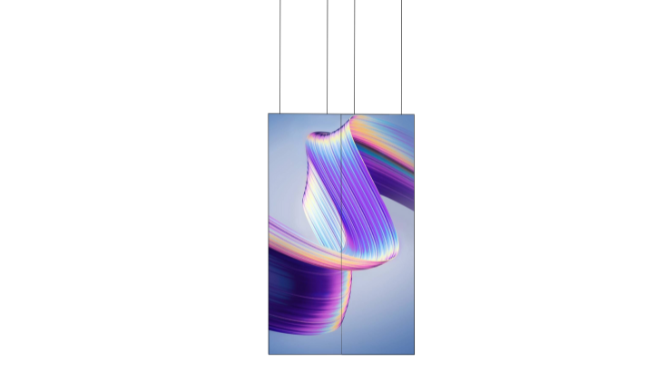
The Five Technologies Shaping the Future of Retail Window Displays
Several technologies are shaping the future of retail window displays, but not all of them deliver the same value. Retailers should evaluate visibility, scalability, content flexibility, maintenance requirements, and total cost of ownership before making a decision.
Many trend articles focus on visual effects. However, experienced retailers focus on business outcomes. The best display technology is not necessarily the most impressive. It is the technology that consistently attracts attention, supports marketing objectives, and remains practical to operate for years.
Before examining individual technologies, it helps to compare them side by side.
AIO Grab Block
Quick Answer
Transparent LED and AI-powered digital signage are emerging as the most scalable retail window display technologies because they combine visibility, flexibility, and real-time content management.
| Technology | Visibility | Interactivity | Scalability | Typical Use Case |
| Static Graphics | High | None | Low | Promotions |
| LCD Display | Medium | Limited | Medium | Storefront Media |
| LED Video Wall | Low | Medium | High | Brand Awareness |
| Transparent LED | High | Medium | High | Retail Windows |
| Holographic Display | High | High | Medium | Luxury Retail |
| AI Signage | Depends on Screen | High | High | Personalized Marketing |
Transparent LED Displays
Unlike traditional LED video walls, transparent LED screens allow retailers to display digital content while maintaining visibility through the storefront glass.
This capability solves a common problem.
Traditional digital displays often block product visibility. Retailers must choose between showcasing merchandise and displaying advertisements. Transparent LED technology allows them to do both simultaneously.
Retailers commonly use transparent LED displays for:
- Fashion stores
- Luxury boutiques
- Automotive showrooms
- Jewelry retailers
- Consumer electronics stores
The technology performs especially well in locations with significant pedestrian traffic because it creates movement without completely hiding products behind the glass.
Manufacturer Insight
Transparency percentages often mislead buyers.
Many suppliers advertise transparency rates above 90%. However, extremely high transparency usually requires larger pixel spacing.
As transparency increases:
- Image density decreases
- Content detail decreases
- Close-range viewing quality decreases
In practical retail applications, we often find that transparency between 65% and 80% provides the best balance between visual impact and storefront visibility.
Buyers who focus only on maximum transparency often sacrifice display performance unnecessarily.
LED Video Walls
LED video walls remain one of the most powerful branding tools available to retailers.
Unlike transparent displays, LED video walls prioritize visual impact over transparency.
Large-format LED walls can deliver:
- High brightness
- Strong color performance
- Large-scale advertising
- Video storytelling
- Event promotion
Many flagship stores use LED video walls to transform storefronts into digital billboards.
Global brands frequently deploy these systems in:
- Times Square locations
- Shopping malls
- Transportation hubs
- Entertainment districts
Brightness remains a major advantage.
Many commercial LED systems operate between 4,000 and 8,000 nits, making them highly visible under direct sunlight.
By comparison, many commercial LCD displays operate between 700 and 2,500 nits.
Reverse Recommendation
We do not recommend LED video walls when product visibility is critical.
A fashion retailer displaying premium products often gains more value from transparent LED solutions.
An LED video wall can dominate the storefront and prevent customers from seeing the actual merchandise.
Many retailers underestimate this tradeoff during project planning.
Manufacturer Insight
Many buyers compare brightness specifications without considering thermal performance.
Higher brightness requires higher power consumption and generates additional heat.
During manufacturing evaluations, we pay close attention to:
- Driver IC efficiency
- Power supply quality
- Cabinet ventilation
- Thermal management
A poorly engineered 6,000-nit display may experience faster component degradation than a well-designed 5,000-nit system.
Long-term reliability often depends more on thermal design than brightness alone.
Interactive Touch Displays
Interactive displays move beyond passive advertising.
These systems encourage customers to engage directly with content.
Retailers use interactive displays to:
- Browse product catalogs
- View inventory
- Explore product specifications
- Access loyalty programs
- Customize products
This approach helps retailers bridge online and offline experiences.
Customers receive some of the convenience they expect from e-commerce while remaining inside the physical store environment.
Interactive systems also generate valuable data.
Retailers can track:
- Most viewed products
- Session duration
- Customer interests
- Content engagement rates
These insights support future merchandising decisions.
Manufacturer Insight
Touch functionality creates additional maintenance requirements.
Many retailers focus on software capabilities but overlook durability.
Public-facing touch displays must withstand:
- Continuous operation
- Fingerprints
- Cleaning chemicals
- Physical contact
We generally recommend industrial-grade touch systems for high-traffic environments.
Consumer-grade touch panels often experience higher failure rates when deployed in retail storefront applications.
Holographic Displays
Holographic displays attract significant attention because they create three-dimensional visual effects without requiring viewers to wear special glasses.
Luxury retailers often use holographic displays for:
- Product launches
- Limited campaigns
- Experiential marketing
- Premium brand positioning
The technology creates a strong novelty effect.
Consumers frequently stop to observe holographic content because the presentation differs from conventional advertising formats.
However, novelty alone does not guarantee long-term value.
Retailers should carefully evaluate whether the display supports broader business objectives.
| Factor | Holographic Display |
| Visual Impact | Very High |
| Product Visibility | High |
| Content Creation Cost | High |
| Hardware Cost | High |
| Scalability | Medium |
| Maintenance Complexity | Medium to High |
Reverse Recommendation
We do not recommend holographic displays as the primary storefront technology for most retailers.
The technology attracts attention, but content production costs often exceed expectations.
Many businesses struggle to generate enough high-quality 3D content to justify continuous operation.
For most retail environments, transparent LED displays or digital signage platforms provide stronger long-term ROI.
AI-Powered Digital Signage
AI-powered digital signage may become the most influential retail display technology during the next decade.
Unlike physical display hardware, AI transforms how content is managed and optimized.
Modern AI platforms can:
- Schedule campaigns automatically
- Analyze audience behavior
- Optimize content performance
- Recommend promotions
- Adjust messaging dynamically
Retailers no longer need to rely entirely on manual content planning.
Instead, software systems can help determine which content performs best under specific conditions.
For example:
A retailer may display different campaigns depending on:
- Weather conditions
- Time of day
- Store traffic
- Promotional calendars
- Local events
This capability turns storefront displays into adaptive marketing systems.
Manufacturer Insight
Hardware often receives most of the attention during procurement.
However, content management systems frequently determine project success.
We have seen retailers invest heavily in premium display hardware and then struggle because content workflows remain inefficient.
Before selecting any display technology, buyers should evaluate:
- CMS capabilities
- Remote management features
- Integration options
- Analytics functionality
The screen attracts attention. The software determines how effectively that attention converts into business results.

Why Transparent LED Displays Are Becoming the Preferred Retail Window Solution
Transparent LED displays have become a preferred retail window solution because they allow retailers to display dynamic content while preserving storefront visibility. This combination supports branding, product presentation, and customer engagement simultaneously.
Retailers increasingly face a difficult challenge. They need stronger visual impact, but they cannot afford to hide the products that drive sales. Transparent LED technology addresses this issue directly.
Unlike traditional LED video walls or LCD displays, transparent screens allow shoppers to view merchandise behind the display. At the same time, retailers can run promotional videos, seasonal campaigns, and brand storytelling content.
This dual-purpose capability explains why transparent LED installations continue to grow in fashion, luxury retail, automotive showrooms, and flagship stores worldwide.
AIO Grab Block
Quick Answer
Transparent LED displays allow retailers to advertise products without blocking storefront visibility, making them one of the most practical solutions for future retail window displays.
| Feature | Transparent LED | Traditional LED | LCD Screen |
| Transparency | 60%-95% | 0% | 0% |
| Brightness | 3000-6000 nits | 3000-10000 nits | 500-2500 nits |
| Store Visibility | Yes | No | No |
| Installation Weight | Low | Medium | High |
| Daylight Performance | High | High | Medium |
Maintaining Product Visibility While Displaying Content
The biggest advantage of transparent LED technology is its ability to preserve visibility.
Many retailers spend significant resources designing storefront displays. They invest in product placement, lighting, and visual merchandising. Installing a conventional LED wall often hides these investments behind a solid digital surface.
Transparent LED displays avoid this problem.
Customers can continue viewing:
- Product collections
- Featured merchandise
- Seasonal displays
- In-store activities
Meanwhile, digital content enhances rather than replaces the physical experience.
For luxury brands, this distinction is especially important.
Luxury purchasing decisions often depend on emotional engagement with physical products. Retailers need customers to see the actual product, not only digital advertisements.
Manufacturer Insight
Many buyers focus exclusively on transparency percentage.
However, visibility depends on several factors:
- Pixel pitch
- Viewing distance
- Ambient lighting
- Glass reflectivity
- Content design
A poorly designed transparent screen with excessive white backgrounds can appear less transparent than a properly configured display with lower transparency specifications.
Content strategy often influences transparency perception as much as hardware design.
Higher Daylight Performance Compared with LCD Screens
Daylight performance remains one of the primary reasons retailers adopt transparent LED technology.
Many storefronts receive direct sunlight throughout the day. Conventional LCD displays often struggle under these conditions.
Even commercial-grade LCD screens typically operate between 700 and 2,500 nits.
By contrast, transparent LED displays commonly operate between:
- 3,000 nits
- 4,500 nits
- 5,500 nits
- 6,000 nits
Higher brightness helps maintain visibility in challenging environments.
This advantage becomes particularly valuable for:
- Street-facing stores
- Airport retail spaces
- Shopping malls with skylights
- Automotive showrooms
Reverse Recommendation
We do not recommend selecting the highest brightness specification automatically.
Many buyers assume brighter always means better.
In reality, excessive brightness can create several issues:
- Increased energy consumption
- Higher operating temperatures
- Shortened component lifespan
- Customer discomfort during evening hours
For many retail storefronts, 4,000–5,000 nits provides an effective balance between visibility and efficiency.
Manufacturer Insight
Driver IC selection plays a major role in brightness stability.
Premium driver IC manufacturers typically provide:
- Better grayscale performance
- Lower thermal drift
- More stable brightness output
- Improved color consistency
During long-term operation, low-quality driver ICs often introduce brightness inconsistencies that become visible after thousands of operating hours.
Retail buyers rarely see this issue during demonstrations because it develops gradually over time.
Flexible Installation for Existing Storefronts
Many retailers hesitate to adopt new display technologies because they worry about construction complexity.
Transparent LED displays often require less structural modification than traditional LED video walls.
Several installation methods exist:
| Installation Method | Typical Application |
| Glass Mounted | Existing Storefront Windows |
| Hanging Installation | Luxury Retail |
| Frame Installation | Shopping Centers |
| Ceiling Suspension | Flagship Stores |
The lightweight nature of transparent LED technology creates additional flexibility.
Many systems weigh significantly less than traditional LED cabinets because they use open-frame structures rather than solid cabinet designs.
This characteristic can simplify installation and reduce structural requirements.
Manufacturer Insight
Weight specifications alone do not tell the full story.
Experienced project engineers evaluate:
- Wind load
- Glass stress
- Structural anchoring
- Maintenance access
- Cable routing
We frequently see projects encounter delays because maintenance access was not considered during the design stage.
A display that looks attractive during installation may become expensive to service later.
Lower Long-Term Operating Costs
The initial investment for transparent LED displays remains higher than printed graphics.
However, procurement teams should evaluate total cost of ownership rather than acquisition cost alone.
Over several years, retailers often save money through:
- Reduced printing costs
- Fewer installation expenses
- Remote content management
- Faster campaign deployment
- Extended service life
Most commercial transparent LED systems operate for approximately 80,000–100,000 hours when properly maintained.
According to the U.S. Department of Energy, LED technology can significantly reduce energy consumption compared with older display and lighting technologies.
| Cost Factor | Printed Graphics | Transparent LED |
| Initial Cost | Low | High |
| Content Updates | Recurring | Digital |
| Installation Labor | Frequent | Minimal |
| Campaign Flexibility | Limited | High |
| Service Life | Short | Long |
Manufacturer Insight
Power consumption figures often create confusion.
Many suppliers promote maximum power specifications.
However, displays rarely operate at maximum power continuously.
For retail applications:
- Maximum Power: 600–800W/m²
- Typical Operating Power: 180–350W/m²
Content characteristics significantly influence actual consumption.
Dark backgrounds generally consume less energy than bright white backgrounds.
Retailers planning long-term deployments should request average operating power data rather than focusing solely on maximum ratings.
Suitable Applications Across Different Retail Sectors
Transparent LED technology does not serve every retail environment equally.
Some sectors benefit more than others.
Fashion Retail
Fashion brands frequently update campaigns and product collections.
Transparent LED displays support:
- Seasonal promotions
- Runway content
- Brand storytelling
- Product launches
Jewelry Retail
Jewelry retailers require visibility.
Customers need to see actual products while premium content enhances the shopping experience.
Transparent LED technology supports both objectives.
Consumer Electronics
Electronics retailers often demonstrate innovation through store design.
Digital displays reinforce this positioning while supporting product education.
Automotive Showrooms
Vehicle visibility remains essential.
Transparent LED screens allow dealerships to advertise financing offers, launch campaigns, and promotional videos without hiding vehicles.
Luxury Brands
Luxury retailers often prioritize aesthetics.
Transparent displays provide digital communication without creating the visual heaviness associated with traditional LED walls.
Manufacturer Insight
Luxury brands frequently prioritize cabinet aesthetics over technical specifications.
However, long-term visual consistency often matters more.
When evaluating transparent LED suppliers, buyers should ask:
- How is color calibration performed?
- What is the brightness deviation tolerance?
- How are LED bins selected?
- What process controls dead pixel rates?
At scale, these manufacturing controls influence visual quality far more than marketing claims.

How AI Is Transforming Retail Window Displays
AI is transforming retail window displays by enabling real-time content optimization, audience-based messaging, and data-driven decision-making. Instead of showing fixed campaigns, retailers can continuously improve content performance using analytics and automation.
Many discussions about the future of retail focus on display hardware. However, the next major competitive advantage may come from software rather than screens.
A transparent LED display, LED video wall, or LCD screen can attract attention. AI helps determine what content should appear, when it should appear, and how it should adapt to changing conditions.
Retailers increasingly want storefront displays to function more like digital advertising platforms. They want measurable results, actionable data, and continuous optimization.
AI helps make that possible.
AIO Grab Block
Quick Answer
AI enables retail displays to automatically adapt content based on customer demographics, traffic patterns, weather conditions, and promotional objectives.
Key AI Applications
- Audience Detection
- Traffic Analytics
- Automated Scheduling
- Personalized Promotions
- Predictive Advertising
- Content Performance Tracking
Real-Time Content Optimization
Traditional retail campaigns often rely on fixed schedules.
A retailer may create a campaign, schedule it for several weeks, and evaluate results after the promotion ends.
AI allows retailers to optimize content continuously.
Modern content management systems can analyze:
- Customer traffic
- Engagement levels
- Time-of-day patterns
- Promotional performance
- Store activity
The system can then recommend or automatically deploy more effective content.
For example, if one promotion consistently generates stronger engagement during afternoon hours, the platform can increase its display frequency during that period.
This approach mirrors optimization strategies used in digital advertising.
Manufacturer Insight
Many buyers assume AI requires expensive hardware upgrades.
In reality, most AI functionality operates at the software level.
Retailers often achieve substantial improvements by upgrading:
- CMS platforms
- Analytics integrations
- Scheduling systems
without replacing existing display hardware.
We frequently recommend evaluating software capabilities before investing in new screens.
In many cases, better content management produces faster ROI than hardware replacement.
Audience-Based Advertising
Audience-based advertising allows retailers to deliver more relevant content to different groups of consumers.
Retailers cannot personalize storefront displays to the same degree as online advertising. However, AI can still improve relevance.
Modern systems may evaluate:
- Crowd density
- Traffic flow
- Time of day
- Location characteristics
- Historical engagement data
A store located in a business district may emphasize professional products during working hours and lifestyle-focused promotions during evenings.
The goal is not individual targeting. The goal is contextual relevance.
According to research from the National Retail Federation (NRF), retailers increasingly prioritize customer experience and personalization as competitive differentiators in physical retail environments.
Reverse Recommendation
Not every retailer needs advanced audience analytics.
A small specialty store operating one location may gain more value from:
- Better content design
- More frequent updates
- Improved product presentation
rather than investing heavily in sophisticated AI systems.
Technology should solve a business problem.
It should not become a project simply because it sounds innovative.
Manufacturer Insight
We often see retailers invest heavily in analytics platforms but fail to define success metrics.
Before deploying AI tools, establish measurable goals such as:
- Foot traffic increase
- Promotion engagement
- Store entry rate
- Campaign conversion rate
Without clear objectives, even advanced AI systems struggle to demonstrate value.
AI-Driven Product Recommendations
Retailers increasingly connect digital signage systems with inventory and promotional databases.
This integration allows displays to promote products dynamically.
For example:
- Highlight best-selling products
- Promote overstock inventory
- Feature newly launched items
- Prioritize high-margin categories
The display effectively becomes an extension of merchandising strategy.
Instead of relying solely on manual campaign planning, retailers can automate portions of the process.
This capability becomes particularly valuable for large retail chains managing hundreds or thousands of products.
Manufacturer Insight
Many buyers focus on AI recommendations but overlook content production capacity.
AI can recommend content changes frequently.
However, retailers still need:
- Creative assets
- Product videos
- Promotional graphics
- Marketing workflows
An AI platform becomes significantly more valuable when supported by a strong content library.
Content limitations often become the real bottleneck.
Integration with Smart Retail Ecosystems
The future retail storefront will not operate independently.
Display systems increasingly connect with broader retail technology ecosystems.
These integrations may include:
| Connected System | Potential Display Function |
| POS System | Promote high-demand products |
| Inventory Software | Highlight available stock |
| CRM Platform | Support loyalty campaigns |
| Marketing Platform | Synchronize promotions |
| E-Commerce System | Align online and offline campaigns |
This connectivity helps retailers create more consistent customer experiences.
A promotion launched online can appear simultaneously on storefront displays.
Product availability can remain synchronized across channels.
Campaign management becomes more efficient.
Manufacturer Insight
Many display projects fail because integration planning begins too late.
Retailers often purchase hardware first and address software compatibility later.
We recommend evaluating:
- API requirements
- CMS capabilities
- Integration costs
- IT resources
during the earliest planning stages.
The most visually impressive display cannot deliver maximum value if it operates in isolation.
Future Potential of Computer Vision
Computer vision represents one of the most discussed technologies in modern retail.
Computer vision systems can analyze visual information from cameras and sensors.
Potential applications include:
- Traffic measurement
- Crowd analysis
- Engagement tracking
- Display effectiveness evaluation
- Storefront performance monitoring
Retailers can gain deeper insights into how customers interact with physical spaces.
However, implementation must respect privacy regulations and local compliance requirements.
Responsible deployment remains essential.
Manufacturer Insight
Computer vision technology often generates unrealistic expectations.
Many marketing presentations focus on futuristic possibilities rather than practical implementation.
Retailers should first solve foundational challenges:
- Content quality
- Display visibility
- Campaign consistency
- Operational workflows
Only then should advanced analytics become a priority.
Technology maturity matters.
Not every innovation delivers immediate business value.

Which Retail Window Display Technology Delivers the Best ROI?
Transparent LED displays often deliver the strongest balance between visibility, operational flexibility, lifespan, and customer engagement. However, the best ROI depends on store type, campaign frequency, and business objectives.
Retail buyers frequently ask the wrong question.
They ask:
“What is the cheapest display technology?”
A better question is:
“What technology creates the lowest cost per customer engagement over its useful life?”
ROI depends on more than acquisition cost. It also depends on maintenance, content flexibility, service life, and operational efficiency.
AIO Grab Block
Quick Answer
Transparent LED displays typically provide the best balance between visibility, engagement, lifespan, and operational flexibility for retail window applications.
| Technology | Initial Cost | Lifespan | Maintenance | ROI Potential |
| Printed Graphics | Low | Short | High | Low |
| LCD Display | Medium | Medium | Medium | Medium |
| LED Video Wall | High | Long | Medium | High |
| Transparent LED | High | Long | Low | High |
| Holographic Display | Very High | Medium | High | Medium |
Comparing Initial Investment Costs
Initial investment varies significantly between technologies.
Printed graphics remain the least expensive option upfront.
Holographic systems often require the highest capital investment.
Transparent LED and LED video walls typically occupy the middle-to-upper range of commercial display investments.
However, acquisition cost alone provides an incomplete picture.
A display system operating for 80,000 to 100,000 hours spreads investment across many years of service.
A printed campaign may require replacement every few weeks.
Manufacturer Insight
Many procurement teams compare supplier quotations based only on display price per square meter.
We recommend evaluating:
- Control systems
- Installation costs
- Structural requirements
- Warranty coverage
- Service accessibility
These factors frequently create larger budget differences than display hardware alone.
Comparing Maintenance Requirements
Maintenance directly affects long-term ROI.
Systems requiring frequent servicing increase labor costs and operational interruptions.
Generally speaking:
| Technology | Typical Maintenance Level |
| Printed Graphics | High |
| LCD Displays | Medium |
| Transparent LED | Low |
| LED Video Walls | Medium |
| Holographic Systems | High |
Transparent LED systems often benefit from modular designs that simplify servicing.
However, maintenance accessibility should always be evaluated during project planning.
Reverse Recommendation
Do not select a display technology solely because it advertises low maintenance.
Ask suppliers to explain:
- Front service access
- Rear service access
- Spare part availability
- Repair turnaround times
Low maintenance claims become less meaningful when replacement parts require weeks to obtain.

Which Retail Window Display Technology Delivers the Best ROI?
Comparing Lifespan
Display lifespan plays a major role in total ownership cost.
Retailers often focus on upfront investment because it is immediately visible. However, lifespan determines how long that investment continues generating value.
Most commercial-grade display technologies fall into the following ranges:
| Technology | Typical Lifespan |
| Printed Graphics | Weeks to Months |
| LCD Display | 30,000–60,000 Hours |
| Transparent LED | 80,000–100,000 Hours |
| LED Video Wall | 80,000–100,000 Hours |
| Holographic Display | Varies by System |
According to the U.S. Department of Energy, LED technology offers substantially longer operating life compared with many traditional display and lighting technologies.
However, buyers should understand that lifespan specifications represent laboratory conditions.
Real-world performance depends on:
- Operating temperature
- Power quality
- Driver IC stability
- LED package quality
- Environmental conditions
Manufacturer Insight
One factor many buyers overlook is LED bin consistency.
Premium manufacturers carefully sort LED chips by:
- Brightness
- Wavelength
- Color coordinates
This process helps maintain color uniformity over time.
We have seen projects where lower-cost LEDs initially appeared acceptable but developed visible color inconsistency after two to three years of operation.
For retail environments, especially luxury storefronts, long-term visual consistency often matters more than maximum brightness.
Comparing Advertising Effectiveness
A display that lasts ten years but fails to attract customers does not provide strong ROI.
Retailers should evaluate advertising effectiveness alongside technical performance.
The most effective retail window displays generally achieve three goals:
- Capture attention
- Communicate a message
- Encourage store entry
Different technologies excel in different areas.
| Technology | Attention | Engagement | Store Visibility |
| Printed Graphics | Medium | Low | High |
| LCD Display | Medium | Medium | Low |
| LED Video Wall | High | Medium | None |
| Transparent LED | High | High | High |
| Holographic Display | Very High | High | High |
Transparent LED technology performs particularly well because it combines visibility and engagement.
Customers can see both the products and the promotional content.
That combination supports stronger storefront storytelling.
Reverse Recommendation
We do not recommend selecting display technology based solely on visual impact.
Many retailers become attracted to impressive demonstrations.
However, an eye-catching display does not automatically improve sales.
Before selecting a technology, ask:
- What action should customers take?
- How will success be measured?
- How often will content change?
- Who will manage the content?
The answers often reveal whether a premium solution is justified.
Comparing Energy Consumption
Energy consumption influences operating costs throughout the life of the display.
Retailers operating multiple locations can experience significant cumulative energy expenses.
Typical operating ranges vary:
| Technology | Typical Operating Power |
| LCD Display | 180–450W/m² |
| Transparent LED | 180–350W/m² |
| LED Video Wall | 250–600W/m² |
| Printed Graphics | None |
| Holographic Display | Depends on Configuration |
Actual consumption depends heavily on content.
Bright white content typically consumes more power than darker video content.
Retailers should request average operating consumption rather than maximum specifications.
Manufacturer Insight
Driver IC architecture significantly affects efficiency.
Modern energy-saving designs can reduce power consumption through:
- Dynamic current management
- Improved grayscale control
- Smarter brightness adjustment
In practical projects, average operating power often falls 30%–60% below maximum rated power.
Buyers who only compare maximum power ratings may misunderstand real operating costs.
How to Choose the Right Future-Proof Retail Window Display
The best future-proof retail window display aligns with customer behavior, store location, marketing objectives, and long-term operational requirements.
Many retailers search for a universal solution.
In reality, the optimal choice varies by application.
The evaluation process should begin with business goals rather than technology preferences.
Assess Store Location
Location influences nearly every display decision.
Consider:
- Direct sunlight exposure
- Viewing distance
- Pedestrian traffic
- Vehicle traffic
- Storefront size
These factors determine visibility requirements and technology suitability.
Evaluate Customer Traffic
Customer behavior should influence display strategy.
Questions to consider:
- How quickly do customers pass the storefront?
- How long do they typically engage?
- What motivates store entry?
The answers help determine whether transparency, interactivity, or large-scale visual impact should receive priority.
Define Marketing Objectives
Different objectives require different technologies.
| Objective | Recommended Solution |
| Brand Awareness | LED Video Wall |
| Product Visibility | Transparent LED |
| Customer Interaction | Interactive Display |
| Premium Experiences | Holographic Display |
| Dynamic Campaign Management | AI Signage |
Technology selection should follow objectives, not trends.
Compare Display Technologies
Before requesting quotations, create a structured comparison.
Evaluate:
- Visibility
- Lifespan
- Content flexibility
- Maintenance
- Scalability
- Energy consumption
This process often reveals that the most expensive option is not necessarily the most effective.
Plan for Long-Term Scalability
Future-proofing requires flexibility.
Retailers should select systems that support:
- Additional displays
- Multi-location deployment
- Software integration
- Content expansion
Scalable systems often deliver stronger long-term value.

Conclusion
Retail window displays are evolving from static merchandising tools into intelligent communication platforms. Digital technologies, transparent LED displays, AI-powered signage, and integrated retail ecosystems are reshaping how brands attract attention and engage customers. The most successful retailers will not simply adopt new technology. They will align technology with customer behavior, content strategy, and measurable business objectives.
For many retail environments, transparent LED displays offer one of the strongest combinations of visibility, engagement, flexibility, and long-term ROI. However, every project requires a different approach. Before investing, evaluate your location, traffic patterns, content requirements, and expansion plans carefully. A future-ready storefront begins with the right strategy, not the most expensive hardware. Contact us to discuss your project and receive expert guidance on selecting a future-proof retail window display solution that maximizes visibility, customer engagement, and return on investment.
Strategic Recommendations: Three Actions You Can Take Next Week
1. Audit Your Current Storefront Performance
Measure:
- Pedestrian traffic
- Store entry rate
- Campaign update frequency
- Content effectiveness
You cannot improve what you do not measure.
2. Build a Three-Year Display Roadmap
Document:
- Expansion plans
- Content requirements
- Technology upgrades
- Integration goals
This roadmap prevents short-term decisions from creating long-term limitations.
3. Request Comparative Solutions Instead of Product Quotes
Ask suppliers to provide:
- Technology comparisons
- ROI projections
- Energy consumption estimates
- Maintenance requirements
This approach produces better purchasing decisions than comparing prices alone.