


Window LED screen
Enhanced Visibility: Bright LEDs keep content clear day and night, making windows stand out.
Customizable Designs: Panels come in various shapes and sizes to match any window layout.
Interactive Marketing: Touch or sensor features engage customers directly.
Energy Efficiency: LEDs use less power than traditional signage, saving energy.
Easy Maintenance: Front and rear serviceable modules allow quick repairs.
What Are LED Window Displays and How Do They Work?
LED window displays are high-resolution screens installed on glass surfaces or within window structures, designed to deliver vivid visual content while maintaining transparency. Unlike traditional opaque displays, these solutions allow natural light to pass through, preserving store visibility and creating a seamless integration between digital content and the physical environment.
Dive deeper: LED window screens use a matrix of LEDs embedded on transparent panels or flexible films. Pixel density, transparency ratio, and brightness determine display quality and viewing distance. For instance, a pixel pitch of 4mm with 60% transparency provides a clear image while allowing customers to see interior displays behind the screen. Advanced models support interactive content, touch response, and integration with cloud-based content management systems (CMS), enabling real-time updates and remote control.
Popular LED Window Display Products
To meet diverse business needs, LED window displays come in several innovative formats. Each format addresses specific applications and installation requirements.

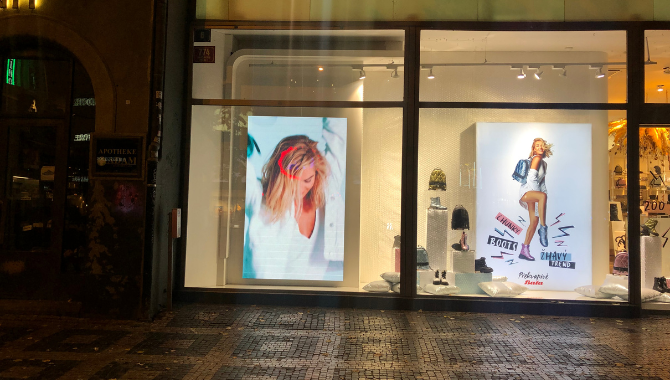
Shop window posters are compact, high-resolution LED displays designed for storefront advertising. They combine clarity, brightness, and portability to highlight promotions, product launches, or seasonal campaigns.
Ideal for small-to-medium storefronts
Easy installation and repositioning
Supports dynamic content scheduling via cloud CMS

Transparent LED banners offer a flexible, see-through display solution for larger windows and curtain walls. These banners maintain natural light transmission while delivering eye-catching visuals.
High transparency (50%-85%)
Modular panels for extended width and height
Suitable for retail chains, malls, and architectural facades

Holographic invisible LED screens create the illusion of floating images and interactive content. This format is perfect for premium brands and experiential marketing, delivering a futuristic, immersive experience.
3D holographic effect for striking visual impact
Can integrate with AR or motion sensors
Works in museums, exhibitions, and luxury retail
Technical Considerations for Implementation

For outdoor-facing windows, panels should meet IP65 standards.
Panels must withstand UV exposure, temperature fluctuations, and humidity.

LED technology is inherently energy-efficient.
Monitor total power consumption, particularly for large-scale installations.

Glass panels must support weight and installation load.
Consider adhesive films or framing options for temporary setups.

Ensure compatibility with existing CMS or digital signage systems.
Support standard input signals (HDMI, DVI, Ethernet) for flexible content delivery.
High Visibility and Brightness
LED displays offer vivid colors and high brightness, making content clearly visible both day and night, even in direct sunlight.
Ensures your storefront or advertisement stands out in busy streets and malls.


Transparency and Space Efficiency
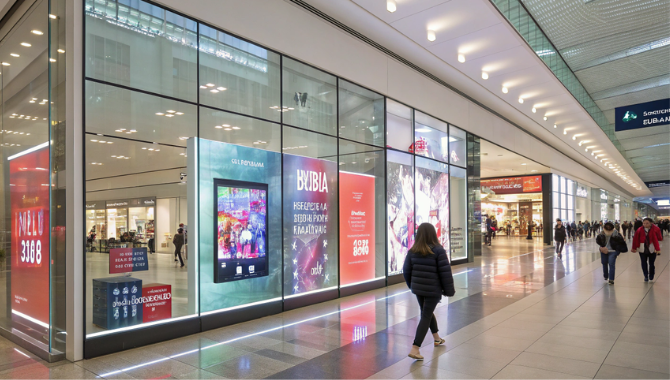
Transparent LED panels allow natural light to pass through, maintaining interior visibility while displaying digital content.
Ideal for glass windows, shopfronts, and commercial buildings without blocking the view.
Customizable Designs
Available in various sizes, shapes, and flexible configurations, including curved or irregular windows.
Supports brand-specific creative designs and tailored marketing campaigns.


Interactive and Engaging Content
Supports touch, motion sensors, or AR integration, enhancing customer engagement.
Creates memorable experiences that attract foot traffic and boost sales.
Energy Efficiency
Modern LED panels consume less power than traditional light boxes or projection systems, reducing operating costs and supporting sustainability.
Easy Maintenance and Durability
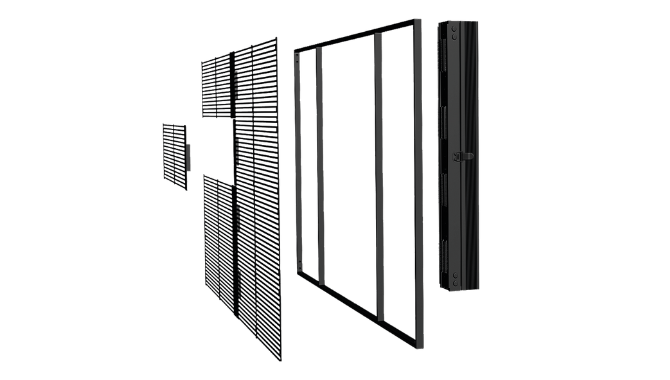
Modular design allows front or rear servicing, minimizing downtime.
Durable against environmental factors like UV exposure, temperature changes, and humidity.
Marketing ROI and Analytics Support
Enables real-time content updates and integration with analytics tools.
Businesses can track engagement, measure performance, and optimize campaigns effectively.

Choosing the Right LED Window Display


Selecting the appropriate LED window display requires careful consideration of several technical and operational factors.
Pixel Pitch and Resolution:
Smaller pixel pitches (P2.5–P4) are suitable for close viewing distances in storefronts.
Larger pitches (P5–P10) work well for larger commercial or architectural windows.
Brightness and Transparency:
Brightness levels above 3,000–4,500 nits are recommended for outdoor-facing windows.
Transparency ratios between 50% and 85% balance visibility of interior products and clarity of digital content.
Panel Type:
Glass LED Panels: Rigid, high-transparency panels ideal for permanent installations.
LED Window Films: Flexible, adhesive solutions suitable for temporary or curved surfaces.
Installation and Maintenance:
Modular designs simplify installation and replacement.
Consider front and rear serviceability for minimal disruption.
Investing in LED window displays can deliver measurable ROI when integrated effectively into commercial operations.
Foot Traffic Increase: Studies show dynamic digital signage can boost pedestrian attention by up to 83% (source: Digital Signage Federation).
Sales Conversion: Interactive window displays can increase in-store conversion rates by 20–30% in pilot retail deployments.
Operational Savings: Energy-efficient LED panels reduce lighting costs compared to traditional backlit signs.
By calculating ROI before deployment, businesses can forecast payback periods and operational benefits. Downloadable ROI calculators can assist procurement teams in estimating returns based on panel size, brightness, content schedule, and installation costs.

To maximize the impact of LED window installations, businesses should adopt creative, data-driven content strategies.
Day-Night Mode: Adjust content brightness and contrast for varying lighting conditions.
Seasonal Campaigns: Rotate promotions and thematic visuals throughout the year.
Interactive Engagement: Encourage passersby to interact via touch, motion, or mobile apps.
Analytics Integration: Monitor engagement metrics, foot traffic, and conversion rates.
These strategies enhance customer experience while providing actionable data for marketing and sales teams.
Applications Across Industries
Attract passerby attention with dynamic visual content.
Display seasonal promotions, product highlights, or interactive campaigns.
Increase foot traffic and dwell time through engaging content.
Use storefronts as interactive digital billboards.
Deliver high-impact campaigns without relying solely on traditional media.
Cloud-based CMS allows simultaneous multi-location content updates.
Integrate LED glass walls or panels into building facades.
Maintain transparency while creating digital signage for tenants or visitors.
Supports branding, wayfinding, or safety messaging.
Flexible panels allow installation on temporary structures.
High brightness ensures visibility in ambient light conditions.
Modular designs enable quick assembly and disassembly.
Yes. High-brightness panels (3,000–4,500 nits) ensure visibility in daylight. Outdoor-rated IP65 panels resist moisture and UV damage.
Consider viewing distance: smaller pitches (P2.5–P4) suit close-up retail, while larger pitches (P5–P10) are better for distant or large-area installations.
No. Modular designs with front and rear serviceability allow easy maintenance without major disruption.
Yes. Many displays integrate with cloud-based CMS, allowing real-time updates across multiple locations.
LED technology is energy-efficient. Consumption depends on size and brightness, but it is significantly lower than traditional projection or backlit signage.