


Confused about aspect ratios? You are not alone. It seems like many people can’t make sense of what that tiny difference between a 16:10 and 16:9 display is. This article will explain it to you.
Understanding Aspect Ratios

The aspect ratio is merely the relation of a display’s width in regard to its height, given with two numbers separated by a colon. For example, the 16:9 aspect ratio represents that for every 16 units of width, there are 9 units of height. Everything you see on your screen, from how much content you are able to view at once to how images and videos are displayed, is dictated by this ratio.
Different purposes demand different aspect ratios. A wider ratio, like 16:9, offers more horizontal space, while a taller one, like 16:10, gives more room vertically. The realization of the issue of differences will help you choose a display for your needs, whether working with photo editing or more fond of watching movies and even with spreadsheet work.
16:10 vs 16:9: Basic Dimensions

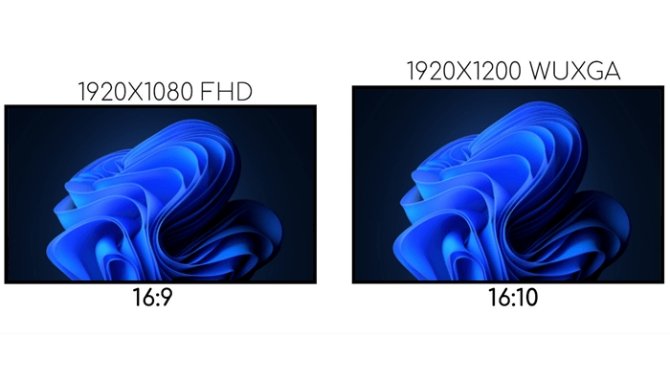
The easiest way to know the difference between a 16:10 and a 16:9 ratio is to break down the basic dimensions of each.
16:10 ratio:
- For each 16 in width, there are 10 in height
- Example of display resolution: 1920×1200
16:9 ratio:
- For each 16 in width, there are 9 in height
- Example of display resolution: 1920×1080
The key difference is that 16:10 displays are a bit taller compared to their 16:9 siblings. This minor adjustment makes for significant differences in the way you view and work on your computer.
In my opinion, the extra height that the 16:10 ratio provides is rather underestimated. I’m still surprised how much of a difference that little addition in vertical estate makes, especially while working with documents or browsing the web.
Historical Context: 16:10 vs 16:9

We can see how these aspect ratios evolved in the following way:
16:10
- First introduced during the early 2000s
- Initially popular for computer monitors
- Gave a good balance between wide-screen content and also spaces in the vertical.
16:9
- This was standardized for HDTVs in the middle of the 2000s
- Thus laptop manufacturers quickly adapted to this aspect ratio
- This presently is the most common display aspect ratio
The transition to 16:9 was primarily stirred by the wide consumption of widescreen video content and the urge for standardization on different devices. The information above brings one to the conclusion that the aspect ratio of 16:10 has retained a niche following, particularly among professional users who find extra vertical space highly useful.
Screen Real Estate: 16:10 vs 16:9

Obviously, some of the most noticeable differences between these ratios are the amount of screen real estate they provide. Some of the pros and cons of the 16:10 and 16:9 ratios include the following:
16:10 Advantages:
- More vertical space
- Better for reading long documents
- Allows for easier multitasking: side-by-side windows
16:9 Advantages:
- Wider screen, better for widescreen video content
- More common, and easier to find compatible hardware and software
That additional room in the vertical area may become pretty handy if you happen to be one of those people who always work on long documents, spreadsheets, and coding environments. If you are more of a consumer of wide-screen media, then a 16:9 display could be more fitting.
I find that the extra verticality of 16:10 is a total game-changer for productivity. It’s amazing how much difference those extra pixels make while scrolling down in a long document or coding, but yes, I do have to admit that for media consumption, 16:9 very often feels more natural, given how pervasive it is in the world of video.
Content Compatibility: 16:10 vs 16:9

Each of these ratios shines in different types of content compatibility:
16:10 compatibility:
- Hosts 16:9 and 4:3 content with minimal black bars
- offers extra space for toolbars in productivity applications
- some games, may push the interface elements to the sides
16:9 compatibility:
- Perfect for most modern video content
- standard of most games, so full-screen experiences are expected
- may feature black bars when viewing older material in 4:3
With a 16:10 display, you will have more flexibility if you work with a variety of content types. For an entertainment setup, though, 16:9 may be a better choice since most multimedia is produced at that ratio.
But saying that, I do find the 16:10 a very versatile ratio; it’s the best of both worlds since you could comfortably view widescreen content and still have that extra space vertically for other tasks. That said, I really can’t deny the convenience of 16:9 for modern media consumption. It’s actually very hard to decide and boils down to your use case.
Gaming Experience: 16:10 vs 16:9

The decision between 16:10 and 16:9 for gamers is all about how one wants their playing experience to be:
16:10 Gaming Advantages:
- Wider field of view in certain games
- Extra vertical space may be useful for strategy games
- May provide a competitive edge in certain titles
16:9 Gaming Advantages:
- Standard Aspect Ratio for most modern games
- Guarantees Compatibility with Game HUDs and Interfaces
- No Stretching or Cropping of Game Visuals
While most gaming is performed at 16:9, a growing number of gamers prefer the vertical space offered by 16:10. Certain titles, especially strategy games or those where vision is a decided tactical advantage, will see the most benefit.
So, in a general view, I have found 16:9 to be more convenient due to its widespread support. Nevertheless, I couldn’t help but appreciate the extra vertical space provided by 16:10 in certain games, especially strategy titles. Although not a make-or-break factor for most gamers, it is something that one should really consider if a person is going to play many games that would really benefit from having that extra screen vertical real estate.
Productivity Applications: 16:10 vs 16:9

The aspect ratio makes a difference in work and productivity in the following lines:
16:10 Productivity Features
- More vertical space for documents and web pages
- Better coding due to more visible lines of code
- Improved multitasking with vertically stacked windows
16:9 Productivity Features
- Widescreen suitable for spreadsheets and timelines
- More adaptable to side-by-side document comparison
- More suitable for video editing with wide-screen footage
If most of your work involves editing a lot of documents, coding, or vertical scrolling, then 16:10 may be more comfortable for you. In case your work often involves wide layouts or video, you may want to choose 16:9.
In my experience, I have found that 16:10 is a productivity powerhouse. Extra vertical space is really useful when working with long documents or code. That reduces unnecessary scrolling and lets you see more content at once, surely improving workflow efficiency by leaps and bounds. But I also appreciate the width of 16:9 when doing things like video editing or working on a wide spreadsheet. It’s about matching the tool to the task, really.
Video and Film Viewing: 16:10 vs 16:9
Aspect ratio is one key in the case of watching videos and films:
16:10 video viewing:
- Good balance between 16:9 and 4:3 content to provide the least black bars
- May letterbox some very wide cinematic movies
- Allows subtitle space without covering the actual content
16:9 video viewing:
- Perfect fit for most modern TV shows and YouTube videos
- Matches the aspect ratio of many movies
- May have black bars on older 4:3 content
For a committed entertainment setup, the 16:9 is usually preferred, as most of the modern video content is compatible with it. On the contrary, a 16:10 display offers a good compromise while watching multipurpose content that also includes older 4:3 shows.
This really makes 16:10 a pretty good all-rounder, as I tend to watch old and new content equally. Being able to watch both 16:9 and 4:3 content comfortably is a huge plus. In terms of pure movie especially the more modern stuff-it’s kind of hard to beat the immersion that would be presented through a 16:9 display. Really, it all just comes down to what type of content you consume most often.
Future Trends: 16:10 vs 16:9

As display technologies gradually improve with time, so do the users’ preferences. Here’s what you could see in the future:
16:10 Future trends:
- Remaining niche, staying popular among professionals
- Possible resurgence in productivity-focused devices
- Some adoption in certain tablets and convertibles
16:9 Future trends:
- Will continue to be standard for TVs and most monitors.
- Continued dominance in the laptop market
- The gradual shift towards even wider ratios, such as 21:9, in some applications
This is very likely to change in the near future, as there is a growing interest in both taller rates 16:10 or even 3:2 for productivity and wider ratios for immersive entertainment experiences.
Personally, I am excited to see where this display technology will go in the future years. With any luck, we will start to see more options fitting different use cases, even though 16:9 is likely to remain dominant due to the pervasive nature of that format in media. It is also telling that taller formats 16:10 and 3:2, for example, start to get more interest again for productivity, while the growth in popularity of ultra-wide displays for gaming and multitasking at large proves there still is room for innovation on this axis.
Conclusion
Have you decided? If not, don’t worry about it, most of us are adequately served by either aspect ratio. For now, focus on finding a good display that fits into your budget and space. NSE carries both 16:10 and 16:9 displays. Let our experts help match you up.