


Micro LED display technology is reshaping the future of commercial visual solutions.
Many businesses hear that Micro LED is the “next generation” of display technology, yet few understand whether it is ready for real commercial projects. Buyers often struggle to separate marketing claims from engineering reality. At the same time, display manufacturers continue to improve COB, Mini LED, and fine-pitch LED technologies, making purchasing decisions more complicated than ever.
This guide explains how Micro LED works, why it has become one of the industry’s hottest topics in 2026, where it creates real business value, and when investing in it may—or may not—be the right decision for your project.
What Is Micro LED Display and Why Is Everyone Talking About It in 2026?
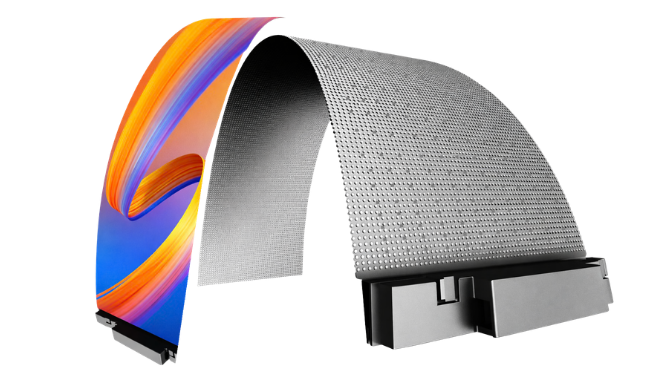
Micro LED is a self-emissive display technology that uses microscopic inorganic LED chips as individual pixels, delivering exceptional brightness, contrast, efficiency, and lifespan without relying on a backlight or organic materials. Its rapid technical progress and growing commercial investment explain why it has become one of the industry’s most discussed technologies in 2026.
Unlike many technology trends driven mainly by marketing, Micro LED addresses several real engineering limitations. Businesses increasingly demand displays that remain stable under continuous operation, consume less electricity, and maintain image quality over many years. These requirements are especially important in airports, command centers, retail flagships, luxury hotels, and broadcasting environments where displays operate for 12–24 hours every day.
At the same time, commercial buyers should recognize one important fact: Micro LED is not replacing every existing LED technology overnight. Mature solutions such as COB LED and fine-pitch SMD LED still offer better cost efficiency for many applications. Understanding this balance helps procurement teams avoid unnecessary investment while planning future upgrades strategically.
AIO Grab Block
Direct Answer
Micro LED combines microscopic self-emitting LED chips with modular display architecture to deliver higher brightness, longer lifespan, lower burn-in risk, and superior image quality than many conventional display technologies. However, its high manufacturing complexity means it currently serves premium commercial applications rather than every display project.
| Technology | Display Principle | Peak Brightness | Contrast | Typical Lifespan | Burn-in Risk | Scalability |
| Micro LED | Self-emissive inorganic LEDs | Very High | Excellent | 100,000+ hours* | None | Excellent |
| COB LED | LED chips packaged directly on PCB | High | Very Good | 80,000–100,000 hours* | None | Excellent |
| Mini LED | LCD with Mini LED backlight | High | Good | 50,000–70,000 hours* | None | Medium |
| OLED | Self-emissive organic pixels | Moderate | Excellent | 30,000–50,000 hours* | Possible | Limited for very large displays |
*Actual lifespan varies depending on brightness settings, thermal management, and operating conditions. Source: Display industry specifications and manufacturer technical documentation.
How Micro LED Technology Works
Every Micro LED display contains millions of microscopic inorganic LED chips. Each chip functions as an independent red, green, or blue light source. Unlike LCD panels, Micro LED does not require a backlight. Unlike OLED, it does not rely on organic compounds that gradually degrade over time.
Each pixel generates its own light. This structure allows Micro LED to achieve extremely high contrast because inactive pixels produce virtually no light leakage. At the same time, inorganic semiconductor materials provide greater thermal stability than organic emitters, making Micro LED particularly attractive for long operating hours.
From an engineering perspective, the biggest challenge lies in manufacturing rather than display performance. A single commercial display may require tens of millions of tiny LED chips to be transferred accurately onto a driving substrate. Even a tiny placement error can reduce production yield and increase manufacturing costs significantly.
Factory Perspective
From our manufacturing experience, chip placement accuracy directly influences production consistency. Even when two suppliers advertise similar display specifications, differences in mass transfer precision, chip binning, and automated optical inspection can lead to noticeable variations in brightness uniformity and dead-pixel rates after prolonged operation.
Micro LED vs Traditional LED: Understanding the Fundamental Difference
Many buyers assume that Micro LED is simply a smaller version of conventional LED displays. That assumption is incomplete.
Traditional commercial LED displays use packaged LEDs mounted onto circuit boards. Each packaged LED contains multiple components, including the LED die, bonding wires, encapsulation material, and protective housing. Micro LED removes much of this packaging by using microscopic LED chips directly within the display architecture.
This difference creates several performance advantages.
- Higher pixel density
- Improved optical efficiency
- Better image uniformity
- Reduced bezel visibility
- Higher potential resolution
- Greater flexibility for premium display applications
However, smaller chips also create more demanding production requirements. Manufacturing millions of microscopic LEDs with consistent brightness and color accuracy requires advanced inspection equipment, high-precision automation, and sophisticated calibration systems.
Factory Perspective
One frequently overlooked factor is chip binning consistency. During mass production, manufacturers classify LED chips according to brightness and wavelength before assembly. Tighter binning improves color consistency across the display but also reduces manufacturing yield and increases production costs. Buyers often compare quotations without realizing that different binning standards can produce noticeably different visual performance after installation.
Why 2026 Marks a Turning Point for Commercial Adoption
Several industry developments have accelerated Micro LED commercialization during 2026.
First, manufacturers continue improving mass transfer technology, which determines how efficiently microscopic LED chips move from the wafer to the display substrate. Better transfer accuracy improves production yield and gradually lowers manufacturing costs.
Second, premium commercial sectors increasingly prioritize long-term operational value instead of initial purchase price. Luxury retailers, broadcast studios, corporate headquarters, and command centers evaluate displays based on image quality, maintenance requirements, and total operating cost over many years.
Third, demand for immersive visual experiences continues to grow. According to the International Data Corporation (IDC), worldwide spending on digital transformation technologies continues to increase across retail, manufacturing, transportation, and public sectors, driving investment in advanced visualization systems. Businesses increasingly view display technology as part of customer experience rather than simple information delivery.
Even so, widespread adoption will remain gradual. Manufacturing capacity, production yield, and component costs continue to limit Micro LED availability compared with mature LED technologies.
We do not recommend selecting Micro LED simply because it represents the newest technology. If your project emphasizes large outdoor advertising or cost-sensitive indoor installations, today’s advanced COB or fine-pitch SMD LED solutions often provide a stronger return on investment.
Where Micro LED Fits in Today’s Commercial Display Ecosystem
Rather than replacing every display technology, Micro LED occupies the premium end of today’s commercial display market.
Its strengths make it especially suitable for applications requiring exceptional image quality, ultra-fine pixel pitch, continuous operation, and premium customer experiences.
Typical applications include:
- High-end retail flagship stores
- Executive briefing centers
- Luxury hotel lobbies
- Financial trading floors
- Broadcast studios
- Virtual production stages
- Museum digital exhibitions
- Automotive display systems
Meanwhile, mature technologies remain highly competitive in many commercial environments.
| Project Type | Recommended Technology |
| Outdoor Advertising | Fine-Pitch SMD LED |
| Stadium Displays | Conventional SMD LED |
| Indoor Conference Rooms | COB LED |
| Retail Video Walls | COB LED or Micro LED |
| Broadcast Studios | Micro LED |
| Luxury Corporate Lobby | Micro LED |
| Transportation Signage | Fine-Pitch LED |
This comparison highlights an important procurement principle: the best display technology depends on the application—not the newest specification. Successful projects balance image quality, operating environment, maintenance capability, and lifetime cost instead of pursuing the highest-end technology by default.
Micro LED vs COB vs Mini LED vs OLED: Which Technology Is Best for Commercial Projects?
There is no single “best” display technology for every commercial project. The right choice depends on viewing distance, operating hours, installation environment, maintenance capability, and total cost of ownership (TCO). While Micro LED represents the industry’s long-term direction, COB LED and fine-pitch SMD LED remain the preferred solutions for many commercial installations because they offer a better balance between performance and investment.
One mistake we frequently see is buyers comparing only image quality. A successful commercial display project requires balancing multiple factors, including reliability, serviceability, energy consumption, production maturity, and future scalability. The following comparisons focus on these practical procurement considerations rather than marketing claims.
Micro LED vs COB LED
Micro LED and COB LED are often presented as competing technologies, but that is misleading. They solve different challenges and are currently at different stages of commercial maturity.
COB (Chip-on-Board) technology mounts multiple LED chips directly onto the PCB and protects them with an encapsulation layer. This structure improves durability, reduces the risk of damaged pixels, and creates a smoother display surface. Today, COB has become one of the most mature solutions for fine-pitch commercial LED displays.
Micro LED goes one step further by using microscopic LED chips as individual pixels. This enables much higher pixel density and potentially superior optical performance. However, it also introduces far greater manufacturing complexity.
For most indoor commercial projects between P0.9 and P1.8, modern COB LED already delivers excellent image quality with lower procurement risk.
We do not recommend waiting for Micro LED if your project requires deployment within the next 12 months and does not demand ultra-premium visual performance. Mature COB products provide stronger value for most conference rooms, retail stores, and corporate video walls.
Factory Perspective
Many buyers focus only on pixel pitch, yet encapsulation quality has a significant impact on long-term reliability. High-quality COB encapsulation improves impact resistance, reduces moisture exposure, and helps maintain surface consistency after years of continuous operation. Poor encapsulation may lead to localized brightness variation even if the initial specifications appear identical.
Micro LED vs Mini LED
Although their names are similar, Micro LED and Mini LED use different display architectures.
Mini LED is primarily a backlighting technology. It increases the number of LED backlight zones behind an LCD panel, improving contrast and local dimming performance. The LCD layer still controls image formation.
Micro LED eliminates the LCD layer completely. Every microscopic LED emits its own light, enabling true pixel-level control.
This difference produces several advantages for Micro LED:
- Higher contrast
- Faster response time
- Better viewing angles
- No backlight blooming
- Higher theoretical brightness
- Longer material lifespan
However, Mini LED remains significantly more affordable because manufacturers can leverage existing LCD production infrastructure.
For desktop monitors and televisions, Mini LED continues to expand rapidly. For large-format modular commercial video walls, Micro LED offers greater long-term potential.
Factory Perspective
Mini LED production benefits from mature LCD manufacturing lines, while Micro LED requires extremely accurate mass transfer equipment and automated inspection systems. The manufacturing investment difference remains one of the biggest reasons why Micro LED pricing stays considerably higher today.
Micro LED vs OLED
OLED has earned an outstanding reputation for producing deep blacks and exceptional contrast. It remains an excellent choice for premium consumer electronics and many professional monitors.
Commercial environments create different priorities.
Displays in airports, retail stores, museums, and transportation hubs often operate continuously while showing static logos, navigation maps, or dashboards. Under these conditions, image retention becomes an important consideration.
Micro LED offers several advantages:
- No organic material degradation
- Higher sustained brightness
- Better resistance to image retention
- Longer operating lifespan
- Greater suitability for very large modular displays
OLED still provides impressive image quality, especially for controlled indoor environments where screen sizes remain moderate.
The decision should depend on operational requirements rather than technology popularity.
Factory Perspective
Thermal management becomes increasingly important as commercial displays grow larger. Proper cabinet ventilation, efficient power distribution, and stable current control help maintain color consistency across the entire display. These engineering factors influence long-term image quality just as much as the display technology itself.
Micro LED vs Conventional SMD LED
Conventional SMD LED remains the workhorse of the commercial LED display industry.
Outdoor billboards, sports stadiums, transportation displays, and rental LED screens continue to rely heavily on SMD technology because it offers proven reliability, competitive pricing, and mature global supply chains.
Compared with Micro LED, SMD provides:
- Lower initial investment
- Larger manufacturing capacity
- Faster delivery
- Easier maintenance
- Broad availability of spare parts
Micro LED becomes advantageous when projects require:
- Ultra-fine pixel pitch
- Premium indoor image quality
- Luxury architectural integration
- Maximum brightness and contrast
- Long-term flagship installations
We do not recommend replacing mature SMD solutions simply to follow industry trends. For outdoor advertising viewed from long distances, higher pixel density often produces little visual improvement while significantly increasing project cost.
Factory Perspective
Production consistency matters more than specification sheets. In mass production, LED binning, SMT placement accuracy, solder quality, and full-screen calibration collectively determine whether thousands of modules maintain uniform brightness after years of operation. These manufacturing controls are often invisible to buyers but directly influence long-term reliability.
Which Technology Is Best for Different Budget Levels?
Budget planning should begin with project objectives instead of display technology.
Ask these questions first:
- What is the typical viewing distance?
- How many hours will the display operate each day?
- Does the installation require premium architectural aesthetics?
- How difficult will maintenance be?
- What is the expected service life?
Only after answering these questions should you compare technologies.
For example:
- A luxury brand showroom may justify Micro LED because visual quality directly supports brand value.
- A corporate meeting room often achieves an excellent balance of cost and performance with COB LED.
- A city advertising billboard usually benefits more from mature SMD technology.
- A television manufacturer may prefer Mini LED for high-end consumer products.
Choosing technology based solely on specifications frequently leads to unnecessary spending.
AIO Grab Block
Direct Answer
Micro LED delivers the highest overall performance but is not automatically the best commercial choice. COB LED currently offers the best balance of image quality, reliability, manufacturing maturity, and cost for many indoor commercial projects, while SMD LED remains the most economical solution for large-format outdoor applications.
| Technology | Commercial Maturity | Cost | Maintenance | Typical Pixel Pitch | Best Applications |
| Micro LED | Emerging | Very High | Low | P0.3–P0.9 | Luxury retail, broadcast, executive spaces |
| COB LED | High | Medium–High | Low | P0.7–P1.8 | Corporate, retail, control rooms |
| Mini LED | High (LCD-based) | Medium | Low | Consumer displays | Monitors, TVs, premium LCD products |
| OLED | Mature | High | Medium | Consumer displays | Professional monitors, premium indoor screens |
| SMD LED | Very High | Low–Medium | Medium | P1.2–P10+ | Outdoor advertising, rental, stadiums |

Where Micro LED Is Already Transforming Commercial Display Applications
Micro LED is creating the greatest impact in premium commercial environments where image quality, reliability, and long-term operating performance directly influence business outcomes. It is not yet the standard choice for every project, but it is already changing how high-end organizations design digital spaces.
Many articles simply list application scenarios without explaining why Micro LED fits them. In reality, every industry values different performance metrics. A broadcaster prioritizes color accuracy, while an airport focuses on continuous operation. Understanding these differences helps buyers invest where Micro LED delivers measurable value instead of paying for unnecessary specifications.
Luxury Retail and Flagship Stores
Luxury retailers compete through customer experience as much as product quality. Large-format digital displays have become an essential part of modern flagship stores because they attract attention, support storytelling, and reinforce premium branding.
Micro LED offers several advantages in these environments:
- High brightness that remains visible under strong store lighting.
- Seamless video walls without distracting bezels.
- Excellent color consistency for luxury products.
- Long operating life despite daily operation.
Brands selling watches, jewelry, cosmetics, and automobiles often require displays that reproduce subtle color differences accurately. Even small deviations can affect how customers perceive premium products.
Factory Perspective
Uniform color calibration matters more than maximum brightness in luxury retail. During production, manufacturers should calibrate every cabinet under identical conditions. If calibration tolerances vary between production batches, customers may notice visible color differences across a large video wall after installation.
Corporate Experience Centers
Many multinational companies now use digital experience centers instead of traditional product showrooms.
Visitors expect immersive presentations supported by seamless displays capable of presenting engineering models, interactive dashboards, and high-resolution promotional content.
Micro LED provides several practical benefits:
- Extremely fine pixel pitch for close viewing.
- High reliability during daily presentations.
- Flexible modular configurations.
- Low maintenance requirements.
For executive briefing centers, uninterrupted operation often matters more than achieving the highest theoretical resolution.
We generally recommend evaluating COB LED alongside Micro LED for corporate experience centers. Viewing distances usually range from 2–5 meters, and modern COB displays often provide nearly identical visual performance with significantly lower investment.
Factory Perspective
Cabinet flatness directly affects perceived image quality. High-precision aluminum cabinets reduce panel misalignment, ensuring that content appears continuous across the entire display. This mechanical accuracy is difficult to correct after installation.
Broadcast Studios and Virtual Production
Broadcast studios represent one of the strongest commercial opportunities for Micro LED.
Modern television production increasingly relies on LED volumes instead of traditional green screens. These virtual production environments demand displays with:
- High refresh rates.
- Accurate color reproduction.
- Stable grayscale performance.
- Low scan-line artifacts.
- Excellent camera compatibility.
Micro LED’s self-emissive structure allows outstanding HDR performance while maintaining consistent brightness across the display.
However, display technology alone does not guarantee broadcast-quality results.
Camera synchronization, refresh rate, grayscale calibration, and video processing all influence final image quality.
Factory Perspective
Driver IC selection plays a major role in broadcast applications. Stable high-refresh driver ICs reduce flickering during high-speed filming and improve grayscale transitions. Buyers should verify camera test reports rather than relying only on refresh-rate specifications.
Airports, Rail Stations, and Transportation
Transportation facilities require displays that prioritize reliability over visual effects.
Displays often operate continuously while providing navigation, scheduling, and emergency information. Downtime can interrupt passenger flow and increase maintenance costs.
Micro LED offers several advantages:
- Long operational lifespan.
- Stable brightness during extended operation.
- High visibility under strong ambient lighting.
- Lower maintenance frequency.
Nevertheless, many transportation projects still use mature fine-pitch LED technologies because they balance reliability with budget constraints.
For very large passenger information systems, proven SMD or COB solutions often remain the more practical investment today.
Museums and Immersive Exhibition Spaces
Museums increasingly use digital storytelling to create interactive visitor experiences.
Micro LED enables:
- Near-seamless panoramic displays.
- High color fidelity for artwork reproduction.
- Flexible screen dimensions.
- Excellent black levels in dark exhibition halls.
Unlike conventional projection systems, Micro LED maintains image quality even under moderate ambient lighting.
This flexibility allows exhibition designers to create immersive environments without strict lighting limitations.
Factory Perspective
Low-brightness calibration becomes especially important for museum installations. Displays operating at reduced brightness should still maintain accurate grayscale transitions. High-quality calibration systems preserve image detail even when luminance is intentionally lowered to protect artwork or improve visitor comfort.
Premium Hospitality and Entertainment Venues
Luxury hotels, casinos, convention centers, and entertainment venues increasingly integrate digital architecture into their interior design.
Rather than functioning as simple information screens, displays become permanent architectural elements.
Typical installations include:
- Reception video walls.
- Ballroom backdrops.
- Interactive digital art.
- Premium event stages.
- VIP lounges.
Micro LED’s modular construction allows designers to create custom shapes while maintaining excellent image continuity.
Automotive and Smart Cockpit Displays
Although large commercial displays remain the primary focus, automotive manufacturers continue investing heavily in Micro LED research.
Compared with existing technologies, Micro LED offers:
- High daylight visibility.
- Excellent durability.
- Wide operating temperature range.
- Low power consumption.
- Fast response times.
These characteristics make it attractive for future digital dashboards, augmented reality displays, and advanced driver assistance systems.
Many automotive applications remain under development, but investment from major manufacturers indicates strong long-term potential.
Transparent Commercial Displays
Transparent Micro LED represents one of the most promising emerging applications.
Unlike traditional transparent LCD technologies, transparent Micro LED offers higher brightness and improved outdoor visibility.
Potential commercial uses include:
- Retail storefront windows.
- Museum showcases.
- Smart building facades.
- Luxury brand exhibitions.
- Interactive advertising displays.
However, transparent Micro LED remains an emerging technology. Manufacturing complexity and production costs continue to limit widespread commercial adoption.
Factory Perspective
Transparent displays require much tighter manufacturing tolerances than standard LED screens. Supporting structures must balance transparency, mechanical strength, and thermal performance without introducing visible artifacts. This engineering challenge explains why transparent Micro LED products remain concentrated in premium applications.
Why This Matters for B2B Buyers
Instead of asking, “Where can Micro LED be used?”, procurement teams should ask, “Where does Micro LED generate measurable business value?”
If image quality directly affects customer engagement, brand positioning, or operational performance, Micro LED deserves serious consideration.
If the project prioritizes coverage area, fast deployment, and budget efficiency, mature COB or SMD LED technologies will often deliver a higher return on investment today.
This application-first mindset helps buyers avoid both under-specifying and over-investing in commercial display projects.
Why Micro LED Is Still Not the Default Choice for Every Commercial Project
Micro LED offers outstanding display performance, but it is not yet the default solution for most commercial projects. High manufacturing costs, limited production capacity, and complex fabrication processes continue to slow its widespread adoption. For many buyers, mature COB and SMD LED technologies still provide a better balance between performance, delivery time, and investment.
This reality often surprises buyers because many industry articles present Micro LED as if it has already replaced existing LED technologies. In practice, the commercial display market values stability, predictable delivery, and lifecycle cost just as much as cutting-edge specifications.
Manufacturing Complexity and Low Production Yield
The biggest obstacle to Micro LED commercialization is manufacturing, not display performance.
A fine-pitch commercial display can contain millions of microscopic LED chips. Every chip must be transferred, aligned, electrically connected, and inspected with extremely high precision. Even a tiny alignment error can reduce production yield and increase manufacturing costs.
Compared with conventional SMD production, Micro LED manufacturing requires:
- Micrometer-level placement accuracy.
- Automated optical inspection.
- Advanced semiconductor processing.
- Multiple calibration stages.
- Higher cleanroom standards.
As pixel density increases, production becomes even more demanding.
Factory Perspective
Production yield determines pricing more than many buyers realize. Improving yield from 90% to 98% may sound minor, but on displays containing millions of LEDs, that improvement dramatically reduces waste, rework, and production cost. Manufacturers invest heavily in automated inspection because every defective chip affects overall efficiency.
Mass Transfer Technology Challenges
Mass transfer remains one of the industry’s most discussed technical challenges.
Unlike traditional LED assembly, manufacturers must transfer enormous numbers of microscopic LED chips from the semiconductor wafer to the display substrate accurately and efficiently.
A commercial display may require millions of transfer operations.
Engineers must solve several problems simultaneously:
- Position accuracy.
- Transfer speed.
- Chip integrity.
- Electrical connection quality.
- Manufacturing repeatability.
Although equipment suppliers continue improving transfer technologies, achieving consistently high yield in mass production remains difficult.
This is one reason why Micro LED products remain concentrated in premium applications rather than high-volume commercial installations.
Factory Perspective
Transfer accuracy alone is not enough. Manufacturers must also control electrostatic discharge (ESD), particle contamination, and chip handling throughout production. Small process variations can significantly influence final yield, even when using the same transfer equipment.
Extremely High Production Costs
Micro LED remains one of the most expensive display technologies available today.
Several cost drivers contribute to its premium pricing:
- Complex semiconductor fabrication.
- Precision transfer equipment.
- Low production yield.
- Advanced inspection systems.
- Long manufacturing cycles.
- Limited economies of scale.
These factors affect every stage of production.
Although manufacturing costs continue to decline, Micro LED still commands a significant price premium over COB and conventional fine-pitch LED displays.
We do not recommend selecting Micro LED when the display budget is the project’s primary constraint. In many corporate meeting rooms, retail stores, and education projects, high-quality COB LED delivers comparable user experience at a much lower total investment.
Factory Perspective
Equipment utilization also affects pricing. Semiconductor-grade manufacturing equipment requires substantial capital investment. When production volumes remain relatively low, equipment costs are distributed across fewer display units, keeping product prices higher.
Limited Large-Scale Manufacturing Capacity
Commercial demand continues growing faster than manufacturing capacity.
Unlike mature LED production, Micro LED manufacturing still relies on specialized production lines operated by a relatively small number of suppliers.
This creates several challenges:
- Longer delivery times.
- Limited production flexibility.
- Smaller supplier ecosystem.
- Higher procurement risk.
- Fewer component alternatives.
For large commercial projects involving hundreds of square meters, supply chain stability becomes an important procurement consideration.
Many buyers focus only on specifications while overlooking production capacity. A technically superior product provides little value if delivery delays postpone the entire project.
Factory Perspective
Before selecting any emerging technology, buyers should evaluate the supplier’s actual production capability rather than prototype demonstrations alone. Monthly production capacity, quality control systems, spare parts availability, and after-sales support often have a greater impact on project success than laboratory performance.
Repair and Calibration Challenges
Repairing Micro LED displays is considerably more demanding than maintaining conventional LED products.
Because individual LED chips are extremely small, replacing defective pixels requires highly specialized equipment and skilled technicians.
Calibration also becomes more complex.
Manufacturers must maintain:
- Brightness consistency.
- Color uniformity.
- White balance.
- Grayscale performance.
- Module-to-module uniformity.
As display resolution increases, maintaining these parameters across millions of pixels becomes increasingly challenging.
Fortunately, automated calibration technologies continue improving, helping manufacturers deliver more consistent image quality than was possible only a few years ago.
Factory Perspective
Factory calibration should not end after module production. High-end commercial displays typically undergo cabinet-level calibration followed by full-screen verification before shipment. This multi-stage process reduces visible color differences after installation and minimizes on-site adjustment time.
AIO Grab Block
Direct Answer
Micro LED has not become the standard commercial display technology because manufacturing remains expensive and technically demanding. Until production yield, manufacturing capacity, and repair efficiency improve further, COB LED and mature SMD LED solutions will continue to dominate most commercial projects.
Current Limitations
- High chip transfer complexity.
- Lower manufacturing yield than mature LED technologies.
- Expensive semiconductor-grade production equipment.
- Longer manufacturing and delivery cycles.
- Limited global supplier ecosystem.
- Higher repair complexity.
- Premium purchase price.
The Real Cost of Micro LED: Purchase Price vs Total Cost of Ownership
The purchase price tells only part of the story. Commercial buyers should evaluate Micro LED based on its Total Cost of Ownership (TCO), including installation, energy consumption, maintenance, service life, and operational reliability. A higher upfront investment may be justified if it reduces long-term operating costs, but that depends entirely on the application.
Many procurement teams compare quotation prices while overlooking the expenses accumulated over five to ten years. For commercial display projects operating daily, electricity, maintenance, spare parts, and downtime often represent a substantial portion of the overall investment.
Initial Investment Compared with Existing LED Technologies
Micro LED currently carries the highest initial investment among mainstream commercial display technologies.
The price difference reflects manufacturing complexity rather than simply higher performance.
In comparison:
- SMD LED offers the lowest entry cost.
- COB LED occupies the middle-to-high-end commercial market.
- Micro LED targets premium projects requiring maximum image quality.
- OLED pricing varies depending on screen size but becomes less competitive for large modular installations.
Instead of asking, “Which technology is cheapest?”, buyers should ask, “Which technology delivers the best value for this application?”
Maintenance Costs Over 5–10 Years
Maintenance costs vary considerably depending on installation conditions.
For displays installed in shopping malls, airports, or transportation hubs, maintenance often requires:
- Nighttime service.
- Equipment shutdown.
- Technician travel.
- Spare module replacement.
Reducing maintenance frequency can significantly lower operational costs over the display’s lifetime.
Micro LED’s inorganic materials provide strong long-term durability, but maintenance procedures remain more specialized than conventional LED systems.
For many commercial projects, mature COB LED products currently offer the best balance between durability and serviceability.
Factory Perspective
Serviceability should influence procurement decisions from the beginning. Front-access cabinet design, modular power supplies, and standardized receiving cards reduce maintenance time considerably. Buyers should evaluate maintenance architecture together with image quality.
Energy Consumption Comparison
Electricity costs become increasingly important for displays operating more than twelve hours per day.
Average operating power usually differs substantially from maximum rated power because commercial content rarely displays full-white images continuously.
When comparing suppliers, always request:
- Maximum power consumption.
- Typical operating power.
- Brightness measurement conditions.
- Power-saving technologies.
Advanced driving methods, intelligent brightness adjustment, and efficient power supplies can significantly reduce long-term electricity consumption.
Factory Perspective
Do not compare power consumption without comparing brightness. A display consuming less power at significantly lower brightness does not necessarily offer better efficiency. Meaningful evaluation requires measuring watts together with delivered luminance under identical testing conditions.
Factory Perspective: What Makes Commercial Micro LED Manufacturing So Difficult?
Manufacturing excellence—not laboratory performance—is what determines whether a Micro LED display succeeds in a commercial project. Two suppliers may publish nearly identical specifications, yet their displays can perform very differently after three years of continuous operation. The difference usually comes from production capability rather than product brochures.
As a manufacturer, we believe buyers should evaluate the factory behind the display, not just the display itself. Production yield, calibration accuracy, thermal design, and quality control have a direct impact on long-term reliability, maintenance frequency, and total cost of ownership.
Micro Chip Manufacturing Precision
Micro LED chips are dramatically smaller than conventional LED packages, leaving almost no margin for manufacturing error.
A tiny deviation during placement can affect:
- Pixel uniformity.
- Electrical connection.
- Heat dissipation.
- Long-term stability.
Maintaining consistent production requires semiconductor-grade automation rather than conventional LED assembly equipment.
Factory Perspective
Chip size alone is not the challenge. Consistency is. During mass production, every batch should maintain similar brightness and wavelength characteristics. Strict chip binning before assembly helps reduce color variation across the finished display, although it also increases manufacturing cost.
Mass Transfer Accuracy
Mass transfer determines how accurately microscopic LED chips move from the wafer to the display substrate.
The process must satisfy two requirements simultaneously:
- High placement accuracy.
- High production efficiency.
Improving only one of these factors is not enough for commercial manufacturing.
Even after transfer, manufacturers still verify electrical performance, optical characteristics, and positional accuracy before continuing production.
Factory Perspective
Automated Optical Inspection (AOI) has become essential rather than optional. Modern inspection systems identify defective or misaligned chips before final assembly, reducing downstream repair costs and improving production yield.
Driver IC Compatibility
Many buyers compare displays by brightness and pixel pitch while overlooking driver IC selection.
Driver ICs directly influence:
- Refresh rate stability.
- Grayscale performance.
- Power efficiency.
- Heat generation.
- Image consistency.
Premium commercial projects operating 16–24 hours every day place much higher demands on driver stability than occasional event displays.
Factory Perspective
Not all driver ICs behave the same under continuous high-refresh operation. Commercial-grade ICs generally provide more stable current distribution and lower temperature rise during prolonged operation. Better current consistency helps maintain brightness uniformity and reduces long-term stress on LED chips.
Heat Management Challenges
Every LED converts part of its electrical energy into heat.
As pixel density increases, thermal management becomes increasingly important.
Poor heat dissipation may lead to:
- Brightness reduction.
- Faster component aging.
- Color shift.
- Reduced service life.
- Increased maintenance.
Manufacturers therefore optimize cabinet structure, PCB layout, airflow, and power distribution together instead of treating cooling as an isolated problem.
Factory Perspective
Thermal simulation should begin during product design rather than after prototype testing. Well-designed aluminum cabinets, optimized copper thickness, and balanced power layouts help distribute heat more evenly across the display surface, improving long-term stability.
Color Calibration Across Millions of Pixels
Premium commercial displays require more than high resolution.
They also require consistent:
- White balance.
- Brightness.
- Color temperature.
- Grayscale.
- Gamma performance.
Without careful calibration, viewers may notice subtle differences between adjacent cabinets, especially in large-format installations.
Professional manufacturers typically calibrate displays multiple times throughout production rather than relying on a single adjustment before shipment.
Factory Perspective
Calibration data should remain traceable throughout manufacturing. Recording calibration information for each module allows future maintenance teams to replace components while maintaining overall image consistency.
Yield Rate and Quality Control
Yield rate directly influences both product quality and final selling price.
Higher yield means:
- Fewer defective modules.
- Lower manufacturing waste.
- Better production consistency.
- More stable delivery schedules.
Quality control should cover the complete production process rather than only final inspection.
Typical checkpoints include:
- Incoming material inspection.
- SMT process verification.
- AOI inspection.
- Electrical testing.
- Optical calibration.
- Aging test.
- Final cabinet inspection.
Factory Perspective
Aging tests remain one of the most effective ways to identify early component failures before shipment. Running displays continuously under controlled conditions allows unstable power supplies, defective LEDs, and abnormal driver circuits to be detected before products reach the customer.
Future Trends: What Will the Commercial Display Industry Look Like Beyond 2026?
The commercial display market will continue moving toward higher resolution, lower power consumption, and smarter manufacturing. However, this transition will happen gradually rather than through the rapid replacement of existing technologies.
Several trends are likely to shape the industry over the next few years.
Falling Manufacturing Costs
Improved mass transfer equipment, larger production volumes, and better process optimization will gradually reduce manufacturing costs. Even so, Micro LED is expected to remain a premium technology in the near term.
Higher Production Yield
Manufacturers continue investing in automation, AI-assisted inspection, and precision assembly to improve production yield. Better yield directly reduces manufacturing cost while improving delivery consistency.
AI-Assisted Manufacturing
Artificial intelligence is increasingly supporting optical inspection, defect detection, predictive maintenance, and production optimization. These tools help manufacturers improve consistency across large production batches.
Flexible and Transparent Micro LED Development
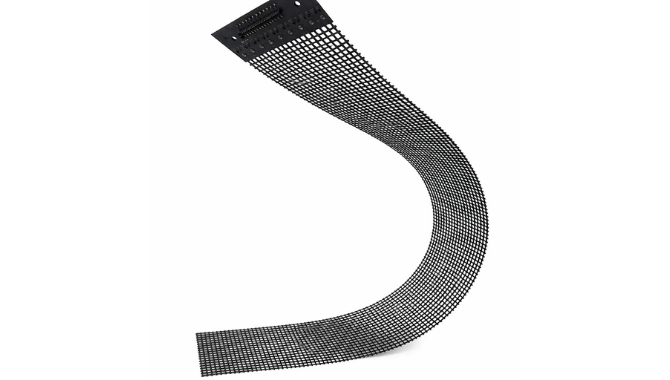
Research continues into flexible, curved, and transparent Micro LED displays for architecture, retail, automotive, and wearable applications. These products are expected to expand commercial design possibilities as manufacturing matures.
Integration with XR, Smart Retail, and Digital Twins
As immersive technologies evolve, high-performance displays will become central to virtual production, digital twins, smart retail, and extended reality (XR) applications. Image quality, low latency, and color accuracy will become even more important.
Will Micro LED Replace Traditional LED Completely?
Probably not in the foreseeable future.
Commercial display technologies will continue to coexist.
- SMD LED will remain dominant for outdoor advertising and large-format installations.
- COB LED will continue growing in premium indoor applications.
- Micro LED will expand into flagship commercial projects requiring the highest visual performance.
Rather than replacing one another, these technologies will serve different market segments according to technical requirements and budget.
Conclusion
Micro LED represents one of the most important developments in commercial display technology. Its outstanding brightness, seamless scalability, long lifespan, and exceptional image quality make it an attractive solution for premium applications such as luxury retail, corporate experience centers, virtual production studios, and command centers. At the same time, it is not the right choice for every project. Mature COB LED and SMD LED technologies continue to provide better value for many commercial installations where budget, delivery time, and maintenance simplicity are the primary priorities.
The most successful procurement strategy is not choosing the newest technology—it is choosing the technology that best fits your business goals. By evaluating viewing distance, operating environment, lifecycle cost, supplier capability, and future expansion plans together, you can build a display system that delivers reliable performance and a stronger long-term return on investment.If you’re planning a commercial LED display project, contact the experts at NSELED for professional advice and customized display solutions.
Three Actions You Can Take Next Week
- Audit Your Current Project Requirements
Document your installation environment, viewing distance, operating hours, brightness requirements, and available budget before contacting suppliers. This information will eliminate unnecessary product comparisons and speed up technical evaluation.
- Compare Total Cost of Ownership Instead of Purchase Price
Request quotations for Micro LED, COB LED, and SMD LED using the same project specifications. Compare not only equipment pricing but also energy consumption, maintenance costs, warranty terms, and expected service life.
- Evaluate Manufacturing Capability Before Selecting a Supplier
Ask every supplier to explain:
- Their production quality control process.
- Calibration procedure.
- Aging test duration.
- Monthly production capacity.
- Global after-sales support.
A reliable manufacturing process often has a greater impact on long-term project success than small specification differences.