


A CO2 cannon is one of the most exciting special effects used in modern live events.
Many event organizers want dramatic stage effects that grab audience attention instantly. However, choosing the right effect can feel confusing. People often compare fog machines, smoke effects, and CO2 systems without understanding how they actually work or when to use them.
This guide explains what a CO2 cannon is, how it works, and how professionals use it in concerts and events. By the end, you will clearly understand how this stage effect creates unforgettable audience moments.
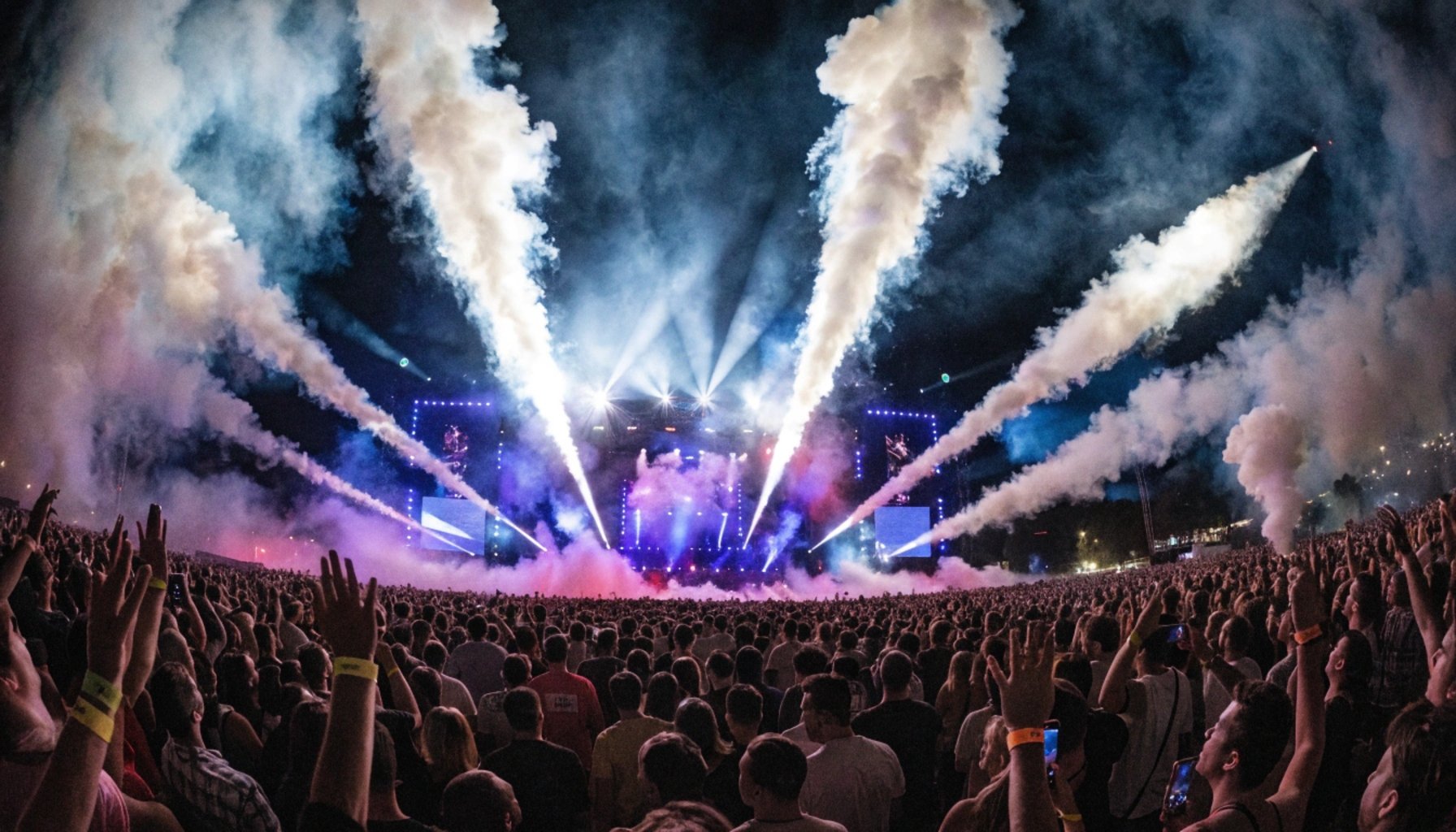
What Is a CO2 Cannon?
A CO2 cannon is a stage special-effects device that releases compressed carbon dioxide to create a powerful white plume of cold vapor. Event producers widely use it in concerts, festivals, nightclubs, and sports arenas because it produces an instant visual impact without leaving residue or smoke in the air.
Definition of a CO2 Cannon
A CO2 cannon is a high-pressure stage effects device that releases compressed carbon dioxide to generate a cold white plume effect. The plume usually shoots several meters into the air and disappears quickly without leaving smoke or odor.
Event technicians typically connect the cannon to a CO2 tank through high-pressure hoses and control valves. When the operator triggers the system, the pressurized gas expands instantly and forms a dense cloud.
Key characteristics of a CO2 cannon include:
- Instant visual burst
• Cold white plume effect
• Short duration blast
• No lingering fog
• Safe when used correctly
These features make CO2 cannons ideal for live entertainment environments where timing and visual impact matter.
CO2 Cannon vs Traditional Fog or Smoke Machines
People often confuse CO2 cannons with fog machines, but the two effects work very differently.
Fog machines produce continuous atmospheric haze, while CO2 cannons create short explosive bursts. Each effect serves a different purpose in stage production.
The following comparison shows the main differences.
| Feature | CO2 Cannon | Fog / Smoke Machine |
| Effect style | Short explosive plume | Continuous fog atmosphere |
| Duration | 2–5 seconds | Can last minutes |
| Visibility impact | Clears quickly | Can reduce stage visibility |
| Best use | Music drops and hype moments | Lighting atmosphere |
| Residue | None | Some fog machines leave haze |
Because of these differences, many event designers combine both effects in the same show. Fog machines create atmospheric lighting effects, while CO2 cannons deliver high-energy visual bursts.

How Does a CO2 Cannon Work?
A CO2 cannon works by rapidly releasing compressed carbon dioxide from a high-pressure tank, which instantly expands and forms a cold white vapor plume. This dramatic effect appears when liquid CO2 changes into gas and cools the surrounding air.
Because the gas expands so quickly, it creates a visible cloud that looks similar to smoke. However, the plume actually consists of condensed moisture from the air, not smoke particles.
According to scientific explanations of carbon dioxide phase behavior provided by the National Institute of Standards and Technology (NIST), pressurized CO2 expands rapidly when released, causing significant cooling and vapor formation.
For stage productions, this rapid expansion creates the iconic blast effect seen in concerts and festivals.
The Basic Working Principle of CO2 Stage Effects
The core principle behind CO2 stage effects is pressure release and temperature change. When compressed carbon dioxide exits the system, it rapidly expands and cools the surrounding air.
This process produces a thick white cloud that can shoot several meters upward. Event technicians carefully control the timing of these bursts to match music cues or dramatic moments.
The typical CO2 blast process follows these steps:
- Liquid CO2 is stored inside a pressurized tank.
- The system connects to a cannon or jet through high-pressure hoses.
- The operator activates the trigger or DMX control system.
- The valve opens instantly.
- CO2 expands rapidly and forms a visible plume.
Most stage cannons produce a plume that lasts two to five seconds, depending on tank pressure and nozzle design.
Key Components of a CO2 Cannon System
A professional CO2 cannon system contains several critical components. Each part ensures the system operates safely and produces a consistent effect.
The table below shows the core elements of a typical CO2 stage effects setup.
| Component | Function |
| CO2 Tank | Stores compressed liquid carbon dioxide |
| High-Pressure Hose | Transfers CO2 from tank to cannon |
| CO2 Cannon / Jet | Releases gas and creates the plume |
| Control Valve | Regulates the gas flow |
| Trigger or DMX Controller | Activates the effect |
Most professional systems use high-pressure hoses rated for industrial gas transport. This safety requirement ensures the equipment can handle pressures that may exceed 800 psi inside CO2 tanks.
Many large event productions also connect their CO2 jets to DMX lighting systems, which allows the effect to synchronize with stage lighting and music.
Types of CO2 Cannons Used in Stage Productions
Event professionals use several types of CO2 cannons depending on the venue size, stage design, and performance style. Each system produces the same basic plume effect, but the control method, mobility, and visual impact can vary significantly.
In simple terms, the difference between systems comes down to how the cannon is controlled and where it is installed. Some cannons stay fixed on stage structures, while others allow performers to interact directly with the crowd.
Choosing the right type helps event organizers create the best visual experience for their audience.
Handheld CO2 Cannons
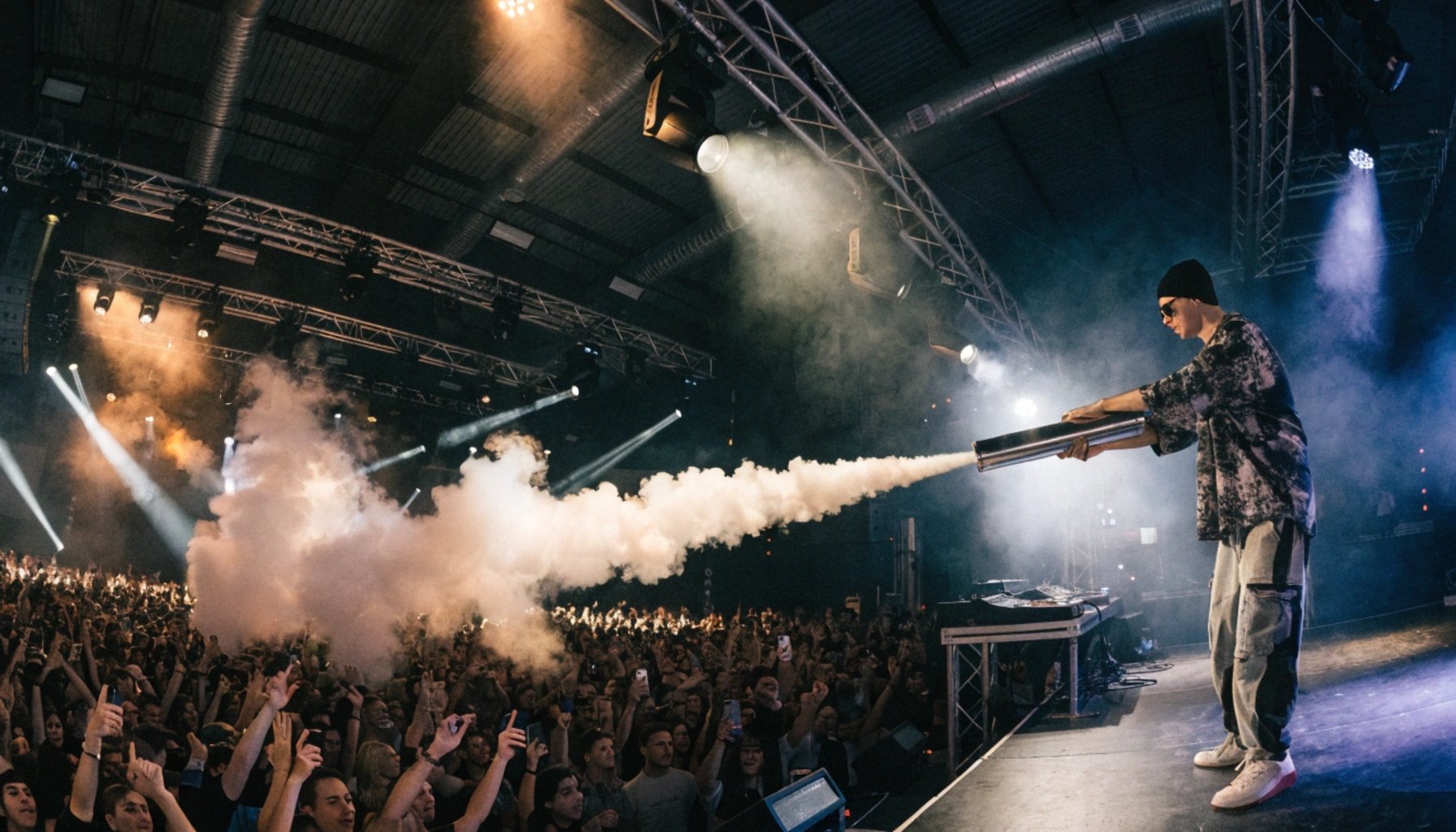
A handheld CO2 cannon is a portable device that performers or DJs can hold and trigger during a live show. This design allows artists to interact directly with the audience by aiming the CO2 plume toward the crowd.
Many electronic music performances use handheld cannons to create high-energy moments during beat drops. DJs often trigger them while standing on stage platforms or near the front of the crowd.
Key characteristics of handheld CO2 cannons include:
- Portable and lightweight
• Triggered manually by the performer
• Highly interactive with the audience
• Common in EDM festivals and nightclub shows
Because these systems connect to an external CO2 tank through a hose, operators must ensure the hose routing remains safe and unobstructed during the performance.
Fixed CO2 Jets
Fixed CO2 jets are stationary stage effects installed on the floor, stage edge, or truss structures. These systems connect to CO2 tanks and are typically controlled through a DMX lighting console.
Professional event productions often use multiple jets across the stage to create synchronized blasts.
For example, concert designers might place jets along the stage front so they fire simultaneously during major musical moments.
The main advantages of fixed CO2 jets include:
- Precise timing with lighting systems
• Consistent plume height
• Multiple jets can fire simultaneously
• Ideal for large concerts and arenas
Because operators control these systems electronically, they can easily coordinate CO2 blasts with lighting cues, lasers, and music transitions.
Multi-Effect CO2 Launchers
Some advanced stage devices combine CO2 blasts with additional visual effects. These multi-function launchers can fire confetti, streamers, or other materials while producing a CO2 plume.
This combination creates an even more dramatic visual moment during key parts of a show.
Common features include:
| Feature | Description |
| Dual effect output | CO2 plume plus confetti or streamers |
| Remote control | Triggered through DMX or control consoles |
| Enhanced visual impact | Creates layered stage effects |
| Popular in festivals | Used during grand finales |
Event producers often use these systems for closing moments of large concerts or major announcements during corporate events.
LED CO2 Cannons
Modern stage technology has introduced LED CO2 cannons, which integrate lighting elements directly into the cannon unit. These devices illuminate the plume with colored LEDs as the gas releases.
This design allows lighting designers to match the CO2 effect with the stage color scheme.
Benefits of LED CO2 cannons include:
- Illuminated vapor plumes
• Color synchronization with stage lighting
• Stronger visual impact in dark environments
• Improved audience visibility
Because the white vapor reflects light effectively, LED illumination can create bright colored plumes that remain visible even in large venues.
Safety Guidelines for Operating CO2 Cannons
CO2 cannons are generally safe when operators follow proper safety procedures and equipment standards. However, the system uses high-pressure gas, which means technicians must handle the equipment carefully and operate it according to professional event safety guidelines.
Most professional stage productions follow strict safety practices when using CO2 effects. These procedures protect both performers and the audience while ensuring the equipment performs reliably.
Organizations such as the U.S. Occupational Safety and Health Administration (OSHA) emphasize proper compressed gas handling to prevent accidents in environments using pressurized cylinders.
https://www.osha.gov/compressed-gases
By following clear safety protocols, event teams can safely integrate CO2 cannons into concerts, festivals, and large public events.
Safe Handling of CO2 Tanks
CO2 cannons rely on pressurized carbon dioxide cylinders, which require proper handling and storage. Mishandling a pressurized tank can cause equipment damage or injury.
Event technicians should always secure tanks in an upright position and protect the valve system from impact.
Important safety practices include:
- Store tanks upright and secure them to prevent tipping
• Avoid exposing cylinders to excessive heat
• Use pressure-rated hoses and connectors
• Transport tanks with protective valve caps
• Only trained technicians should connect equipment
According to industrial gas safety standards, CO2 cylinders may contain pressures exceeding 800 psi, which makes correct handling essential for safe operation.
Proper Ventilation and Indoor Safety
CO2 is a naturally occurring gas in the atmosphere. However, high concentrations in enclosed spaces can displace oxygen, which may create safety risks if ventilation is inadequate.
For indoor events, technicians must ensure the venue has sufficient airflow to prevent gas accumulation.
Key ventilation recommendations include:
- Use CO2 effects only in properly ventilated venues
• Avoid excessive repeated blasts in small rooms
• Monitor airflow near stage areas
• Follow venue safety guidelines for special effects
The National Institute for Occupational Safety and Health (NIOSH) recommends maintaining safe indoor CO2 levels in environments where compressed gas systems operate.
Large venues such as concert halls and arenas usually have ventilation systems designed to handle these effects safely.
Maintaining Safe Distance From the Audience
CO2 cannons produce extremely cold vapor plumes, and the gas exits the nozzle at high speed. Because of this, operators must maintain safe distances between the cannon and the audience.
Professional stage designers position cannons carefully to prevent direct exposure at close range.
Recommended safety practices include:
| Safety Rule | Purpose |
| Keep distance from audience | Prevent direct cold gas exposure |
| Aim jets upward or above crowd level | Avoid direct contact |
| Avoid firing toward performers | Protect stage crew |
| Follow manufacturer guidelines | Ensure safe operation |
Most stage technicians aim CO2 jets upward or across open stage space rather than directly at individuals.
Equipment Inspection Before Events
Before every show, technicians should inspect the entire CO2 system to confirm that it operates correctly. Even small issues with hoses or valves can affect performance or safety.
A typical pre-event inspection includes the following checks:
- Verify all hose connections are secure
• Inspect valves for leaks or damage
• Confirm tank pressure levels
• Test the trigger or DMX control system
• Perform a short test blast before the show
Regular inspections help prevent equipment failure during live performances. They also ensure the CO2 effect triggers exactly when the production team needs it.
How to Set Up a CO2 Cannon for an Event
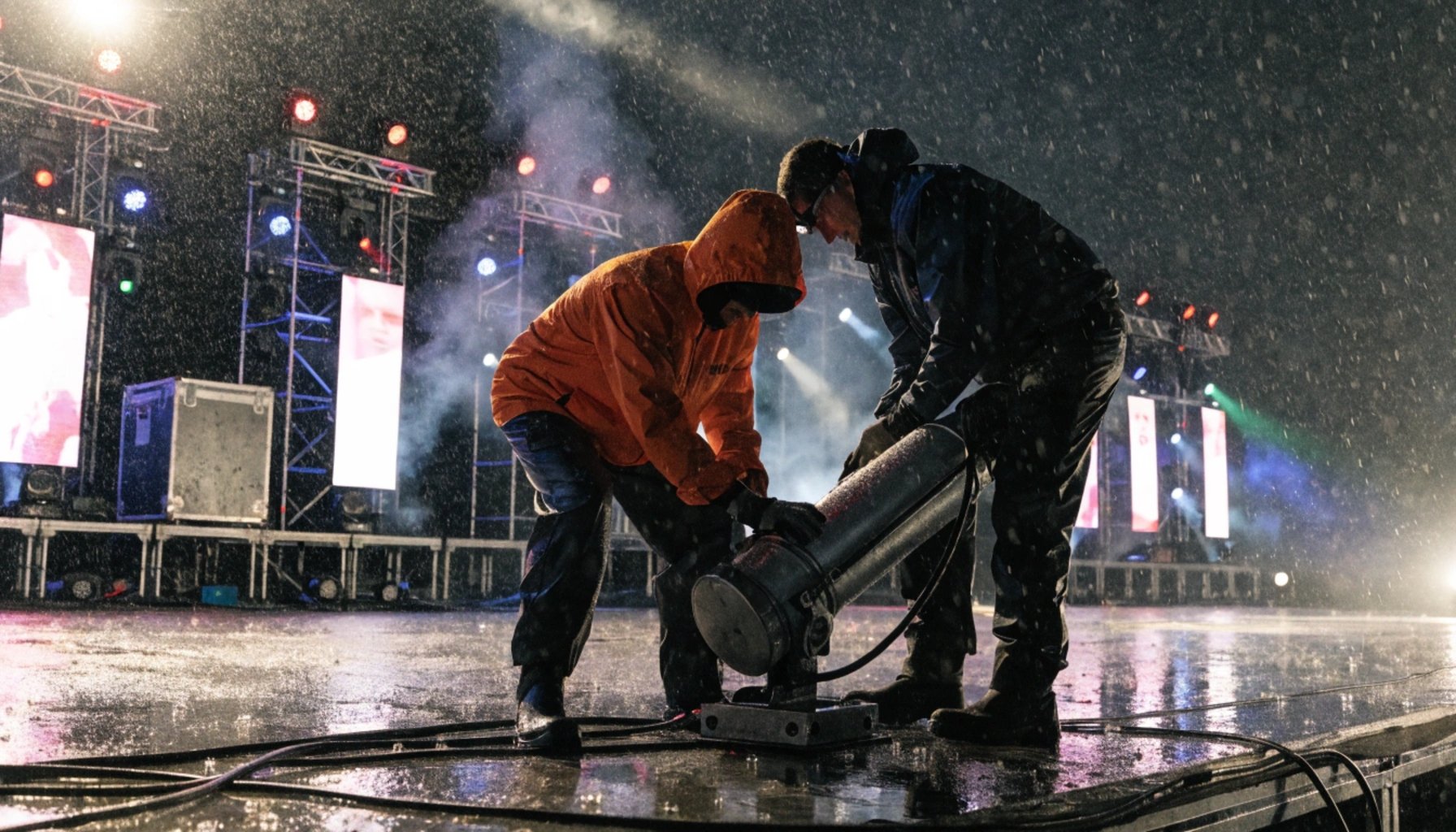
Setting up a CO2 cannon involves connecting the gas supply, securing the equipment, and testing the system before the event begins. When technicians follow a structured setup process, the effect will perform reliably during the show.
Professional event crews usually install CO2 systems during the stage production setup phase. They coordinate with lighting engineers, stage managers, and safety supervisors to make sure the equipment integrates smoothly with the overall show design.
A typical setup includes positioning the cannons, connecting the gas system, and testing the effect before the audience arrives.
Basic Equipment Setup Process
The first step is placing the CO2 cannon in the correct location on the stage. Proper placement ensures the plume reaches the desired height while maintaining a safe distance from performers and the audience.
Event technicians typically follow these steps:
- Position the cannon on a stable surface or stage mount
- Secure the device to prevent movement during operation
- Ensure the nozzle faces upward or toward open stage space
- Confirm adequate clearance around the plume area
- Proper positioning helps create a clean and visually dramatic effect while minimizing safety risks.
Large productions often place multiple jets along the front of the stage to produce synchronized blasts during major music moments.
Connecting Tanks, Hoses, and Control Systems
Once the equipment is in position, technicians connect the cannon to the CO2 tank using high-pressure hoses designed for compressed gas systems. The hose must remain unobstructed and properly secured to avoid leaks or damage.
The following table summarizes the typical connections in a CO2 cannon system.
| System Component | Connection Purpose |
| CO2 Tank | Supplies compressed carbon dioxide |
| High-Pressure Hose | Transfers gas from tank to cannon |
| Valve Regulator | Controls gas flow and pressure |
| CO2 Cannon / Jet | Releases the plume effect |
| Control Trigger or DMX System | Activates the effect |
In larger stage productions, technicians integrate CO2 systems with DMX lighting controllers. This setup allows operators to trigger the effect automatically during pre-programmed moments in the performance.
Testing the CO2 Effect Before the Show
Testing the system before the event begins is critical for both safety and performance timing. Technicians usually perform several short test blasts to confirm that the plume height and timing meet the production requirements.
A typical test procedure includes:
- Confirming tank pressure levels
• Checking hose connections for leaks
• Triggering short test bursts
• Verifying plume direction and height
• Coordinating the effect with lighting cues
These tests allow the production team to fine-tune the effect so it aligns perfectly with the music, lighting, and stage choreography.
If the event uses multiple CO2 jets, the lighting engineer may program the blasts directly into the DMX lighting sequence, allowing the effect to fire automatically during the show.
Conclusion
CO2 cannons are one of the most powerful stage effects used in modern live entertainment. Their ability to release dramatic white vapor plumes instantly makes them ideal for concerts, festivals, nightclubs, and large public events. When used at the right moment, a CO2 blast can transform an ordinary performance into a high-energy visual experience.
Event organizers should always focus on proper equipment selection, safe operation, and strategic timing. Understanding how CO2 cannons work, choosing the right type of system, and following safety guidelines will ensure the effect performs reliably during live shows.
If you are planning an event and want to create unforgettable stage moments, Contact us to learn more about professional CO2 stage effect solutions. Our team can help you select the right equipment and provide guidance for safe and impressive event production.
FAQs
How high can a CO2 cannon shoot?
Most professional CO2 cannons can shoot a plume between 6 and 12 meters (20–40 feet). The exact height depends on tank pressure, nozzle design, and the type of cannon used in the stage setup.
Are CO2 cannons safe for indoor events?
Yes, CO2 cannons are safe for indoor events when the venue has proper ventilation and operators follow safety guidelines. The vapor dissipates quickly and does not linger like traditional fog.
How long does a CO2 cannon blast last?
A typical CO2 cannon blast lasts about 2–5 seconds. Operators can control the duration by adjusting the trigger or programming the effect through a DMX lighting system.