


3D holographic projection creates immersive floating visuals for retail, events, and commercial displays.
However, many buyers misunderstand how this technology actually works. They often treat holographic projection as a replacement for LED displays without considering environmental limitations, viewing conditions, or long-term operational performance. This misunderstanding frequently leads to poor purchasing decisions, unstable display results, and lower-than-expected marketing ROI in real commercial projects.
In this article, you will learn what 3D holographic projection really is, how the technology works, where it performs best, and how to evaluate whether it fits your business application before investment.
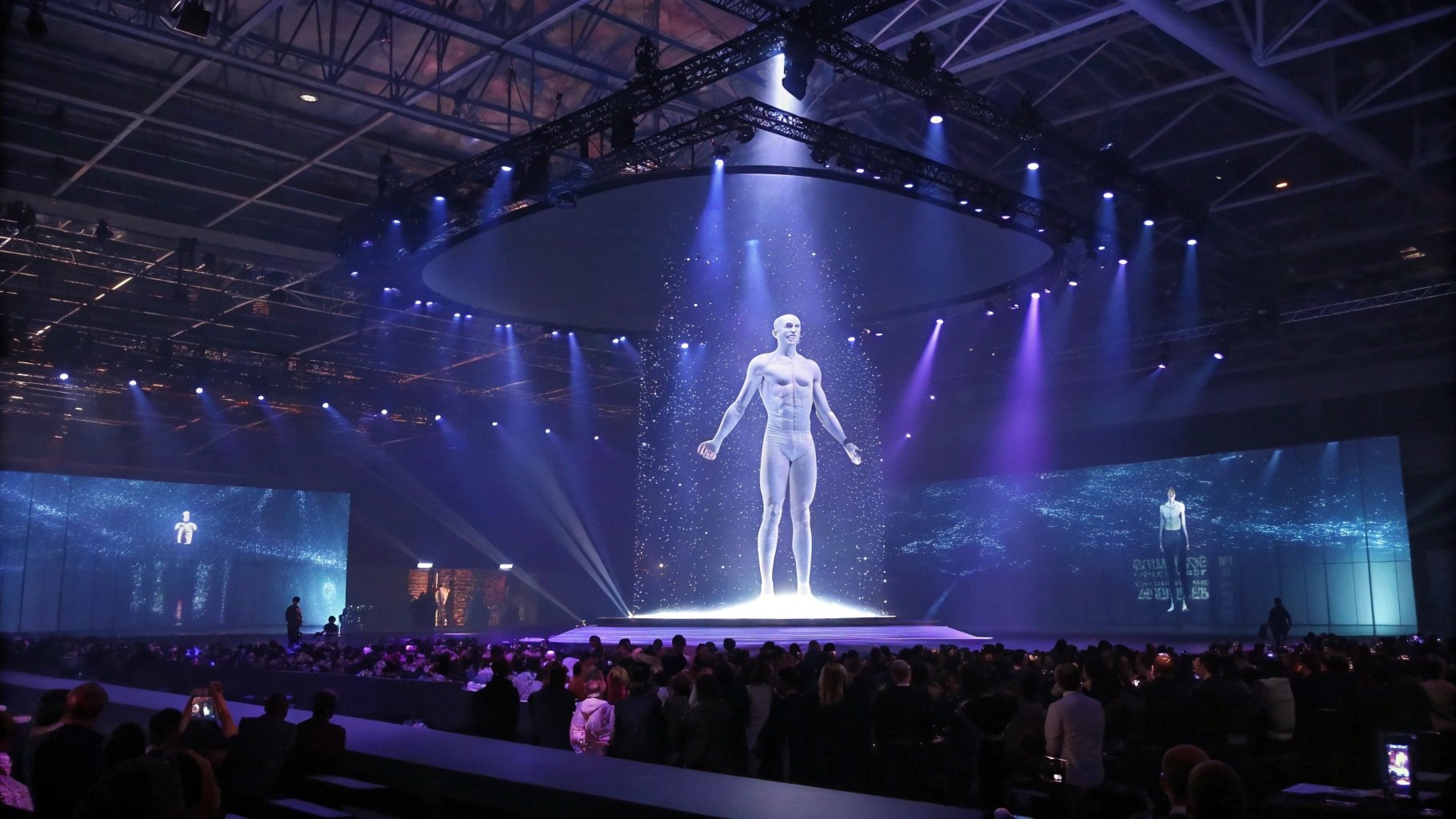
What Is 3D Holographic Projection?
3D holographic projection refers to a group of display technologies that create a floating 3D-like visual effect without requiring glasses or headsets. The system typically uses fast-refresh LED blades, reflection-based optical setups, or transparent projection media to trick the human visual system into perceiving depth. The key mechanism behind this illusion is persistence of vision, where the brain merges rapidly changing frames into a continuous object.
However, it is important to understand that this is not true holography. True holography requires laser interference patterns that physically reconstruct light fields. Commercial systems instead rely on optical simulation techniques that are optimized for visual impact rather than scientific accuracy.
Why It Differs from True Holography
True holography and commercial holographic projection are often confused in marketing materials, but their engineering foundations are completely different. True holography uses coherent laser light and interference patterns to store and reconstruct 3D information, while commercial systems depend on reflection, motion blur, or projection tricks to simulate depth.
| Feature | True Holography | Commercial Holographic Projection |
| Physical principle | Laser interference | Optical illusion |
| Output type | Real light field reconstruction | 3D visual illusion |
| Environment requirement | Lab-grade stability | Retail / event environments |
| Commercial usage | Limited | Widely used in marketing |
According to the Smithsonian Institution, true holography is fundamentally a wave-interference phenomenon, not a projection-based imaging system. This distinction is critical for buyers because it directly affects expectations regarding brightness, scalability, and installation feasibility.
Why It Matters for Modern Visual Displays
Modern commercial environments are extremely competitive in terms of visual attention. In retail and exhibition spaces, brands typically have less than 3–5 seconds to capture visitor attention before they move on. This is why motion-based and immersive visual technologies like holographic projection are becoming popular in marketing environments.
However, from a performance perspective, attention does not automatically translate into conversion. Many retail deployments experience strong initial engagement in the first weeks, but performance often declines over time due to novelty fatigue. This means the technology is more suitable for campaign-driven installations rather than permanent advertising infrastructure.

How Does 3D Holographic Projection Work?
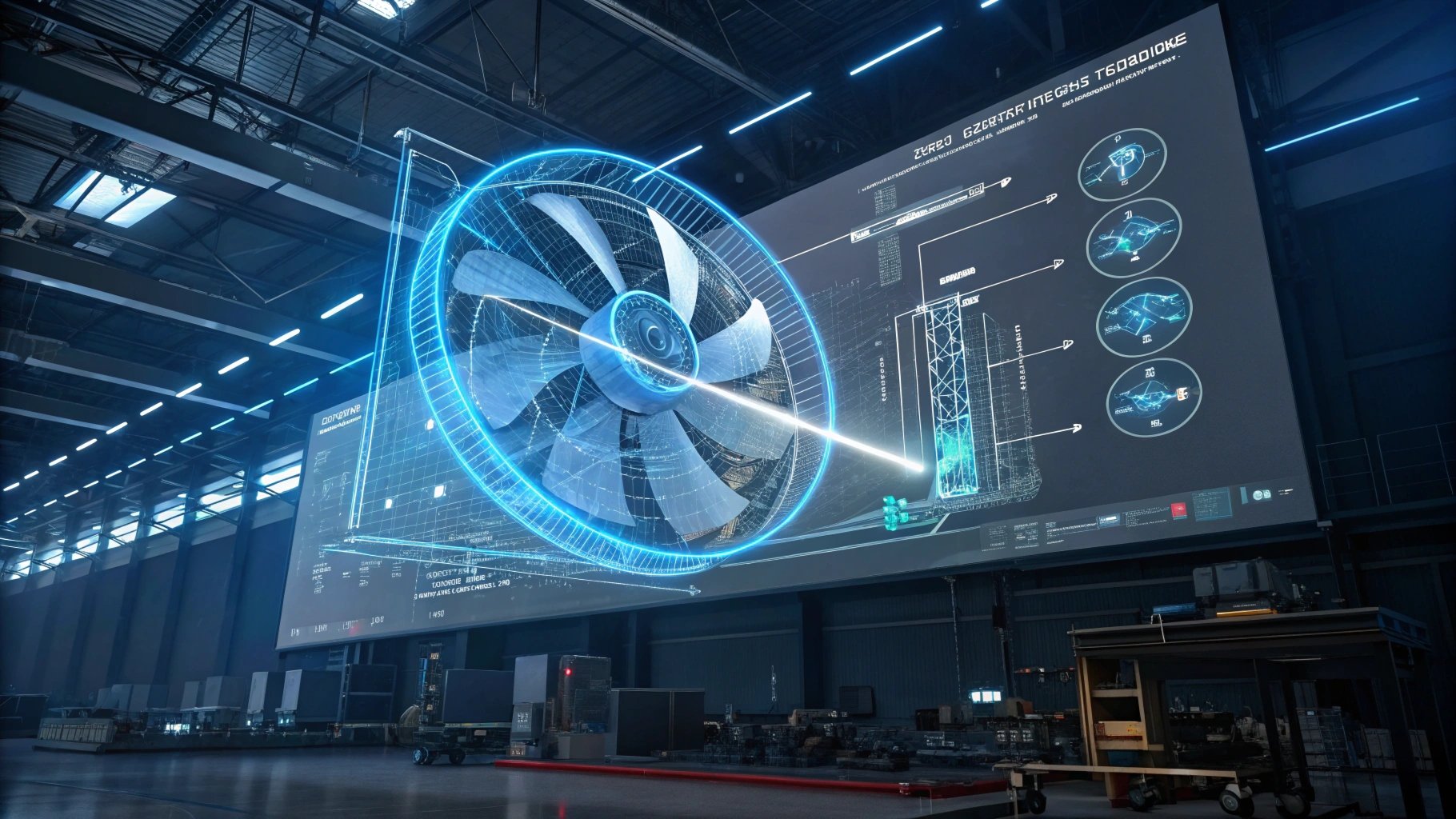
3D holographic projection works by combining high-speed visual rendering with either mechanical motion or optical reflection to create a perception of floating objects. The human brain plays a central role in this process, as it merges rapidly changing images into a continuous spatial form when the refresh rate exceeds visual perception thresholds.
Most systems operate above 24–30 frames per second, but commercial holographic systems often push much higher refresh rates to stabilize the illusion and reduce flicker. The result is a visual experience where objects appear to exist in mid-air, even though all images are generated on physical surfaces or rotating LED structures.
Basic Working Principles
The working process of a typical holographic projection system can be broken down into several engineering steps that directly influence final visual quality:
- A 3D animation is created in standard modeling software
- The animation is converted into frame-by-frame sequences
- The system synchronizes frame output with mechanical rotation or projection timing
- The viewer perceives a continuous floating object due to visual fusion
While this process sounds simple, real-world execution is highly sensitive to synchronization errors. Even minor frame misalignment can cause image distortion or “ghosting,” especially in rotating LED fan systems.
From a manufacturing standpoint, the biggest challenge is not content creation but mechanical stability and thermal consistency. Rotating systems introduce vibration, which directly affects image sharpness over time. Additionally, LED temperature drift can cause brightness inconsistency during long operation cycles.
Engineering Insight (Factory Perspective)
In factory testing environments, we evaluate holographic systems using metrics that are rarely discussed in marketing materials but are critical for long-term reliability. These include motor fatigue cycles, LED thermal decay rate, and synchronization stability under continuous load.
For example, rotating LED systems typically show increased failure probability after several thousand hours of continuous operation due to mechanical wear. This is not a visual limitation but an engineering constraint that directly affects commercial deployment decisions. In contrast, fixed LED display modules avoid mechanical movement entirely, which significantly improves long-term stability.
Main Technologies Used
| Technology | Working Principle | Strength | Limitation | Best Use Case |
| LED Fan Display | Rotating LED blades create persistence of vision | Strong floating illusion | Mechanical wear, noise | Retail attraction |
| Pepper’s Ghost | Reflection through angled glass | Stable and controllable | Needs lighting control | Stage performances |
| Transparent Projection | Projection on semi-transparent film | Clean aesthetic effect | Low brightness in daylight | Indoor branding |
| Volumetric Display | Multi-layer imaging system | True depth perception | High cost, low scalability | Research / exhibitions |
Common Commercial Applications
3D holographic projection is mainly deployed in environments where visual attraction is more important than long-term durability or high-precision content delivery. It is particularly effective in short-cycle marketing environments where campaigns change frequently and audience exposure time is limited.
Retail Advertising
Retail stores use holographic projection to display animated product visuals, brand mascots, and promotional campaigns designed to capture foot traffic. The system is often installed near entrances or window displays where visibility is highest. However, real operational data shows that engagement tends to follow a clear lifecycle pattern.
In the first weeks, customers show high curiosity due to novelty. Over time, however, the effect gradually decreases as the audience becomes familiar with the visual pattern. This is a known phenomenon in retail psychology called “novelty decay,” where repeated exposure reduces cognitive attention response.
| Time Period | Customer Behavior |
| Week 1–2 | Strong curiosity and stopping behavior |
| Month 1–2 | Stable but declining engagement |
| Month 3–6 | Noticeable novelty fatigue |
| After 6 months | Minimal incremental attention |
Trade Shows and Exhibitions
Trade shows represent one of the most effective environments for holographic projection because conditions are controlled and exposure time is short. Booth designers often use these systems to create a visual “anchor point” that draws visitors into a specific area.
Performance depends heavily on environmental factors such as lighting control, booth density, and viewing distance. In practice, holographic systems perform best when viewers are within 3–5 meters and when ambient lighting is partially controlled to reduce reflection interference.
Product Launch Events
In product launch environments, holographic projection is typically used as a storytelling enhancement rather than a primary display system. Event designers often combine it with fog machines, synchronized lighting, and large LED backdrops to create layered visual effects.
From an engineering perspective, LED displays usually serve as the structural visual foundation, while holographic projection acts as a foreground enhancement. This hybrid approach ensures both brightness and immersion.
Entertainment and Education
Museums, theme parks, and educational installations use holographic projection because they can tightly control environmental conditions. This allows the system to operate closer to its optimal performance range. In these settings, the technology is used for storytelling, historical reconstruction, and interactive demonstrations where controlled lighting ensures consistent visual quality.

Benefits of 3D Holographic Projection
3D holographic projection provides strong visual differentiation in crowded environments where traditional displays may not stand out. Its main advantage is not technical superiority but psychological impact, especially in the first few seconds of viewer exposure.
High Visual Impact
The system creates immediate attention due to motion-based optical illusion and floating object perception. Research in visual cognition suggests that moving stimuli significantly increase attention capture probability compared to static images. However, this advantage is strongest in controlled environments where lighting and viewing distance are optimized.
Strong Audience Engagement
Engagement is primarily driven by novelty and unexpected visual effects. Unlike informational displays, holographic systems rely on emotional and sensory stimulation rather than detailed content delivery. This makes them particularly effective for short-term campaigns, but less suitable for continuous informational broadcasting.
Innovative Brand Presentation
Brands often use holographic projection to communicate innovation and technological sophistication. This is a perception-driven advantage rather than a functional one. In many cases, the perceived innovation value outweighs the technical limitations of the system itself.
Limitations and Challenges
Understanding limitations is critical for procurement decisions because it directly affects long-term ROI and system suitability.
Brightness Restrictions
Most commercial holographic systems operate between 1,200 and 2,500 nits equivalent brightness. This is sufficient for indoor environments but significantly lower than outdoor LED displays, which can reach 6,000 to 10,000 nits. As a result, holographic systems struggle in environments with strong ambient light or direct sunlight exposure.
Viewing Angle Limitations
The visual effect of holographic projection is highly angle-dependent. When viewers move outside the optimal viewing cone, the illusion begins to distort and eventually disappears. This limits its usability in open public spaces where audience positioning cannot be controlled.
Content Production Complexity
Unlike standard 2D display content, holographic content requires 3D modeling, frame slicing, and motion calibration. This increases production time and cost. In many commercial projects, content creation can account for 20–40% of total deployment cost depending on complexity.
Higher Operational Costs
Mechanical systems introduce ongoing maintenance requirements. Rotating LED systems require motor checks, alignment calibration, and component replacement over time. From factory testing data, these systems generally have higher maintenance frequency compared to fixed LED display modules.
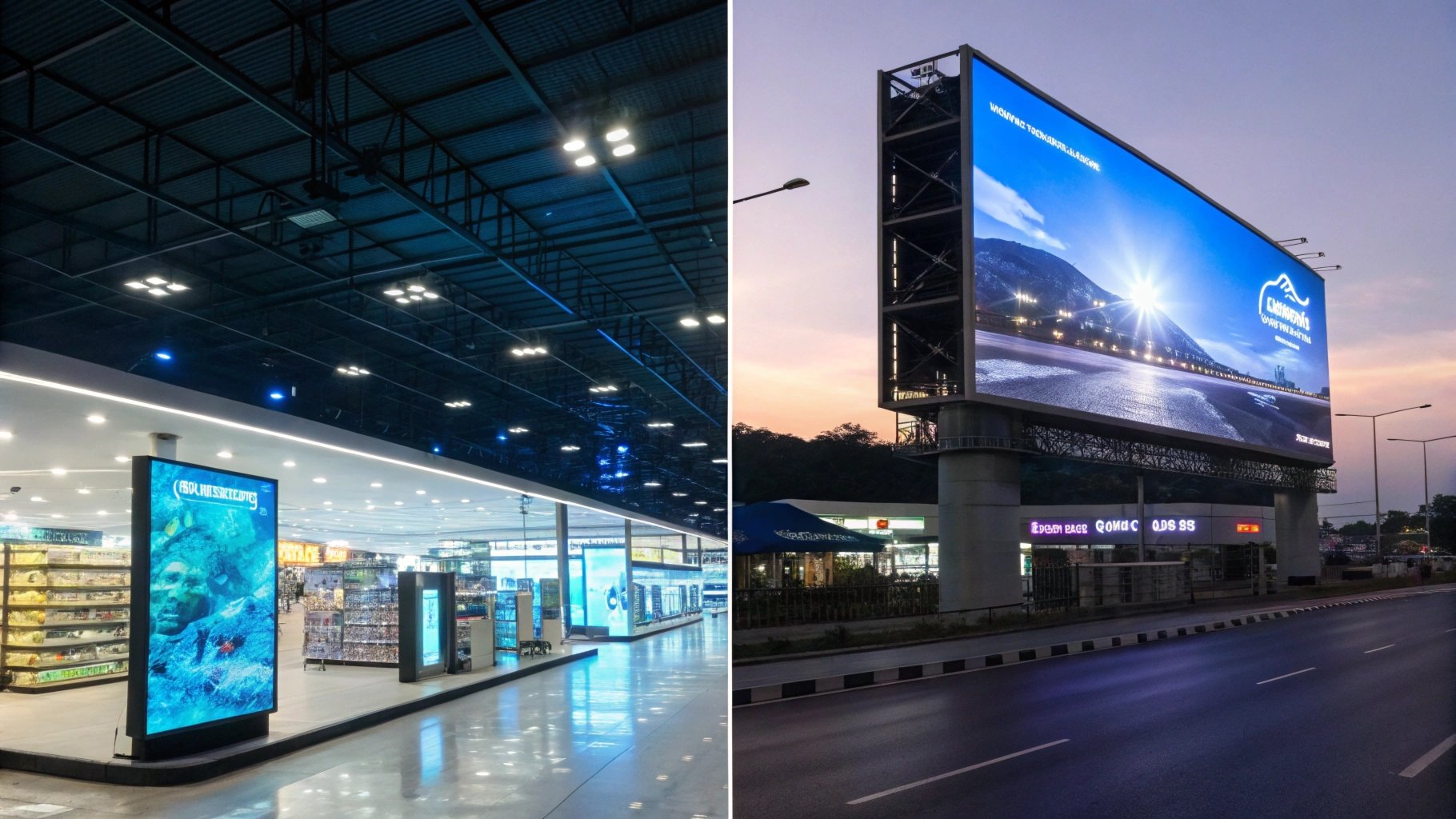
3D Holographic Projection vs LED Display
This comparison is critical for decision-makers because it determines long-term investment efficiency.
| Factor | Holographic Projection | LED Display |
| Brightness | Medium | High (outdoor up to 10,000 nits) |
| Lifespan | Moderate | Long (50,000–100,000 hours) |
| Maintenance | Higher | Lower |
| Installation Flexibility | Limited | High |
| Outdoor Performance | Weak | Strong |
| ROI Stability | Variable | Predictable |
From a factory production perspective, LED displays offer modular architecture, which allows partial replacement and easier scalability. Holographic systems, especially mechanical ones, introduce more failure points due to moving components.
This is why many commercial clients initially experiment with holographic systems but eventually transition to LED-based solutions for long-term deployment.
How to Choose the Right Solution
Choosing the correct technology should always begin with environmental and operational requirements rather than visual preference. Many procurement mistakes happen when decision-makers prioritize visual novelty over engineering constraints.
Define Your Project Goals
If your goal is short-term engagement, such as exhibitions or launch events, holographic systems can be suitable. If your goal is long-term advertising infrastructure, LED displays provide more stable performance and lower lifecycle cost.
Evaluate Environment and Budget
Key evaluation factors include:
- Ambient light level
- Viewer distance and movement patterns
- Daily operating hours
- Maintenance accessibility
Compare Long-Term ROI
In most real-world deployments, LED systems outperform holographic systems over a 12–24 month operational cycle due to lower maintenance and higher reliability.
Conclusion
3D holographic projection is best suited for attention-driven environments such as exhibitions, retail showcases, and live events where visual impact and audience engagement are the main goals. However, for long-term commercial advertising and continuous operation, LED display systems usually provide better brightness stability, longer lifespan, and lower maintenance cost. Choosing the right technology should depend on operating environment, viewing conditions, and ROI expectations rather than visual novelty alone.
If you are comparing holographic projection and LED display solutions for your next project, working with an experienced manufacturer can help you avoid costly specification mistakes. At NSELED, we provide customized LED display systems for retail, outdoor advertising, rental events, and creative installations based on real application requirements. Contact our team today for professional consultation and tailored display solutions.
FAQs
Is 3D holographic projection real holography?
No. Commercial systems are not true holography. Real holography uses lasers to record and reconstruct light wavefronts, creating genuine 3D images. Most “holograms” use optical illusions like Pepper’s Ghost or LED displays, which only simulate 3D effects from 2D visuals.
Is it better than LED display?
It depends on the application. “Holographic projection” is better for short-term novelty and grabbing attention at exhibitions or product launches. However, LED displays perform better in practice, offering higher brightness, better daylight visibility, stronger durability, easier maintenance, and more stable long-term ROI. For continuous advertising, LED screens are usually the more reliable and cost-effective choice.